
Understanding Back Pain: A Global Health Concern
Back pain is a common issue that affects millions of people worldwide. According to the World Health Organization, more than 600 million adults experience some form of back pain, making it the leading cause of disability globally. In the UK, NHS data indicates that eight out of ten people will suffer from back pain at some point in their lives. While most cases are not serious and resolve within a few weeks, for others, the pain can persist for months or even years.
A survey by the British Chiropractic Association found that half of Britons have experienced back pain for a year or longer. This highlights the need for effective strategies to manage and prevent recurring back pain. An orthopaedic surgeon has now shared three simple home workouts that can help ease discomfort, strengthen the spine, and reduce the chances of pain returning.
The Importance of Core Strength and Flexibility
Dr Pamela Mehta, an orthopaedic surgeon from Resilience Orthopaedics in the US, emphasizes that building core strength, improving flexibility, and keeping muscles active are key to managing back pain. She explains that for most people with back pain, the best exercises are those that strengthen the core and improve mobility through the hips.
For many years, bed rest was considered the primary remedy for back pain. However, this approach has been debunked. According to Johns Hopkins Medicine, it is advisable to rest in bed as little as possible. Too much bed rest can weaken muscles and slow recovery. Instead, patients are encouraged to get up and move around as soon as they can. However, it’s important to pay attention to pain and stop to rest if needed, as the body may be trying to prevent further harm.
The NHS advises consulting a GP if back pain does not improve after a few weeks, is severe, interferes with daily activities, or is getting worse. Urgent medical advice should be sought if there are symptoms such as fever, unexpected weight loss, a lump or change in back shape, or if the pain worsens at night, spreads to the upper back, or is triggered by sneezing, coughing, or using the toilet.
Home Workouts for Back Pain Relief
Dr Mehta’s prescription involves three categories of exercises: stretching, strengthening, and aerobic activity.
1. Stretching
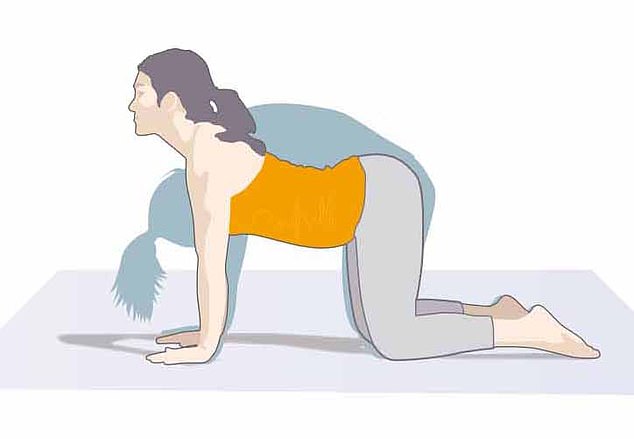
If a slipped disc has been ruled out, the cause of back pain is often soft-tissue strain, which accounts for about eight out of ten cases. These muscles don’t need rest—they need gentle movement. Dr Mehta recommends starting with simple stretches like cat-cow or child’s pose to ease stiffness and get the spine moving.
The cat-cow stretch involves getting on all fours with hands aligned under the shoulders. Breathe in as you drop your belly and lift your head to look upwards—the “cow” position. Then exhale as you arch your back towards the ceiling and tuck your chin to your chest—the “cat” position. Repeat slowly several times to release tension from the neck to the lower spine.
The child’s pose begins from a kneeling position. Stretch your arms straight ahead, rest your forehead on the floor (or on a pillow if needed), and keep your bottom on your heels. Both moves help relieve tightness in muscles surrounding the spine, which can worsen back pain when left tense.

2. Core Strengthening
Core-strengthening exercises stabilize the spine and reduce strain on the lower back. Dr Mehta suggests starting with bridges, which help keep the spine aligned. Lie on your back with knees bent and feet flat on the floor, hip-width apart. Inhale deeply, then lift your hips until your body forms a straight line from shoulders to knees. Hold for five to ten seconds, then exhale as you lower your hips back down slowly. Increase the hold time as your strength improves.
Another useful move is the bird-dog. Begin on all fours, hands under the shoulders. Inhale, then as you exhale, extend your right arm forward and your left leg back simultaneously, keeping your core tight and back flat. Return to start and repeat on the opposite side.
Finally, planks—common in most core routines—can be performed for 15 to 60 seconds depending on your fitness level. Start on elbows and knees, lock your hands together, then straighten your legs so your body forms a straight line from head to heels. Don’t let your back arch or your bottom lift. Build up the time gradually.
3. Aerobic Activity
The last component is aerobic or cardiovascular exercise, which improves circulation, strengthens supporting muscles, and helps prevent stiffness. Walking is one of the best remedies, as a 2025 study found that walking for at least 100 minutes per week lowered the risk of developing chronic low back pain by 23 percent.
Dr Mehta recommends “low-impact aerobics” such as walking, swimming, or using an elliptical machine, which keep muscles active without jarring joints. “What matters most,” she adds, “is consistency and good form.”

When Back Pain Signals Something More Serious
While most back pain is harmless and treatable, persistent pain can sometimes indicate something more serious. The NHS warns that back pain may occasionally be a symptom of cancer. Leak Kalkan, a 23-year-old student from West Yorkshire, shared how her persistent back pain was initially dismissed as sciatica but turned out to be caused by a tumour. Her story serves as a reminder that back pain should never be ignored if it persists, worsens, or comes with other unusual symptoms.
As Dr Mehta says: “For the majority of people, the right combination of movement, stretching, and strength training can make a huge difference. Your back needs to move to heal.”


