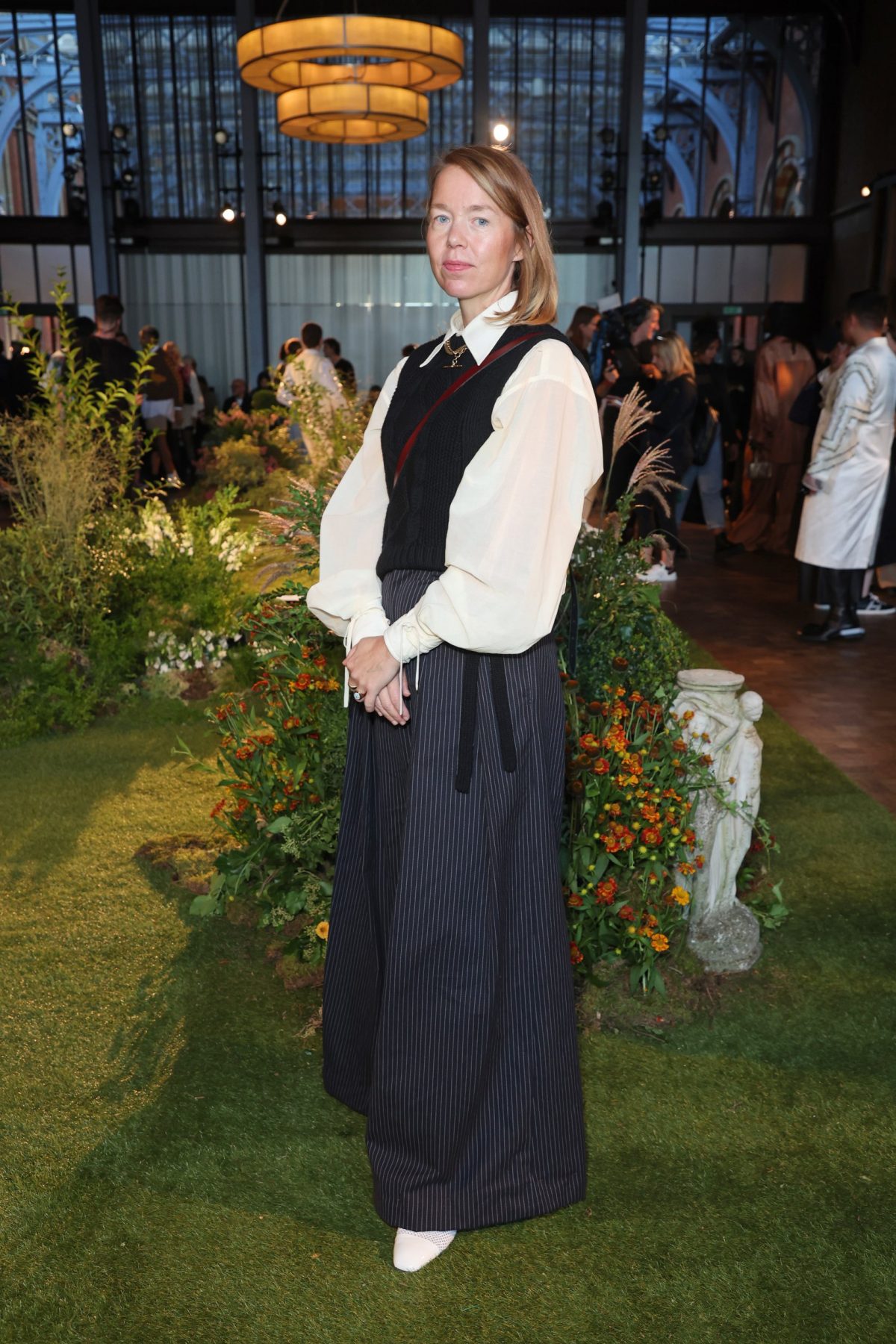
Anna Maxwell Martin is many things. To most of us she is the face of Motherland, the hit sitcom in which she played a hot mess navigating school-gate politics and the chaos of family life. Or she is DCS Patricia Carmichael, the deliciously unlikeable anti-corruption officer sent to shake up the final two seasons of Line of Duty. But to Maxwell Martin herself, she is first and foremost a mother; a single, bereaved parent to a child with special educational needs, who has spent countless moments sitting in her car after difficult school meetings wanting to “smash my head against the windscreen”.
“Things have been pretty brutal,” she says now. “Navigating the systems in place at the moment is exceptionally hard. I’m not going to sit here and slag off teachers or heads – there have been some who have been life-saving for my children. Schools aren’t centres of evil. They are under crushing pressure to perform and part of that is attendance. But it’s cruel to measure a child by that when they cannot be in school because their nervous system is on fire. You can say I’m namby-pamby. I say I couldn’t care less.”
Her own experiences made her realise how much harder it would be for families on the breadline. “I often couldn’t go to work because my daughter couldn’t be in school, and I thought, if I was being threatened with fines and I couldn’t pay my electricity bill, that would be horrific.
“There are children who aren’t at school because they haven’t got a warm coat or had anything to eat, then are berated and fined. Those fines push families further into poverty.”
Maxwell Martin, banging her hand on the table as she speaks, has long been involved with education advocacy, policy reform and various charities. These include Sponsorstars UK, The Difference and Adoption and Special Guardianship Support Fund. Now she is an ambassador for Action for Children, which supports millions of vulnerable young people across the country.
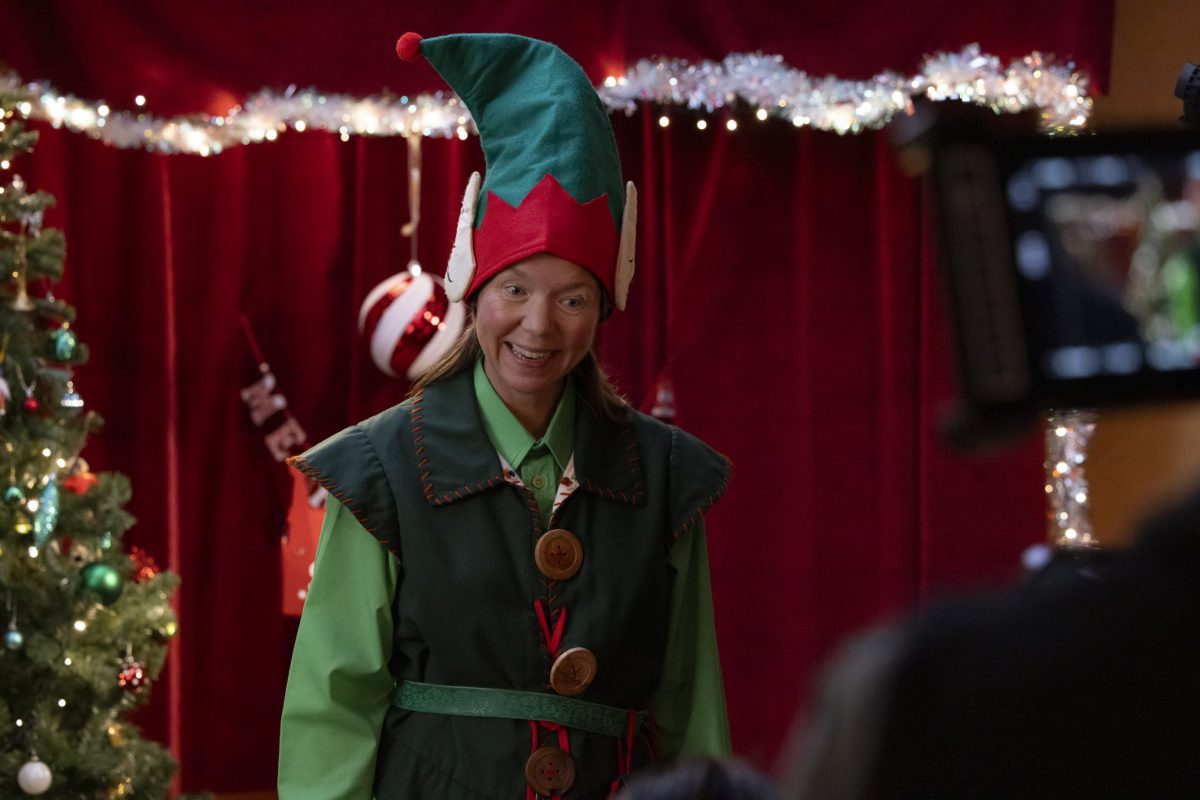
In the charity’s Christmas campaign, Santaland, she plays an elf in a grotto who answers a curious girl’s questions about whether Father Christmas will be visiting this year. It lulls you in with comic precision, only to devastate you with the realisation that the child is living in poverty.
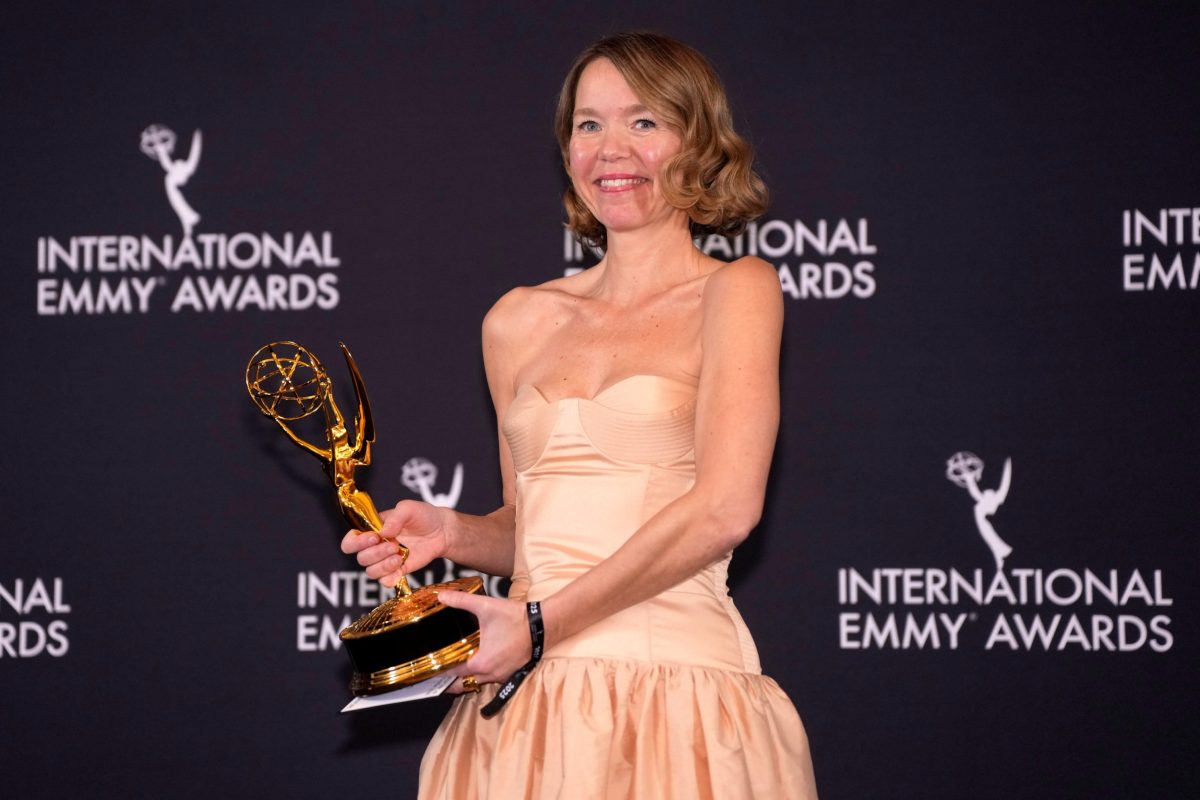
Speaking to me just after the International Emmys in New York – where she won Best Actress for her role in ITV’s brutally brilliant drama Until I Kill You – Maxwell Martin, 48, is the kind of in-demand person who goes straight from the plane to work, spending a long day on set filming the second series of Ludwig alongside David Mitchell, before she can head to the north London home she shares with her partner, two teenage daughters and a rescue dog.
You might wonder how she has time for all this advocacy – but when Action for Children reached out, she didn’t hesitate. “People in this country think of poverty happening elsewhere, but the blinkers need to come off,” she says, reeling off figures such as the 4.5 million children – one in three – now growing up in poverty in the UK.
“We’re in a sort of Dickensian state where we have normalised this, and it is becoming endemic in our culture to just write people off.”
Is the Government doing enough? Hardly, she says, though she welcomed the end of the two-child benefit cap announced in this month’s Budget. “Then of course comes the backlash; the ‘Why do we have to pay for these feckless people?’ I wish people could have a slightly different outlook on how we view those who are struggling, because this negative rhetoric gets us nowhere.”
Santaland encourages those who can to donate gifts to children who otherwise would have none. “We don’t need so much excess at Christmas,” says Maxwell Martin. “Anyone who has extra mince pies in the cupboard or extra presents under the tree could do this wonderful thing by supporting a child who has very little.”
Her own Christmases have been low-key since the death of her ex-husband and father of their daughters, the director Roger Michell, four years ago. Having first met in 2004, when he directed her in his film adaptation of Enduring Love, they were together for 16 years and married for 10, but had recently been amicably separated when he suddenly passed away.
“As a bereaved family, I’m really cautious around the pressure I put on Christmas,” she says. “Sometimes we do literally nothing and it’s fine. Christmas is overwhelming for many. There’s often this idea that other people are having a jollier time or have more stuff. That can be really difficult. So we like to keep it really small. I always tell the girls all I want is a homemade card, which they take the mick out of me for.”
Maxwell Martin spoke about bereavement on Woman’s Hour last year, and described “financial terror” as one of the many things that comes with it. When I raise this now, she is glad to have the chance to clarify that. “We are exceptionally comfortable,” she says. “Yes, I became a single-parent family and I couldn’t work for various reasons, but of course, it’s absolutely fine for me. I’m paid a shitload for the job I do. So that is not a visceral experience for me. There were lots of avenues open to me in terms of pivoting and doing other work, which helped. So I’m grateful you’ve asked me the question, because I know I’m very privileged.”
This hasn’t always been the case. Owing to the double-barrel surname, there is a misconception that Maxwell Martin comes from money. But she grew up in East Yorkshire as Anna Martin and attended the local comprehensive. Her mother was a research scientist turned stay-at-home parent and her father ran a pharmaceutical company. (Where their daughter got her love of performing, the family didn’t know.)
It was only after going to university in Liverpool to study history, then moving south to attend the London Academy of Music & Dramatic Art (Lamda), that she adopted Maxwell Martin to distinguish her from another actress; Maxwell was her grandfather’s name.
After drama school, it didn’t take very long to find an agent or roles. In fact, she remembers sitting on Waterloo Bridge looking at the National Theatre, thinking: “One day I’ll be in there” – then six months after graduation, she was there, first landing a part in a Tom Stoppard play (The Coast of Utopia, 2002), and the following year starring as 12-year-old Lyra in an adaptation of Philip Pullman’s His Dark Materials.
Read Next: Joanna Page: ‘At Rada, it felt like being abused for two years’
She credits much of her success to her looks – or rather, the fact it was never about them. “There was never that lens on me,” she says. “I never thought about my looks and how they would impact my career. And therefore I was lucky; I was relieved of that burden, and I was able to go up for so many different parts. That’s not lost on me, and I’ve never stopped feeling grateful to be employed.”
Not that it has always been easy: Maxwell Martin experienced “tons” of rejection too. “But failing is quite important in life. You use rejection as the mountain to climb. I think maybe I’ve got a predisposition for that – I like climbing that mountain. It doesn’t mean I don’t find it initially disappointing, but then I just think, I’ll do better and bigger.”
That she did. She went on to win Bafta awards for her roles in BBC drama Bleak House (2005) and Channel 4’s film about mental illness, Poppy Shakespeare (2008). While many of her contemporaries found themselves pigeonholed, Maxwell Martin has since become one of the most versatile British actors working today, appearing in everything from police procedurals to historical dramas and comedies (brilliantly playing a celebrant in last year’s Gavin and Stacey finale).
How does she choose roles? “Sometimes it’s dictated by the bank balance; paying the mortgage,” she laughs. “Otherwise, I try to pick things I’ve never done before. It’s like, ‘Right, I’ve done boss bitch, now for something else.’ I also like characters being as far removed from me as possible. I don’t love doing things where I look and sound like me. I like a big challenge.”
The other way she chooses jobs is the cast and crew. While she experienced her fair share of bad behaviour on set in the early days – “from men and women”, she says, “rather than it being in a sexual sense, it was more about power plays” – mostly she has worked with great people. Particularly on Motherland: her friendships with the likes of Paul Ready (who played stay-at-home dad Kevin) and Diane Morgan (who played Liz, one of the mums group) remain strong today.
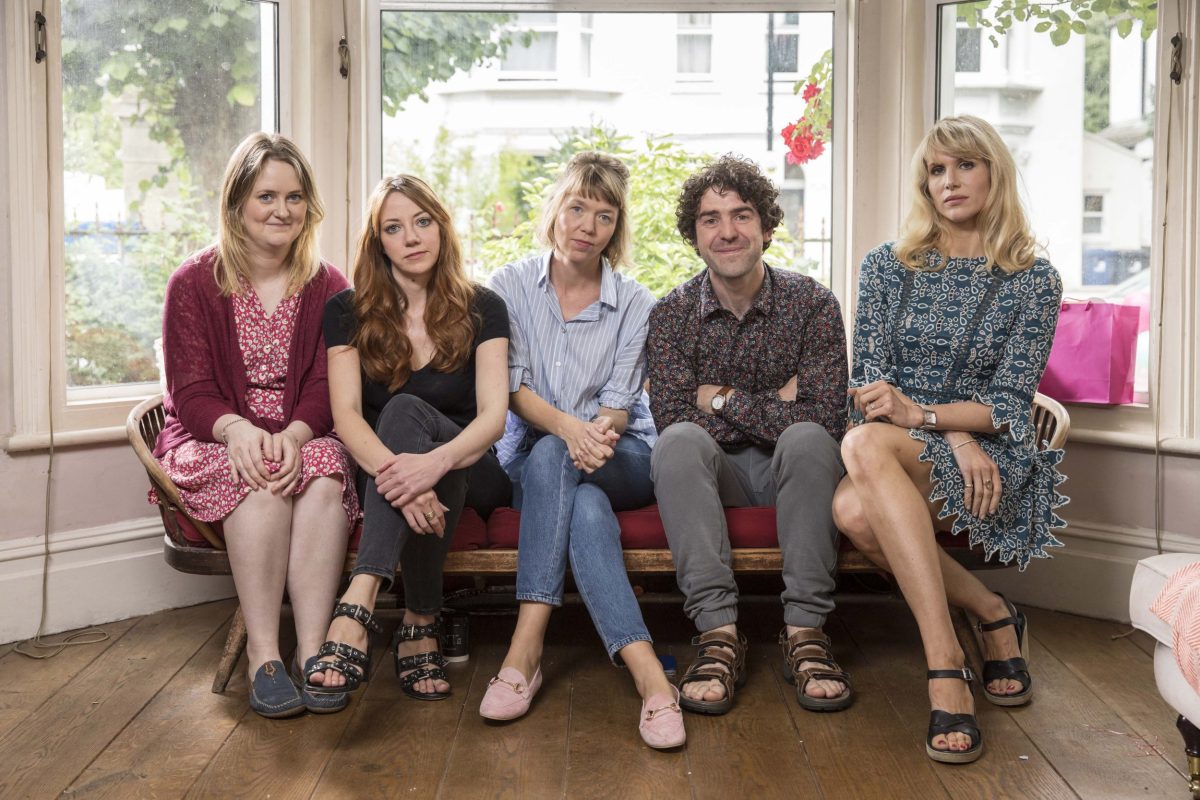
Initially airing on BBC Two in 2016, Motherland ran for three series and became a phenomenon when it was added to Netflix. At the same time, Maxwell Martin was starring in the fifth and sixth series of Jed Mercurio’s Line of Duty. It was a pivotal moment in her fame. Paparazzi began following her around, once even slashing her car tyres so she couldn’t drive off. “I know!” she says, “I pride myself in being a real nippy driver, so I thought I was going to burn the bastard off, but no.” She sighs. “Yeah, that was a weird time.”
Not surprising, given that a record 13 million people watched the Line of Duty finale in 2021. Earlier this month, it was announced that the drama would be back for a seventh series, with Vicky McClure, Martin Compston, Adrian Dunbar confirmed in the cast. When I ask whether she will be joining, there is a weighty pause.
“I literally know zero,” she says. OK, I reply. Are you glad it is coming back? “Am I glad it’s coming back,” she repeats thoughtfully. “I’m not glad or un-glad. I just think, ‘Oh, it’s coming back.’ I don’t really have a view. I guess the proof will be in the pudding.”
It is true that the return of the drama has a lot to live up to. But while the finale of the sixth series may not have met the sky-high audience expectations, I’m not sure how much it would have mattered to her. More than any career success, Maxwell Martin’s “number one job is as a mother”.
“Whether I’m on a set or in a rehearsal room, my priorities are being a mum and meeting the needs of the kids,” she says. “They are my favourite people. I laugh every single day with them. So I feel grateful to have them over and above anything that will ever happen in my career.”
Motherhood has shaped her “in every single way. It has made me a better person,” she says. “I have also failed at being a parent, especially since Roger died, a million times. I’ve had to apologise and pick myself up and pick my children up and say I’m sorry, I’m going to do better. I always want to be the best person for them.”
She is eloquent on grief, not just for Michell but also for her dad, who died when she was 24. “This year I go into having more years without my dad than with him – that is a really weird watershed for me,” she says. “I think we all need to understand that more about grief. It hoodwinks you. It can be OK, can’t it? Then suddenly it’s not. And that can be a week later, a year later, 10 years later. I still miss my dad so terribly, 24 years on. At least it gives me more understanding of what my children go through.”
The discrepancy between outward success and private hardships doesn’t get any easier. “When someone dies, there’s a flurry [of support], and then everyone forgets. And sometimes grief can be delayed, and your difficulties swamp you. I had a mini-grief for Roger last summer. It was the first I’d done a play since he died, and I found it incredibly difficult without him. I was trudging into work, crying. And this summer it hit me again, as it did my children. Grief is a very non-linear road, and it’s an exercise in massive patience.”
As such, she would sum up this past year simply as “gripping on to the rollercoaster”. She muses: “It’s a white-knuckle ride, being a parent and juggling everything. I’m a very up-and-down person anyway. My mum used to say she found it exhausting. I could be pinging off the walls, giggling, and then suddenly I’d be in a slump. So that is what my day is like, and generally my year too.”
But looking ahead, she feels good. “I love getting older,” she says. “I always feel quite excited about what’s going to come along.” Buzzy new screen projects await, along with plenty more advocacy.
“That is something I will do for the rest of my life,” she says. “I will keep hammering on doors at Westminster on behalf of teachers, pupils and children facing difficulties at school.
“All I want for Christmas is for funding cuts to be reversed; for more therapeutic support. If I could have that, I’d be Santa’s happiest helper.”
To donate to Action for Children’s Secret Santa campaign, visit iamsanta.org.uk. Until 3 December, charity partner Nationwide Building Society will match donations up to a total of £200,000, meaning every £1 you donate will be worth £2.


