East Timor’s Journey to Asean Membership
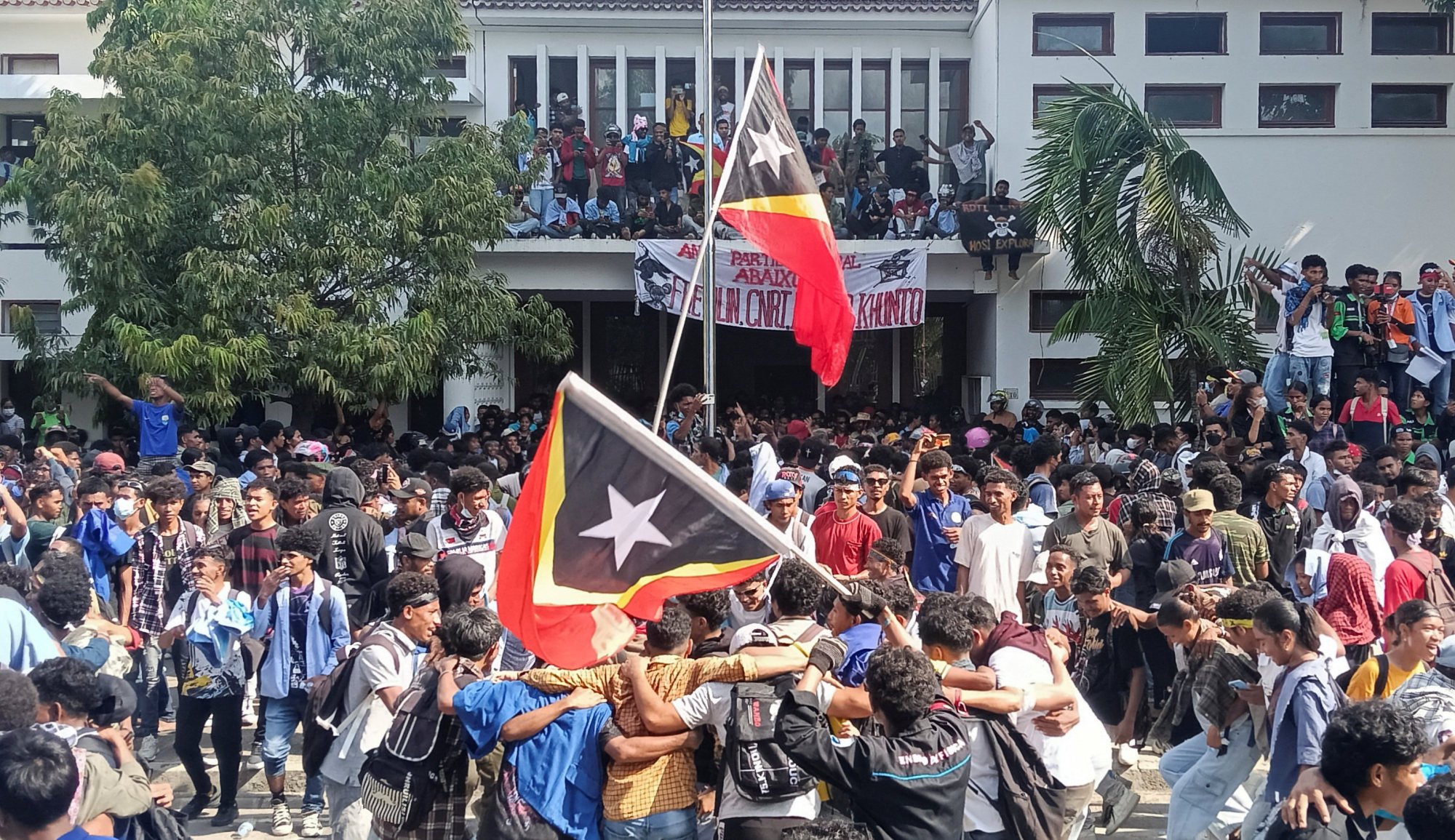
As the streets of Dili hum with anticipation, East Timor is preparing for a diplomatic milestone that has taken decades to achieve. The country, officially known as Timor-Leste, is set to become the 11th member of the Association of Southeast Asian Nations (ASEAN), marking a significant step in its journey toward regional integration.
For a nation of approximately 1.4 million people on the eastern half of Timor Island, this membership represents both a declaration of belonging and an affirmation that its future lies firmly within Southeast Asia. Michael Leach, a professor of politics and international relations at Australia’s Swinburne University of Technology, emphasized that ASEAN accession has been East Timor’s major foreign policy ambition since the restoration of independence. He noted that it unites all major parties and key political figures.
Timor-Leste gained its independence in May 2002 after centuries of Portuguese colonization and a brutal Indonesian occupation that lasted over two decades. Since then, the country has worked to build democratic institutions, nurture civic life, and find its place in the world. However, its economy remains highly dependent on oil and gas, struggling to diversify.
Strategic Choice for Membership
President Jose Ramos-Horta, one of the nation’s founding fathers and a Nobel Peace Prize laureate, described the drive for ASEAN membership as a strategic choice. “It’s a commitment to our future, and a recognition of our shared destiny with our Southeast Asian neighbours,” he stated.
Despite the symbolic significance, joining ASEAN requires more than just alignment; it demands active participation, including implementing trade rules, attending numerous meetings annually, and holding its own among larger peers. For the bloc, integrating a new member without weakening internal cohesion will be a challenge, as will ensuring its inclusion brings economic and institutional benefits.
Ivo Ribeiro, a 23-year-old researcher from Timor-Leste, who was born just months before the country gained independence, highlights the generational stakes of this transition. He emphasizes that while joining ASEAN is a way to develop East Timor, the country must also focus on building institutions, protecting property rights, creating a real business environment, and investing in people.
The Road to Heaven
East Timor first applied to join ASEAN in 2011, but its candidacy faced challenges regarding the country’s readiness. Some member states questioned whether Timor-Leste had the administrative capacity, human capital, or institutional maturity to meet the bloc’s obligations. Joanne Lin, co-coordinator of the ISEAS-Yusof Ishak Institute’s ASEAN Studies Centre in Singapore, noted that the hesitation reflected real concerns. She added that the delay underscored ASEAN’s belief in meaningful and sustainable membership.
Despite these concerns, Dili pressed ahead, expanding its diplomatic presence, sending civil servants to ASEAN-sponsored capacity-building programs, and increasing attendance at regional meetings. President Ramos-Horta expressed frustration during a forum in Jakarta in 2022, stating, “It seems like the road to heaven, to reach the perfection of heaven, is easier than to reach the gates of ASEAN.”
The breakthrough came when Indonesia, then the largest economy and chair of ASEAN, championed a formal roadmap for East Timor’s membership, setting out phased milestones for building capacity and meeting the bloc’s commitments. Malaysia, this year’s ASEAN chair, confirmed full admission would occur at this month’s summit in Kuala Lumpur.
A Painful Past
The symbolism of former occupier Indonesia acting as the linchpin welcoming East Timor into the ASEAN fold was profound. Damien Kingsbury, an international politics professor at Australia’s Deakin University, noted that the two now enjoy “a sound diplomatic relationship.” He added that East Timor benefits from having the support of ASEAN’s pivotal country, while Indonesia benefits from having a large part of its ugly history effectively expunged.
The journey from subjugation to sovereignty was long and painful. Dili first declared independence after the collapse of Portuguese rule in 1975, only to be invaded by Indonesia days later. The occupation that followed resulted in more than 100,000 deaths from violence, hunger, and disease, according to a truth and reconciliation commission. A United Nations-backed referendum in 1999 delivered an overwhelming mandate for independence, but also triggered a final fit of violence before a transitional UN administration shepherded the country to full sovereignty in 2002.

Diplomatic Dance
For as long as it has existed as an independent nation, diplomacy for East Timor has been an exercise in carefully navigating relations with partners old and new. Now, as it prepares to take its seat at the ASEAN table, that balancing act gains new urgency. Membership of the bloc gives Dili a regional platform from which to manage its two most consequential external relationships – with Australia and China – through a multilateral framework.
Australia is the Southeast Asian nation’s largest donor, pledging nearly A$100 million (US$65 million) in development aid for 2025-26. It is also a key defense ally, with the two signing a bilateral security agreement in 2022 that formalized training, logistics, and joint exercises between their militaries. Meanwhile, China’s influence is also expanding, with a Chinese construction company building Tibar Bay Port, East Timor’s largest-ever infrastructure project, and the two countries signing a cooperation plan encompassing agriculture, green energy, digital technology, and aviation under Beijing’s Belt and Road Initiative.

Beyond Oil and Gas
East Timor’s economy runs on hydrocarbons. Oil and gas revenues funnelled through the country’s sovereign wealth fund, worth about US$18.74 billion as of August, underwrite the lion’s share of public spending. But the wells are running dry, and withdrawals from the fund have soared as offshore production tails off. The International Monetary Fund has warned that the wealth fund could be completely exhausted by the end of the 2030s without tighter financial discipline and diversified growth.
Dili has pinned its hopes on the long-delayed Greater Sunrise project, which holds an estimated 5.1 trillion cubic feet (144.4 billion cubic metres) of gas reserves and straddles the maritime border with Australia. Prime Minister Xanana Gusmao has repeatedly called the project “critical” and his government is adamant that onshore processing must take place in East Timor, a stance that has long stalled negotiations.

Moral Authority
East Timor’s accession comes at a difficult time for ASEAN, with US President Donald Trump’s return to the White House and imposition of punitive tariffs upending regional trade amid internal divisions over how best to respond. The bloc has also struggled to contain the fallout of Myanmar’s military coup in 2021, with the junta still barred from its high-level meetings.
Into this turmoil was stepping a new member “regularly ranked the most democratic country in Southeast Asia,” said politics professor Leach. East Timor is the only Southeast Asian nation that US-based democracy watchdog Freedom House rates as “free” based on assessments of political rights and civil liberties, giving it a unique moral standing.

Future Prospects
Timorese civil society leaders say their country’s own history of repression and reconciliation equips them well to foster dialogue, even in the most challenging of circumstances. “We don’t believe in interference, but we do believe in bringing parties to the table,” Ximenes said. “Our history gives us a voice.”
That credibility may yet prove to be East Timor’s greatest strength. It cannot single-handedly resolve the Myanmar crisis, nor can it remake ASEAN in its image, but its presence does serve as a reminder of the bloc’s founding vision: peace, freedom, and prosperity through friendship and cooperation.


Related posts:

Fiction park: He was the best in class. He still wasn’t good enough
Gagan Thapa takes oath as Congress president, vows to regain public trust

Inside knowledge that has locals gripped by fear after gran’s body found decomposing in cattle dip

New property purchase disclosure rule in Japan sparks fears it may curb foreign investment
Dino-mite treasures: inside Singapore’s Fort Knox storing playthings of ultra-rich