The Impact of the ASUU Strike on Public Universities
Academic activities across various public universities nationwide were halted on Monday as the Academic Staff Union of Universities (ASUU) initiated a two-week warning strike. This action was taken to emphasize the union’s demands and pressure the Federal Government to address longstanding issues.
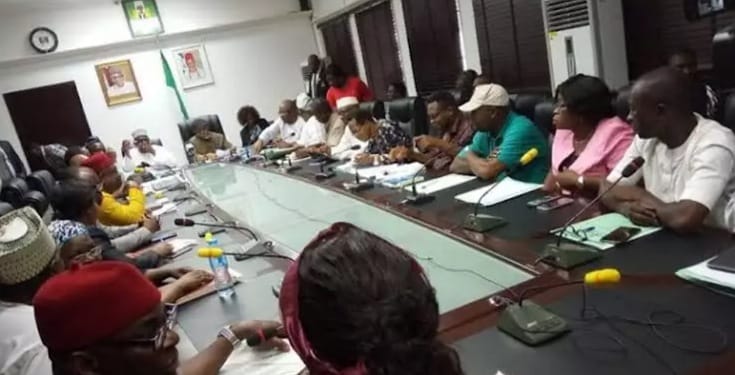
The renewed conflict between ASUU and the government stemmed from the breakdown of negotiations between the two parties. The strike was officially declared by the National President of ASUU, Prof. Chris Piwuna, in Abuja on Sunday. In response, the Federal Government mandated the National Universities Commission (NUC) to submit the attendance list of all lecturers across public universities within seven days.
The Nigeria Labour Congress (NLC) expressed solidarity with ASUU while criticizing the Minister of Education, Tunji Alausa, for implementing the “no work, no pay” policy. NLC president Joe Ajaero described the policy as an act of intimidation that would not resolve the crisis in the nation’s public tertiary institutions.
Alausa claimed that the government had entered the final phase of talks with ASUU and other unions to resolve disputes over welfare, funding, and the implementation of the 2009 ASUU-FGN Agreement. He mentioned that the Tinubu administration had released N50bn for the payment of Earned Academic Allowances and allocated another N150bn in the 2025 budget for needs assessment, to be disbursed in three tranches.
Following the strike, Alausa directed the NUC and vice chancellors to enforce the “no work, no pay” policy. The circular stated that any employee who fails to discharge their duties during the strike period would face salary deductions. However, members of the Congress of University Academics and the National Association of Medical and Dental Academics, who are not part of the strike, would be exempt from the directive.
Reacting to the development, ASUU president Piwuna stated that the union does not respond to threats. He also warned the minister against using “divide and rule” tactics. “We see ourselves as victims of this government the way students see themselves as victims of what is going on,” Piwuna said.
The NLC president urged Alausa to reconsider the implementation of the “no work, no pay” policy. Ajaero warned that if the government remains unresponsive after the two-week warning strike, the NLC would convene an emergency meeting with its affiliates to develop a comprehensive strategy for further engagement with the government.
In the aftermath of the strike, academic activities were grounded across various public universities nationwide. The ASUU-Ahmadu Bello University branch chairman, Haruna Jibril, confirmed the compliance with the strike directive, stating that the decision reflected the collective resolve of the academic staff to press home their long-standing demands.
At both the Samaru and Kongo campuses of Ahmadu Bello University, the usual buzz of academic life was replaced by clusters of students discussing the development. At the Faculty of Education, lecture rooms were deserted, and students sat idly in groups. A few lecturers were spotted around the faculty premises, but none entered classrooms to teach.
This disruption affected students significantly. Final-year student Shafiqah Abdullahi noted that the lack of lectures would have a negative impact on students, especially those in their final year. Similarly, at the Faculty of Social Sciences, some students had just written a test, while others expressed uncertainty about upcoming academic activities.
At Usmanu Danfodiyo University, Sokoto, the institution’s chapter of ASUU joined the industrial action. The UDUS ASUU Chairman, Professor Nurudeen Muhammad, confirmed the development, stating that members commenced the strike action at midnight in line with the directive from the union’s national headquarters.
Universities in Ondo State also joined the nationwide strike. At Adekunle Ajasin University Akungba Akoko, there were no academic activities. Students were seen roaming about the campus while their lecture rooms were open but no lectures took place.
The warning strike disrupted examinations at several institutions. At Joseph Sarwuan Tarka University Makurdi, lecturers withdrew their services, leading to the suspension of academic activities. Similarly, at the University of Uyo, no lectures were held on Monday as the classrooms were empty.
The situation was similar at the University of Ibadan, where lecturers complied with the ASUU directive. The Branch Chairman, Adefemi Afolabi, stated that academic activity at the university is on hold for now.
Lecturers at the Nnamdi Azikiwe University, Awka, were not available when our correspondent visited the campus. The Chairman, ASUU Owerri Zone, Prof Dennis Aribodor, urged the Federal Government to fulfill its promises instead of resorting to threatening actions.
Full compliance with the strike directive was observed at the University of Jos. Lecturers stayed away from campus, leaving students stranded. The Chairman of the ASUU branch at UNIJOS, Prof. Jurbe Molwus, confirmed that the lecturers were complying one hundred percent with the warning strike.
The situation was the same at the Plateau State University in Bokkos, as confirmed by the ASUU Branch Chairman, Dr Monday Hassan. The Branch Chairman, ASUU, Tai Solarin Federal University of Education, Ijagun, Dr Adewale Ositoye, and his counterpart at the Federal University of Agriculture, Abeokuta, Dr Ola Oyedele, confirmed that their respective universities joined the national strike.


