A New Dawn for Bangladesh
Nepal, Feb. 16 — The recent election in Bangladesh marked a significant turning point in the nation’s political landscape. While there have been criticisms of the interim government, one cannot overlook the legacy of Muhammad Yunus, whose leadership during this pivotal election has reshaped the course of Bangladeshi politics.
The election on February 12 was a testament to the dedication and hard work of General Waker-uz-Zaman’s team, who ensured that the event unfolded smoothly. The police and bureaucracy also played their part with equal determination. Nearly one million security personnel were deployed across 42,651 polling centers, and remarkably, no lethal incidents occurred. This peaceful environment was not accidental but a genuine commitment to the republic. As the Election Commission built the stage, Yunus took the podium, highlighting the importance of this moment.
A Spectacular Election
The election was nothing short of spectacular. Approximately 12.77 crore voters participated, achieving a turnout of nearly 60 percent. The results spoke for themselves, with the BNP-led alliance securing at least 212 out of 299 contested seats. Jamaat-e-Islami’s 11-party coalition managed to secure 77 seats as of February 14. Tarique Rahman, who had returned to Dhaka after 17 years in exile, won both his constituencies, positioning him to form the next government with a commanding two-thirds majority. The referendum passed with 68.1 percent approval, showcasing the people’s strong desire for change.
Political Maturity and Public Sentiment
The milestones achieved during this election deserve recognition. There were no organized acts of election violence that spiraled into crises. Tarique Rahman expressed his sentiments after casting his vote, stating, “For more than a decade, the people of Bangladesh have been waiting for this day,” pledging to prioritize improving law and order. Jamaat Ameer Shafiqur Rahman called the election a “turning point,” emphasizing the people’s demand for change. Both camps, for once, aligned with the people’s script, showing a rare unity.
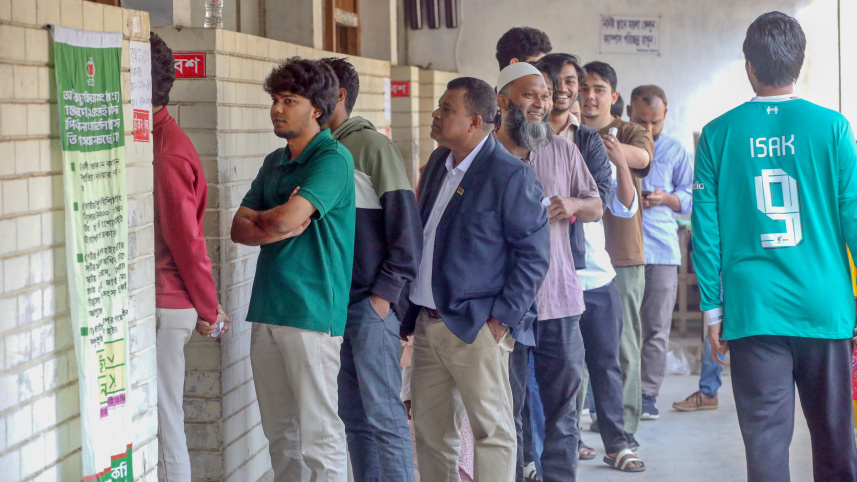
The political maturity displayed by both BNP and Jamaat in accepting the verdict is a real victory. Shafiqur Rahman confirmed his party’s graceful acceptance of the results, regardless of others’ actions. If this maturity is genuine, it could lead Bangladesh down a positive path. The people voted in a festive mood, with first-time voters expressing that it felt like Eid. A former teacher, who hadn’t voted since 2008, shared his joy at casting his ballot, highlighting the significance of this moment.
Future Challenges and Opportunities
As the BNP prepares to take power, it will need a solid cabinet that works beyond partisan interests, with zero tolerance for corruption, impunity, and violence. Every BNP member should remember the lessons from the Awami League’s fall: its arrogance of power. Embracing constructive criticism and meritocracy, and delivering to the public rather than the party, will be crucial. Maintaining an apolitical military, bureaucracy, and law enforcement will also be essential.
Jamaat did well, securing 77 alliance seats, which is a historic high. However, the verdict sends a message that society is not ready for theocracy. Their role as responsible opposition will shape the country’s democratic future. The election was about restoring democracy where everyone’s voice matters, including women and minorities, who remain apprehensive. Ensuring inclusivity, accountability, and the rule of law must be at the heart of governance.
Rebranding and Reform
This is also an opportunity for the NCP to rebrand as a full-grown political party without being a junior partner. Working hard, staying connected with the public, and making meaningful parliamentary contributions, rather than relying on TikTok manifestos, will be key. Any sign of corruption will only keep them in a junior position.
The question remains: what will the Awami League do next? Its exiled leadership has already denounced the election as ‘one-sided,’ a stance that seems hypocritical given their previous success. Will they choose genuine reform or continue running a party-in-exile from talk shows? The choice is there, but history suggests they may opt for dramatic options.
Social Media and Misinformation
Social media misinformation industry, including deepfake merchants and bot armies, faced a challenge. Over 700,000 propaganda posts since August 2024, yet the public saw through them. The shelf life of such tactics has expired, with the public upgrading their misinformation detectors faster than the bots.
Interim Reform Commissions
A necessary word on the interim reform commissions is needed. They proved underwhelming and weak in parts, with grand ideas drafted in seminar rooms disconnected from constitutional realities. The new parliament must rethink reform from scratch, distinguishing between implementable policies, aspirational fantasies, and those best left in the dustbin.
International Relations and Transparency
Most interim affiliates were chosen by students and Yunus, explaining some governance hiccups. The transparency of their 18 months is yet to be judged, with history keeping notes. Meanwhile, BNP enjoys the most comfortable international position, with support from Delhi, Beijing, Islamabad, Washington, Tokyo, Brussels, London, Ankara, Geneva, and the Middle East, provided transparency is delivered. Every handshake now comes with a price tag, requiring preparation.
Bangladesh spent 18 months in the waiting room of democracy. On Thursday, the doctor finally called their name, and people walked in, heads held high, ink on their fingers, and a verdict in their hearts that no algorithm, no exile, and no autocrat can override. The prescription is simple: Govern like the people are watching, because this time, they actually are.


