Romania’s Solar Sector: Navigating Challenges and Seizing Opportunities
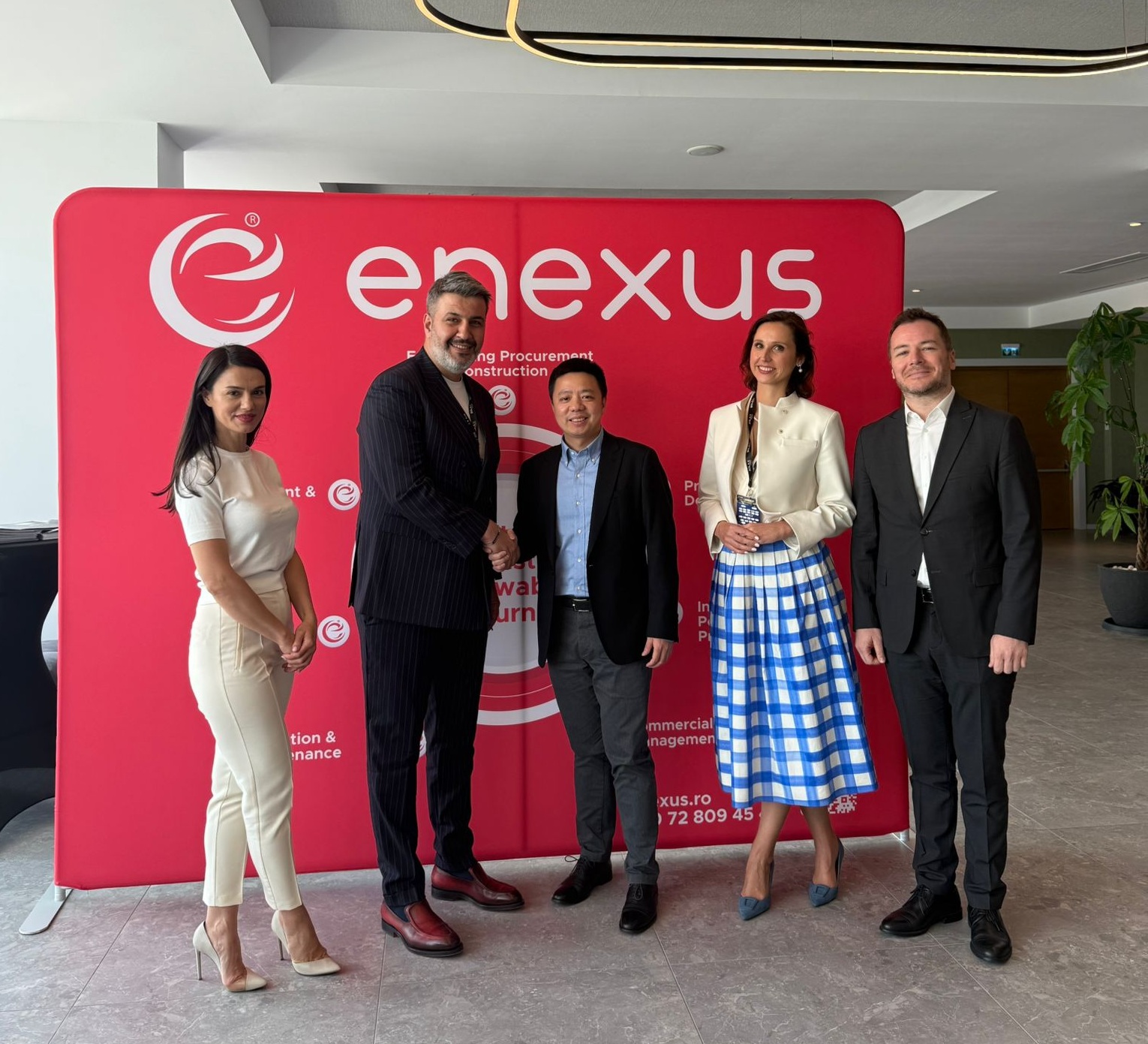
Romania’s solar sector is at a pivotal moment, marked by significant potential juxtaposed with persistent challenges in grid infrastructure and permitting processes. In an exclusive interview, Alina Ștefan, Chief Commercial Officer at Enexus, and Mirel Jarnea, Country Manager of LONGi România, delve into how their partnership is reshaping solar investment and execution in one of Europe’s fastest-growing renewable markets.
The two executives highlight that Romania’s fundamentals—competitive energy production costs, access to EU funding, and rising industrial demand—make the market “too attractive to ignore,” despite regulatory hurdles. Their collaboration goes beyond the conventional supplier-contractor model, emphasizing the delivery of reliable, connection-ready assets that investors can trust for 20–30 years.
Their technology-to-bankability approach, demonstrated through milestone hybrid projects like the one implemented in Gorj county, is setting new benchmarks for speed, reliability, and investor returns. With Enexus targeting 600 MW in 2025 and LONGi expanding its integrated PV, storage, and hydrogen strategy, both companies see Romania as a regional launchpad for scalable, sustainable clean-energy solutions.
Investor Priorities: Potential vs. Hurdles
When asked about the importance of market potential versus hurdles from an investor’s perspective, Alina Ștefan emphasized that while hurdles exist, they are solvable with the right local execution and clear project structuring. She pointed out that Romania’s fundamentals make it too attractive to ignore, and investors look for credible partners who can navigate these challenges effectively.
Mirel Jarnea added that potential acts as a magnet for capital, but the ability to navigate hurdles is crucial for a project’s bankability and profitability. He highlighted the need for higher-efficiency technology, such as LONGi modules, to maximize yield despite grid bottlenecks. When paired with Enexus’s proven execution speed, this synergy ensures a faster time-to-revenue.
Technology and Execution Model: Enhancing ROI
The focus on faster returns for investors is central to their approach. Alina Ștefan explained that exceptional quality panels, combined with efficient components, increase project efficiency by up to 10%, have longer life spans, and guarantee better service. Swift EPC execution from Enexus means quicker grid connection and earlier cash flow, while integrated O&M ensures stable performance and minimal downtime.
Mirel Jarnea added that optimizing the Levelized Cost of Electricity (LCOE) through technological superiority is key. His advanced modules ensure higher energy density, reducing Balance of System (BOS) costs and maintaining superior energy yield in low-light and high-temperature conditions. This intrinsic LCOE advantage, paired with Enexus’s execution speed, delivers an industry-leading bankability profile and ROI.
Lessons from the Gorj Project
The 20.4 MW hybrid solar + storage project in Gorj was presented as a milestone. Alina Ștefan noted that the project proved Romania’s readiness for hybrid projects, highlighting three important lessons: technical integration must be planned from day one, strategic confidence in Romania’s capabilities grew, and success depends on trusted partners who deliver on time and at quality.
Mirel Jarnea emphasized that the Gorj project confirmed the critical bankability of integrated PV-storage solutions in the volatile Romanian market. The key takeaway is that coupling high-efficiency modules with BESS is vital for grid resilience and peak-price revenue capture, offering a hedge against grid unpredictability.
Future Outlook for the Romanian Solar Market
Looking ahead, Alina Ștefan expects strong investor appetite, with Romania needing to almost double solar capacity by 2030 to meet EU targets. Regulation is gradually improving, but the real shift will come from grid upgrades and digitalization. Competition will intensify, but partnerships between global tech providers and agile local players have the potential to dominate.
Mirel Jarnea believes Romania’s investment appeal remains solid due to the EU’s 2030 solar targets, driving sustained momentum for new projects. The regulatory environment is evolving positively, particularly with the push for mandatory BESS integration and CfD auctions promoting bankable assets.

Enexus Growth and Key Projects
Enexus grew tenfold in 2024 and now aims to reach 600 MW in 2025. Alina Ștefan attributed this growth to trust from Turkish and international investors, speed of execution, and a focus on mid-size bankable projects. In 2024, they delivered five projects and contracted over 250 MW, including landmark developments in Gorj and Dâmbovița.
She emphasized that 2025 will scale this momentum, with over 350 MW in pipeline and projects across multiple regions, many from investors placing their capital with Enexus for the second or third time.
Balancing Investor Expectations and Long-Term Development
Alina Ștefan explained that balancing investor expectations for quick returns with long-term infrastructure development involves aligning timelines and expectations early. By clearly explaining the country landscape and particularities, investors understand the medium and long-term nature of projects. Accelerating execution speed, procurement quality, and grid connection builds confidence for the long-term horizon.
Expansion into Other Markets
Alina Ștefan highlighted that managing projects across borders demands a dual perspective, combining global standards with local realities. Romania taught them how to combine these elements, and the experience is transferable, making the company effective in the Black Sea region.

Technical Advantages of Hi-MO 7 Modules
Mirel Jarnea discussed the technical advantages of LONGi’s Hi-MO 7 modules, emphasizing their superior bifaciality and power temperature coefficients. These features boost energy yield in Romania’s climate, especially in dusty or snow-covered areas, and combat efficiency losses during hot summer peaks. This translates directly to a lower LCOE for investors, maximizing returns and ensuring stable power output essential for seamless grid integration.
Transparency and Financial Data
Transparency is central to LONGi’s philosophy, with open communication about traceability, bankability, and financial performance. They share this information openly, from third-party bankability reports to financial performance, to build confidence and de-risk projects for partners.
Synergies with Hydrogen Projects
Mirel Jarnea sees profound synergies between their solar module business and green hydrogen projects in Romania. High-efficiency modules provide affordable, reliable renewable power for electrolyzers, supporting national priorities. Integrating solar technology with hydrogen equipment offers a complete, optimized, and bankable “solar-to-hydrogen” package.
Beyond solar technologies, LONGi is strategically moving into Battery Energy Storage Systems (BESS), reflecting their long-term vision to be a complete clean energy solution provider committed to global decarbonisation and net-zero targets.


