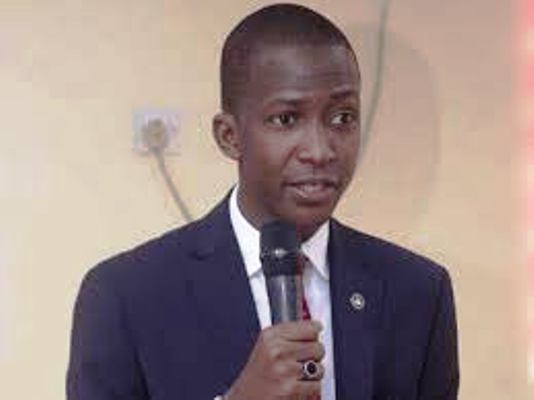
EFCC Chairman Reflects on Two Years of Reform and Achievement
Ola Olukoyede, the Chairman of the Economic and Financial Crimes Commission (EFCC), recently marked his second anniversary in office by addressing journalists at the agency’s headquarters in Abuja. During this occasion, he highlighted the significant reforms and achievements made under his leadership over the past two years.
Olukoyede, who was appointed on October 18, 2023, and confirmed by the Senate the following day, emphasized that the EFCC has made unprecedented progress in combating economic and financial crimes. His remarks were delivered through the Director of Public Affairs of the Commission, Commander CE Wilson Uwujaren.
Record-Breaking Achievements
One of the most notable achievements during this period is the recovery of N566 billion along with other currencies and assets. The Commission also reported receiving over 19,000 petitions, conducting 29,240 investigations, filing 10,525 cases in court, and securing 7,503 convictions between October 2023 and September 2025.
The recovered funds include:
– ₦566,319,820,343.40
– $411,566,192.32
– £71,306.25
– €182,877.10
– Other foreign currencies
In addition to monetary recoveries, the EFCC recovered 1,502 non-monetary assets, including:
– 402 properties in 2023
– 975 properties in 2024
– 125 properties so far in 2025
Among these recoveries are two landmark assets: the final forfeiture of 753 units of duplexes in Lokogoma, Abuja, and the forfeiture of Nok University, now the Federal University of Applied Sciences, Kachia, Kaduna State.
High-Profile Cases and International Cooperation
Olukoyede mentioned several high-profile cases prosecuted during this time, involving former governors and ministers. These include:
– Former governors Willie Obiano, Abdulfatah Ahmed, Darius Ishaku, Theodore Orji, and Yahaya Bello
– Former ministers Olu Agunloye, Mamman Saleh, Hadi Sirika, Charles Ugwu
– Former Central Bank Governor Godwin Emefiele
In December 2024, the Commission arrested 792 suspects involved in investment and cryptocurrency fraud in Lagos, including 192 foreigners who were prosecuted and deported. This move sent a strong message against cybercrime in Nigeria.
The EFCC also revisited and revived several long-standing corruption cases, such as those involving:
– Fred Ajudua
– Haliru Bello Mohammed
– Sambo Dasuki
– Ngozi Olojeme
National Initiatives and Internal Reforms
Part of the recovered funds has been allocated to key national initiatives, including the Students Loan Scheme and Consumer Credit Scheme, with a total of ₦100 billion invested. Other government agencies, such as the Niger Delta Development Commission (NDDC), Asset Management Corporation of Nigeria (AMCON), Federal Inland Revenue Service (FIRS), and National Health Insurance Authority (NHIA), have also benefited from returned funds.
The EFCC established a Task Force on Naira Abuse and Dollarisation of the Economy, which has had a significant impact on currency operations. The campaign against naira abuse, racketeering, and speculative currency trading has helped reduce pressure on the naira and supported the Central Bank’s efforts in stabilizing the economy.
Cybercrime and International Partnerships
Olukoyede emphasized the renewed focus on tackling cybercrime through both enforcement and prevention. The Commission convened a National Cybercrime Dialogue in January 2024, bringing together traditional rulers, religious leaders, academics, and youth representatives. This was followed by the National Cybercrime Summit in October 2024, where Nigeria’s First Lady, Senator Oluremi Tinubu, unveiled the Cybercrime Response Centre.
The EFCC has strengthened partnerships with foreign law enforcement agencies, including the Korean Police, Royal Canadian Mounted Police, Spanish Police, and German Police. Cooperation with the FBI, the UK’s National Crime Agency (NCA), INTERPOL, and Japan’s JICA has led to joint investigations and repatriation of stolen assets to victims in Spain, Canada, and the United States.
Regional Leadership and Internal Reforms
As President of the Network of National Anti-Corruption Institutions in West Africa (NACIWA), Olukoyede led the establishment of a permanent secretariat in Abuja. He was recently re-elected for a second term, marking a historic moment for the regional body.
Internally, the EFCC has undergone significant reforms, including the establishment of the Directorate of Fraud Risk Assessment and Control (FRAC) to strengthen corruption prevention. The Department of Internal Affairs was renamed the Department of Ethics and Integrity to reflect the renewed focus on professionalism and accountability.
New zonal directorates have been created in Ekiti, Anambra, and Katsina States, bringing the total to 17. The new EFCC Academy in Giri is under development, featuring a Cybercrime Research Centre. Other specialized units include the Digital Transformation and Innovation Unit, International Assets Tracing and Recovery Unit, and Visa Fraud Section.
Commitment to Integrity and Professionalism
Olukoyede reaffirmed his commitment to integrity and professionalism within the Commission. He emphasized that all staff were directed to declare their assets upon his assumption of office. Those who breached ethical standards were sanctioned, with 55 officers dismissed over misconduct.
While errant staff have been disciplined, hardworking officers have been rewarded through promotions, provision of CNG buses, and payment of allowances. The FRAC Department ensured the successful delivery of more than 80 percent of the Presidential CNG Buses in 2024.
The EFCC launched EFCC Radio 97.3FM, Nigeria’s first anti-corruption radio station, as a platform for public sensitization and awareness. The Commission is currently undergoing a rebranding process to realign its core values with its renewed vision of integrity and professionalism.


