A Personal Perspective on the Levant’s Path to Peace
In a recent opinion editorial, U.S. envoy Tom Barrack emphasized the critical need for Lebanon to address the issue of Hezbollah’s disarmament, warning that failure to act could lead to a “major confrontation” between Israel and the group. His remarks, shared as a personal reflection, highlighted the broader geopolitical landscape in Syria and Lebanon, framing them as pivotal components in the pursuit of peace across the Levant.
Barrack’s op-ed, published on his official X account, offered a comprehensive view of the evolving dynamics in the region. He described October 13, 2025, as a defining moment in Middle Eastern diplomacy, where world leaders gathered in Sharm el-Sheikh to endorse President Donald J. Trump’s vision for renewal and shared prosperity. This event marked a shift from decades of fear and stagnation to a renewed sense of purpose and optimism.
Under Trump’s leadership, a consensus emerged among Arab, Muslim, and Western nations, aiming to replace paralysis with progress and isolation with inclusion. For the first time in a century, a genuine understanding began to take shape, suggesting that the Middle East could weave a new tapestry of cooperation. The truce in Gaza evolved into something greater: the first tesserae in a renewed mosaic of partnership.
Syria: The Missing Piece of Peace
Yet, the next two vital pieces of this architecture of peace remain incomplete. First, Syria: fractured and weary after years of war, it stands as both a symbol and test of whether this new regional order can truly endure. The winds of reconciliation that began in Gaza must now cross Israel’s northern frontier and breathe life into Syria’s redemption.
The U.S. Senate has already demonstrated foresight by voting to repeal the Caesar Syria Civilian Protection Act, a sanctions regime that served its moral purpose against the previous, treacherous Assad regime but now suffocates a nation seeking to rebuild. The House of Representatives must now follow suit, restoring to the Syrian people their right to work, to trade, and to hope.
On May 13, 2025, in Riyadh, President Trump announced his intent to lift U.S. sanctions on Syria—a historic pivot from coercion to cooperation. That promise became policy on June 30, when an Executive Order formally revoked most Syria sanctions, effective July 1. These twin actions transformed U.S. policy from punishment to partnership, signaling to investors and allies alike that America now stood for rebuilding, not restraining.
Repeal sanctions is not charity; it is strategy. It unlocks the ability of allies and private investors to rebuild Syria’s power grids, water systems, schools, and hospitals. It unleashes one of the most consequential reconstruction efforts since post-war Europe. Economic vitality remains the surest antidote to extremism; commerce is the bridge from conflict to coexistence.
Lebanon: The Second Frontier
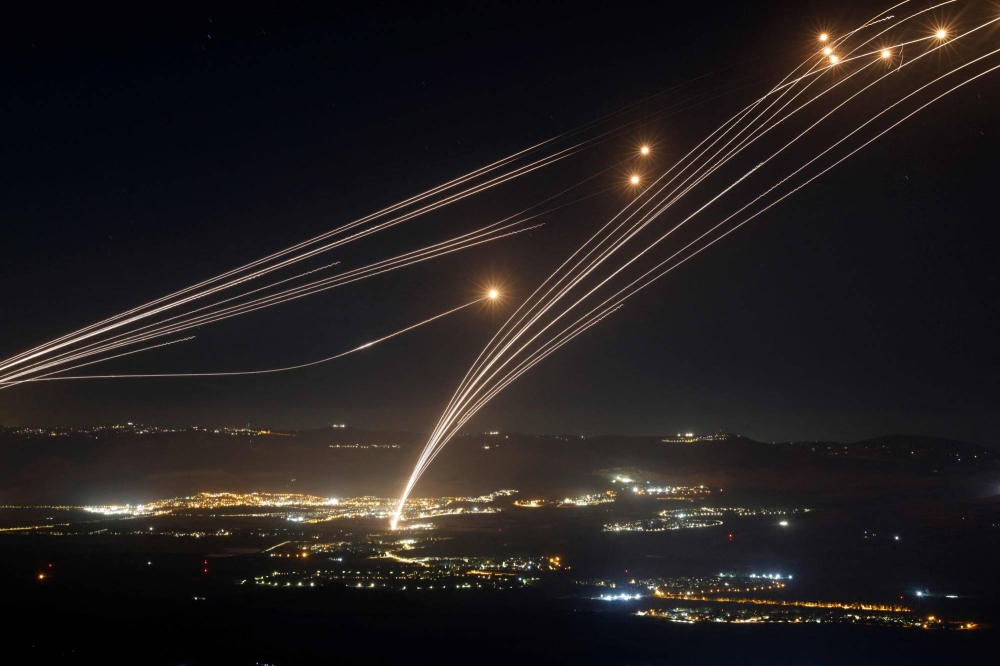
As Syria reclaims stability with its neighbors, including Israel and Türkiye, it forms the first leg of Israel’s northern security framework. The second leg must be the disarmament of Hizballah within Lebanon and the beginning of security and border discussions with Israel.
The Biden Administration-sponsored 2024 Cessation of Hostilities Agreement sought to halt escalation but ultimately failed. There was no direct agreement between Israel and Hizballah due to the fact that Lebanon still views dealing with Israel as a crime and consequently no real mechanism for enforcement exists. Iran’s continued funding of Hizballah militia in spite of sanctions and a divided Lebanese Council of Ministers delivering mixed messages to its own Lebanese Armed Forces, who lack the funding and authority to act.
Early this year, the United States offered the “One More Try” plan, a framework for phased disarmament, verified compliance, and economic incentives under U.S.A. and France supervision. Lebanon declined to adopt it due to Hizballah representation and influence in the Lebanese Council of Ministers. Rather the Lebanese Cabinet and Council of Ministers are trapped in sectarian paralysis and are attempting to make a good faith step forward, which Israel has completely discounted.
As Damascus stabilizes, Hizballah grows more isolated. The militia’s foreign control undermines Lebanon’s sovereignty, deters investment, and erodes public confidence and is a constant red flag to Israel. But the incentives for action now outweigh the costs of inaction: regional partners are ready to invest, provided Lebanon reclaims the monopoly on legitimate force solely under the Lebanese Armed Forces.
A Defining Choice for Lebanon
Disarming Hizballah is thus not only Israel’s security imperative; it is Lebanon’s opportunity for renewal. For Israel, it means a secure northern frontier. For Lebanon, it means sovereignty restored and the chance for economic revival. For the United States, it fulfills the President’s peace by prosperity framework while minimizing U.S. exposure. For the broader region, it removes an essential Iranian regime proxy alongside of Hamas and accelerates Arab modernization and integration.
The United States must support Beirut to quickly separate from the Iranian backed Hizballah militia and achieve alignment with the anti-terrorist rhythm of its region before the new wave of zero tolerance for terrorist organizations consumes it.
If Beirut fails to act, Hizballah’s military arm will inevitably face major confrontation with Israel at a moment of Israel’s strength and Iran backed Hizballah’s weakest point. Correspondingly, its political wing will undoubtedly be confronted with potential isolation as it approaches the May 2026 elections.
President Trump’s newly appointed and extremely capable Ambassador to Lebanon, Michel Issa, arrives in Beirut next month to help Lebanon steer a steady course through these complex issues.
Now is the time for Lebanon to act.