Diplomatic Efforts and Internal Struggles in Sudan
As violence escalated in El Fasher, with civilians fleeing the area amid mounting conflict, representatives of the Quad met in Washington to oversee indirect talks between the paramilitary Rapid Support Forces (RSF) and the Sudanese Armed Forces (SAF). The discussions were anticipated to result in a three-month humanitarian truce. According to diplomatic sources, the first day of negotiations brought cautious optimism, but disagreements on the second day disrupted the process, ultimately leading to the collapse of the talks as the United Arab Emirates blocked a humanitarian truce in El Fasher.
General Burhan’s Diplomatic Push
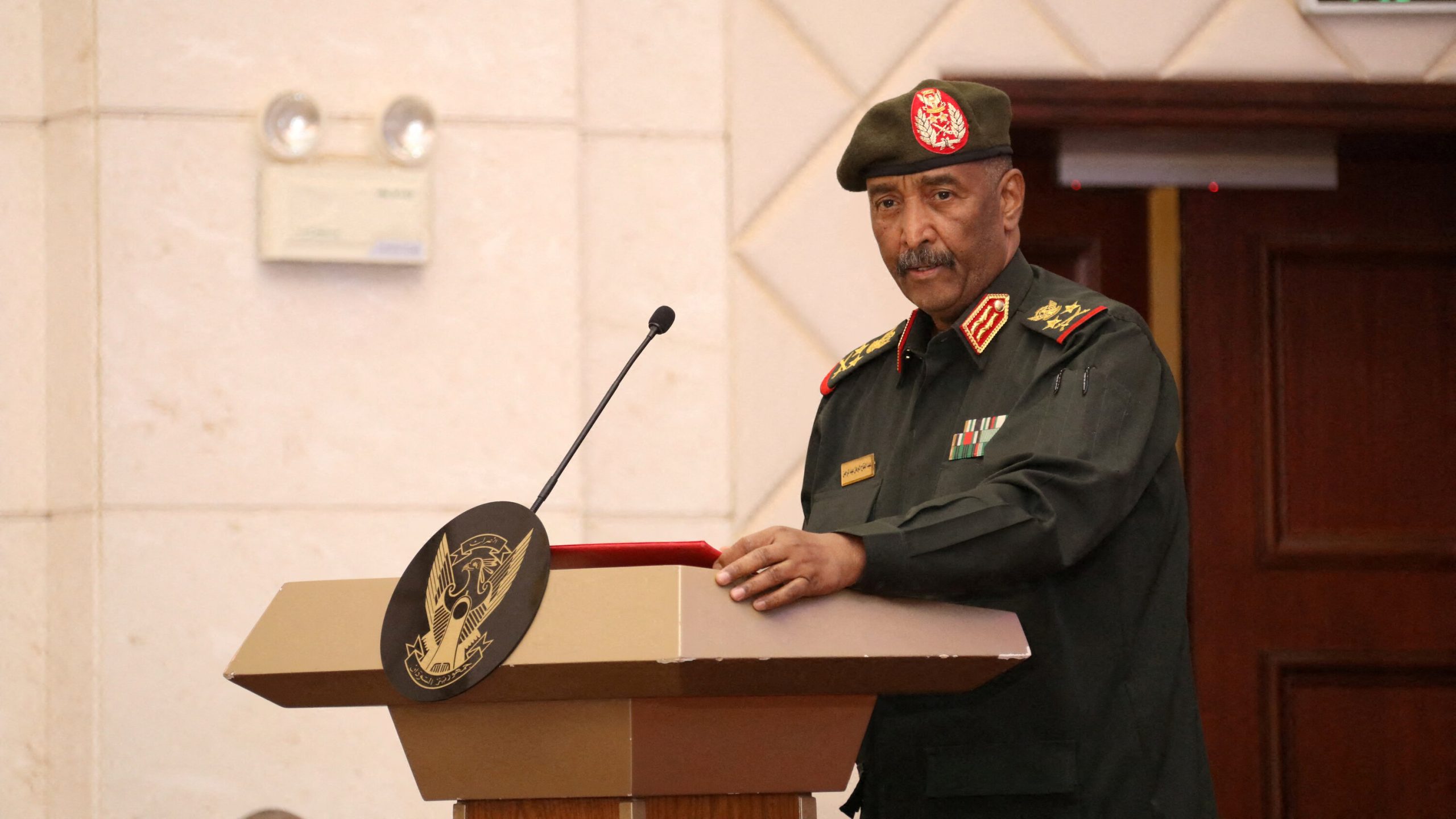
Sudan’s army chief, General Abdel Fattah al-Burhan, has been intensifying diplomatic efforts to secure regional and international support while grappling with internal challenges and external pressures. Earlier this month, he met with Egyptian President Abdel Fattah al-Sisi in Cairo, where he admitted facing serious internal challenges in creating conditions conducive to peace talks. The general reportedly sought political backing from al-Sisi to stabilize his leadership and strengthen his position in potential negotiations aimed at ending Sudan’s ongoing conflict.
Growing Discontent Within the SAF
The meeting occurred amid rising discontent within the Sudanese Armed Forces (SAF), particularly among officers aligned with Islamist factions who viewed al-Burhan’s outreach to the United States and Israel with deep suspicion. This tension has led to significant changes within the military structure.
The Purge: Retiring Islamist Commanders
Following a meeting with the US Special Envoy to Africa, Massad Boulos, in Switzerland, al-Burhan ordered the retirement of a large number of senior and mid-level SAF officers identified as pro-Islamist. This decision, described by sources as unprecedented in scope, marked a decisive shift in the power balance within the army. The list included 26 officers at the lieutenant rank, 53 brigadier generals, and 26 major generals—interpreted by military insiders as an attempt to consolidate Burhan’s authority by sidelining figures loyal to Sudan’s former Islamist regime.
“This was not just a reshuffle,” said one source familiar with the decision. “It was a political message that Burhan is distancing himself from the Islamists to secure international legitimacy and to reassure his Western partners.”
Unfulfilled Promises
Sources link Burhan’s engagement with American officials to promises of economic cooperation and potential US-backed investment projects in Sudan. During his second meeting in Cairo with Massad Boulos, Burhan raised concerns over delays in the promised economic arrangements. He reportedly reminded Boulos that he had “fulfilled his part” of the understanding reached in Geneva—including cutting ties with Iran and reducing Islamist influence within the army—but had yet to receive any concrete information about the supposed US-linked mining investments.
However, Mossad and other intermediaries appear to have stalled, providing no further details about the investment plans or the companies involved. The lack of follow-through has left him increasingly vulnerable to criticism from hardliners who accuse him of compromising Sudan’s sovereignty for unfulfilled promises.
Washington’s Waning Engagement
While Burhan sought international recognition and support, signals from Washington have been far from encouraging. About a month ago, it was revealed that US State Department officials told several Sudanese and non-Sudanese figures during meetings in Washington that the Trump administration would not pursue a long-term engagement with Sudan. The officials explained that Washington’s role would likely conclude once a ceasefire is achieved—a short-term diplomatic milestone that could be presented as a success for the administration, without committing to deeper post-war reconstruction or political reform.
The same officials made clear that the US government has no plans for financial assistance or a post-ceasefire roadmap, underscoring the limited scope of Washington’s commitment. “The message was clear,” said one person briefed on the meeting. “This administration wants a headline—a ceasefire—not a process. There will be no sustained support afterward.”
Institutional Weakness and Policy Drift
Sources further revealed that the US State Department itself has been severely weakened by recent administrative restructuring decisions made under President Trump. What was once a dedicated Sudan and South Sudan office—previously handling crisis coordination, diplomacy, and peace negotiations—has now been folded into the broader East Africa division, leaving fewer staff and less institutional focus on Sudan.
This administrative downgrade, according to one diplomat, has “paralysed” the department’s response capacity and slowed down coordination with both regional partners and humanitarian agencies operating in Sudan. US officials privately encouraged Sudanese civilian leaders to lobby for the appointment of a Special Envoy for Sudan, arguing that such a position would restore focus and accelerate engagement in the peace process. But without strong political will from Washington, the recommendation remains largely symbolic.
Burhan’s Calculated Assurances
Upon returning to Port Sudan, his current base of operations, Burhan convened an emergency meeting of the Security and Defence Council, according to sources in the army. During the session, he briefed his senior officials on the assurances he had given to both the Americans and the Egyptians during his recent diplomatic engagements.
According to the sources, Burhan informed the council that he had pledged Sudan’s commitment to the Quadrant’s peace efforts—the joint diplomatic grouping of the United States, the United Kingdom, Saudi Arabia, and the United Arab Emirates—and reaffirmed his promise to cut all remaining ties with Iran. He also stressed to the Egyptians his willingness to coordinate politically and militarily with Cairo to ensure stability along their shared border and counter regional threats. Additionally, Burhan reiterated Port Sudan’s continued adherence to the Abraham Accords, underscoring that Port Sudan’s leadership remains committed to maintaining cooperation with Israel as part of a broader effort to restore Sudan’s international legitimacy.
Burhan intended these assurances to show loyalty to his external allies and to assert control over his domestic front. Yet, his reliance on foreign validation continues to fuel criticism from within SAF, where many officers view his diplomatic overtures as evidence of weakness and dependency.
A Fragile Balancing Act
Burhan’s recent actions demonstrate a leader balancing competing pressures, including internal dissent, regional rivalries, and shifting international priorities. His efforts to purge Islamist officers and align them with Western powers may consolidate his control in the short term, but he also risks deepening polarisation within the military and alienating influential networks that once anchored his authority.

Related posts:

Fiction park: He was the best in class. He still wasn’t good enough

Gagan Thapa takes oath as Congress president, vows to regain public trust

Inside knowledge that has locals gripped by fear after gran’s body found decomposing in cattle dip

New property purchase disclosure rule in Japan sparks fears it may curb foreign investment

Dino-mite treasures: inside Singapore’s Fort Knox storing playthings of ultra-rich