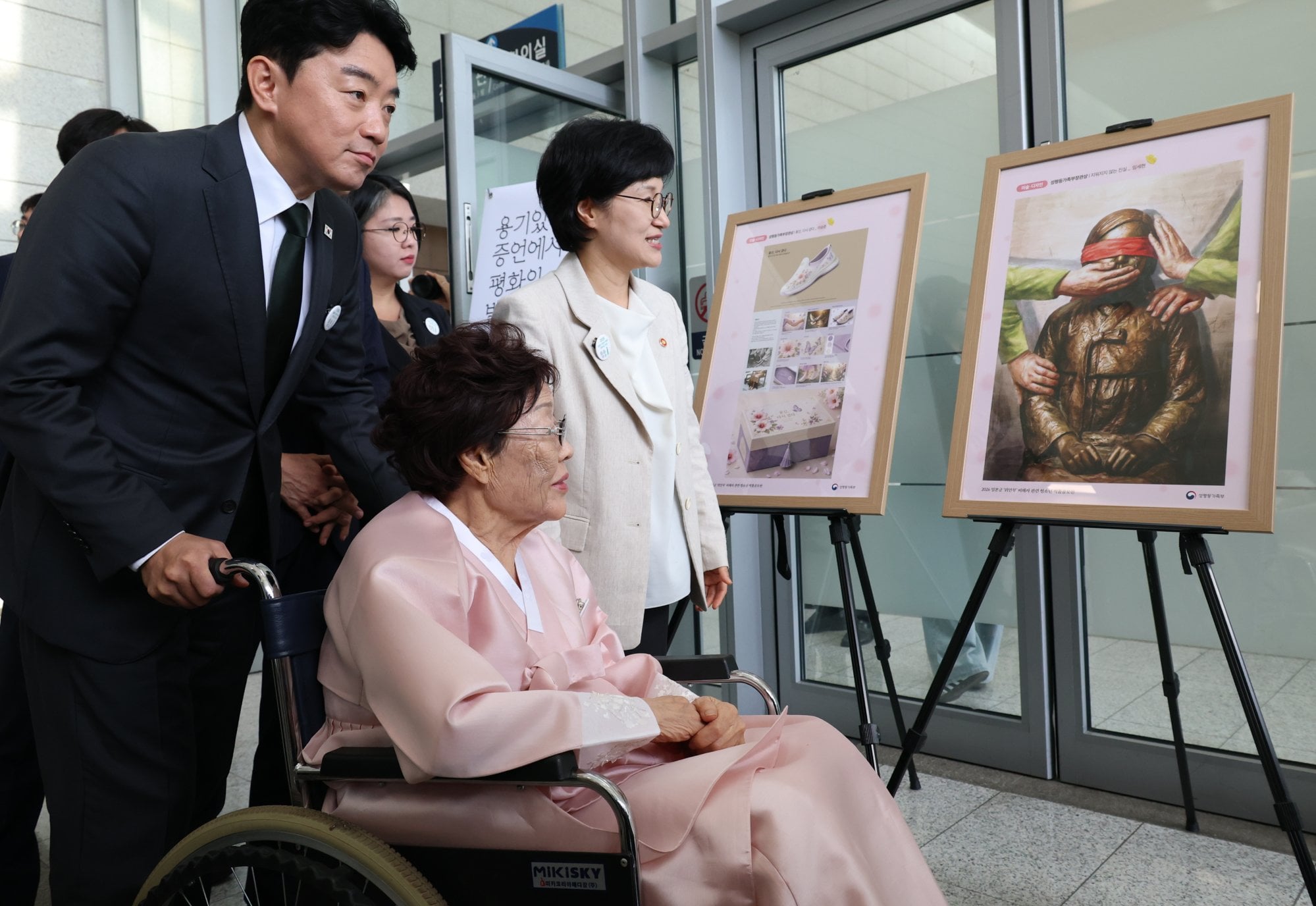
The issue is set to continue rattling ties between Tokyo and Seoul even as they seek to find common ground on security and trade issues
South Korean citizens’ groups have called for the abuse of wartime “comfort women” to be recognised by Unesco, as analysts say the ongoing feud between Seoul and Tokyo threatens to upset recent improvements in their relations.
They also suggest that the two nations would benefit from working together at a time of unprecedented regional and global security and economic challenges, although they admit that may be impossible.
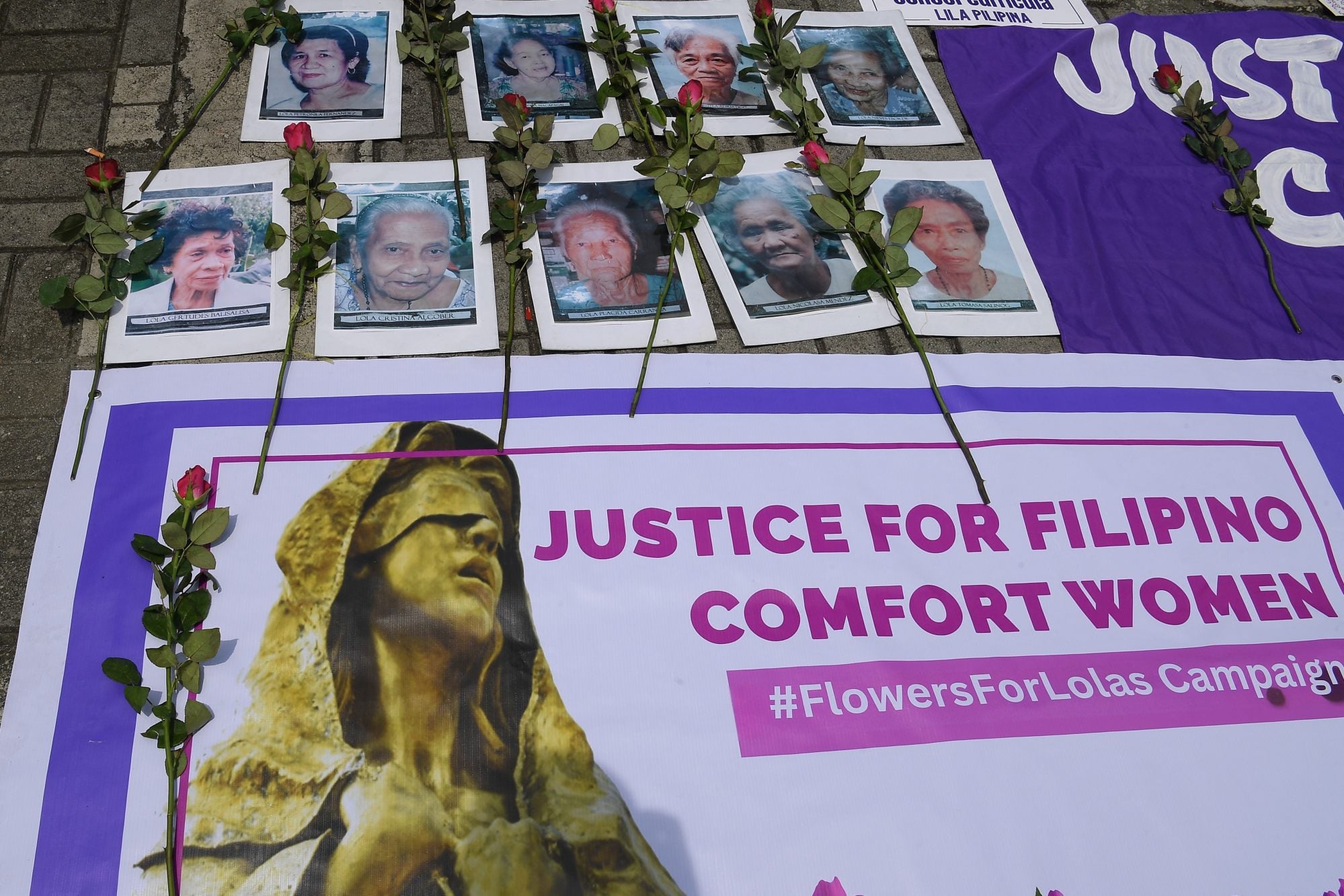
On Sunday, a coalition of South Korean citizens’ groups called on the United Nations Educational, Scientific and Cultural Organisation to move forward with the listing of documents about wartime comfort women on its Memory of the World Register.
Do you have questions about the biggest topics and trends from around the world? Get the answers with SCMP Knowledge, our new platform of curated content with explainers, FAQs, analyses and infographics brought to you by our award-winning team.
The request was made at a press conference in Seoul more than a decade after groups from eight countries first requested that Unesco collate and preserve victims’ testimonies and other paperwork related to the sexual slavery of women from across Asia imposed by Japanese troops.
It comes after the Korean Supreme Court on August 12 dismissed an appeal by Japan‘s Nippon Steel against a lower-court ruling in South Korea that ordered the company to pay 80 million Korean won (US$59,528) to the family of the late Min Moon-sik for forced labour in 1942. The previous month, Unesco passed a resolution at its World Heritage Committee meeting in Busan insisting that Japan present the “whole history” of forced labourers – including more than 1,500 Koreans – who worked during Japan’s colonial era at a mine on the Japanese island of Sado.
More than 80 years after the end of the second world war, it is unlikely that the two nations will see eye-to-eye on their shared history – and particularly the years of Japan’s often brutal occupation of the Korean peninsula in the early decades of the last century, according to analysts.
“I do not think it will ever be possible to have a bilateral alliance in the usual sense between the two nations,” said Toshimitsu Shigemura, a professor of politics at Tokyo’s Waseda University. “Friendship might be possible, but even that will not be easy.”
Japan was at fault for failing to apologise to the nascent Korean nation immediately after its surrender in 1945 and for not immediately offering to provide compensation for its 35 years of colonial rule, Shigemura said. It was not until 1965 that the two countries normalised diplomatic relations and Tokyo paid US$300 million in compensation to Seoul.
“Japan should have reflected more carefully on its behaviour sooner after the war and emphasised that we were adopting a constitution committed to peace,” he said. “But on the other hand, I think there are still many people in Japan who consider themselves to be superior to Koreans and that we actually helped to modernise their society.”
Equally, some in Korea blamed Japan for virtually all the nation’s problems and to this day insisted that Tokyo intended to expand its military so it could invade and reoccupy the Korean peninsula again, Shigemura said.
“There have been failures on both sides, and that is why I am not optimistic that the relationship will ever be really strong.”
Robert Dujarric, co-director of the Institute of Contemporary Asian Studies at the Tokyo campus of Temple University, likened the relationship to the similarly troubled ties between England and Ireland. The two countries have had disagreements over past sectarian violence in Northern Ireland, which is part of the UK, and Dublin calling for a vote to allow the Northern Irish to decide on reunification.
“I do not think Japan and South Korea will ever be able to have what I would call ‘normal’ relations,” he said. “There will always be irritants, so the question is how the two governments control those situations to make sure they do not degenerate.”
Dujarric said he hoped that the Japanese government would not comment on the Unesco documents request, although he expressed concern that conservative groups in Japan would be unable to let go of the opportunity to criticise their neighbour.
Criticising the request and becoming embroiled in debates on the other historical issues would only escalate the rivalry and potentially return the relationship to the lows it experienced in 2018 and 2019, when the row over the sovereignty of Korean-held Dokdo island came to the fore, and a Korean warship locked its radar onto a Japanese maritime patrol aircraft.
On the trade front, Japan imposed new restrictions on exports of key materials critical to South Korea’s semiconductor industry in 2019, triggering a swift boycott by Korean consumers of Japanese goods before the end of the same year. Political leaders in both capitals have in subsequent years worked hard to smooth ruffled feathers, a task arguably made easier by the worsening security situation over North Korea and their separate deepening trade disputes with the US.
In 2019, then-president Moon Jae-in also angered Japan when he reversed the December 2015 “final and irreversible” agreement to settle the comfort women dispute, under which Japan made a formal apology and acknowledged the suffering of the women. Tokyo also paid 1 billion yen (US$8.3 million) that was meant to be disbursed to the former comfort women through a foundation.
“China and North Korea are security problems that both Japan and South Korea have to face up to, but that situation has been made worse by questions over their alliances with this US administration and the trade tariffs that Washington has imposed on its two most important Asian allies,” Dujarric said.
“Seoul and Tokyo are not short of challenges and enemies, so it would clearly be in their best interests to work together,” he said. “Relations are OK at the moment, but there is always potential for something to happen that upsets that – like a Japanese politician going to the Yasukuni Shrine.”
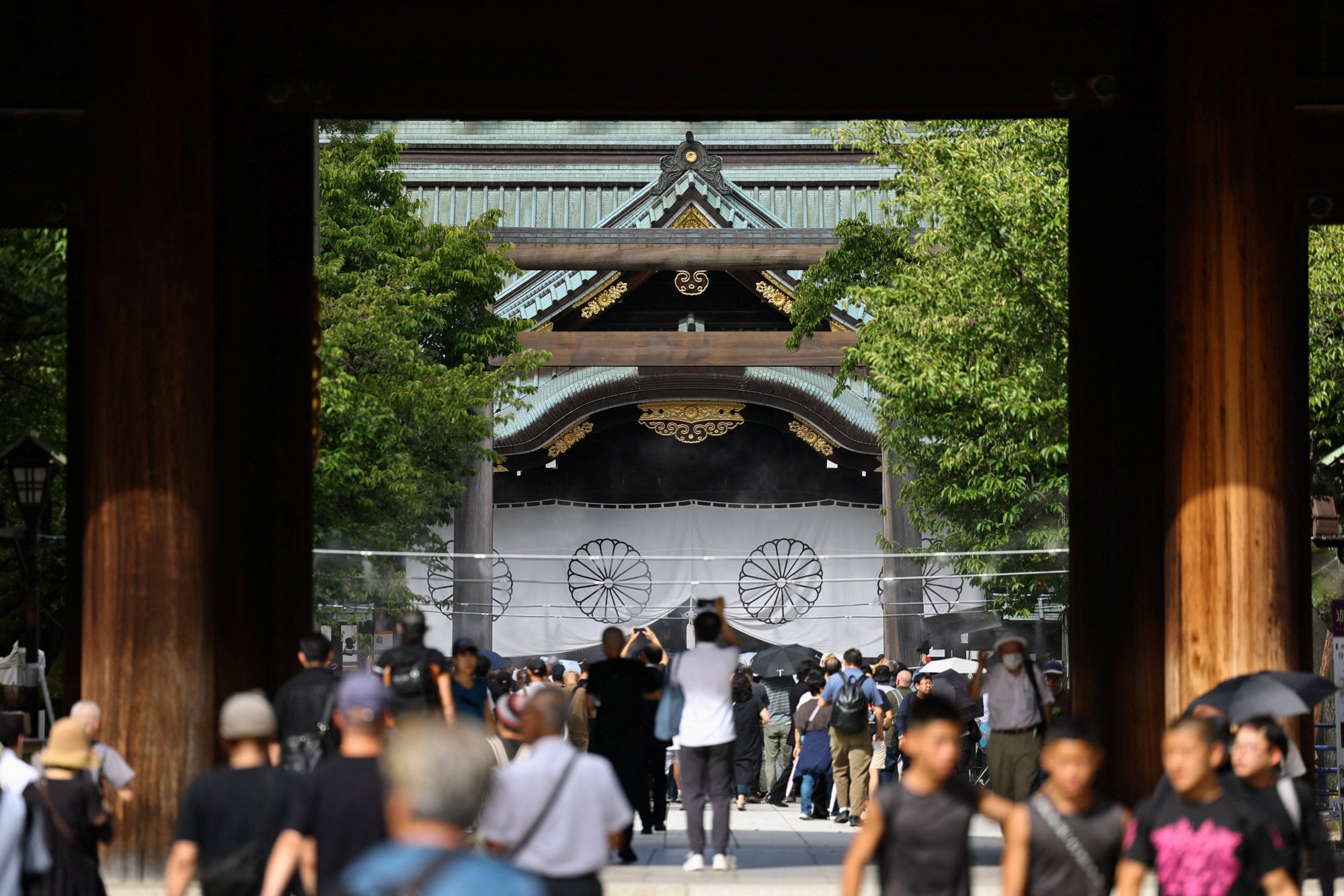
Yasukuni is the last resting place of Japan’s nearly 2.5 million war dead and is controversial because it also honours the memories of 14 Class A war criminals. Japanese Defence Minister Shinjiro Koizumi most recently visited the shrine on August 12, the anniversary of Tokyo’s surrender at the end of the war.
“I hope they can continue to muddle through,” Dujarric said.
Yuji Hosaka, a professor of political science at Korea University in Sejong city and an adviser to the South Korean government on Japan relations, is also pessimistic about the relationship and fears that Tokyo is going to be disappointed if it is holding out hope that the comfort women issue will come to a natural end when the last surviving victim dies.
“There are many groups in South Korea that were not satisfied with the 2015 comfort women agreement, and one of the survivors, Lee Yong-soo, is still very active in promoting their campaign,” said Hosaka.
“I met her recently, and it is clear that she has great power to push the citizens’ movement forward,” he said, pointing out that there were just five former comfort women alive today.
“I recently met another woman who told me that her mother was also a victim, and she said she was committed to continuing the movement even after the last of them has died,” he said.
The South Korean government of President Lee Jae Myung was presently “quiet” on the issue of historical issues with Japan, Hosaka said, but behind the scenes they were being “very helpful” to victims of Tokyo’s colonial rule.
More Articles from SCMP
How Hong Kong artisan perfume house Floriography bottles memories and the city’s vibes
Hong Kong emerges as leading Asian study destination for Kazakhstani students
Songmont, Bosideng and other Chinese fashion brands taking Eastern aesthetics global
This article originally appeared on the South China Morning Post (www.scmp.com), the leading news media reporting on China and Asia.
Copyright (c) 2026. South China Morning Post Publishers Ltd. All rights reserved.

Related posts:

Fiction park: He was the best in class. He still wasn’t good enough
Gagan Thapa takes oath as Congress president, vows to regain public trust

Inside knowledge that has locals gripped by fear after gran’s body found decomposing in cattle dip
New property purchase disclosure rule in Japan sparks fears it may curb foreign investment

Dino-mite treasures: inside Singapore’s Fort Knox storing playthings of ultra-rich