
Hong Kong universities attracting growing number of students from Central Asian country, with enrolment up by 408 per cent in eight years
Kazakhstan has recorded the largest student population and fastest enrolment growth at Hong Kong’s public universities among Central Asian countries in recent years, according to official data, while students from the country say the city is the most preferred regional higher education destination in Asia among their peers.
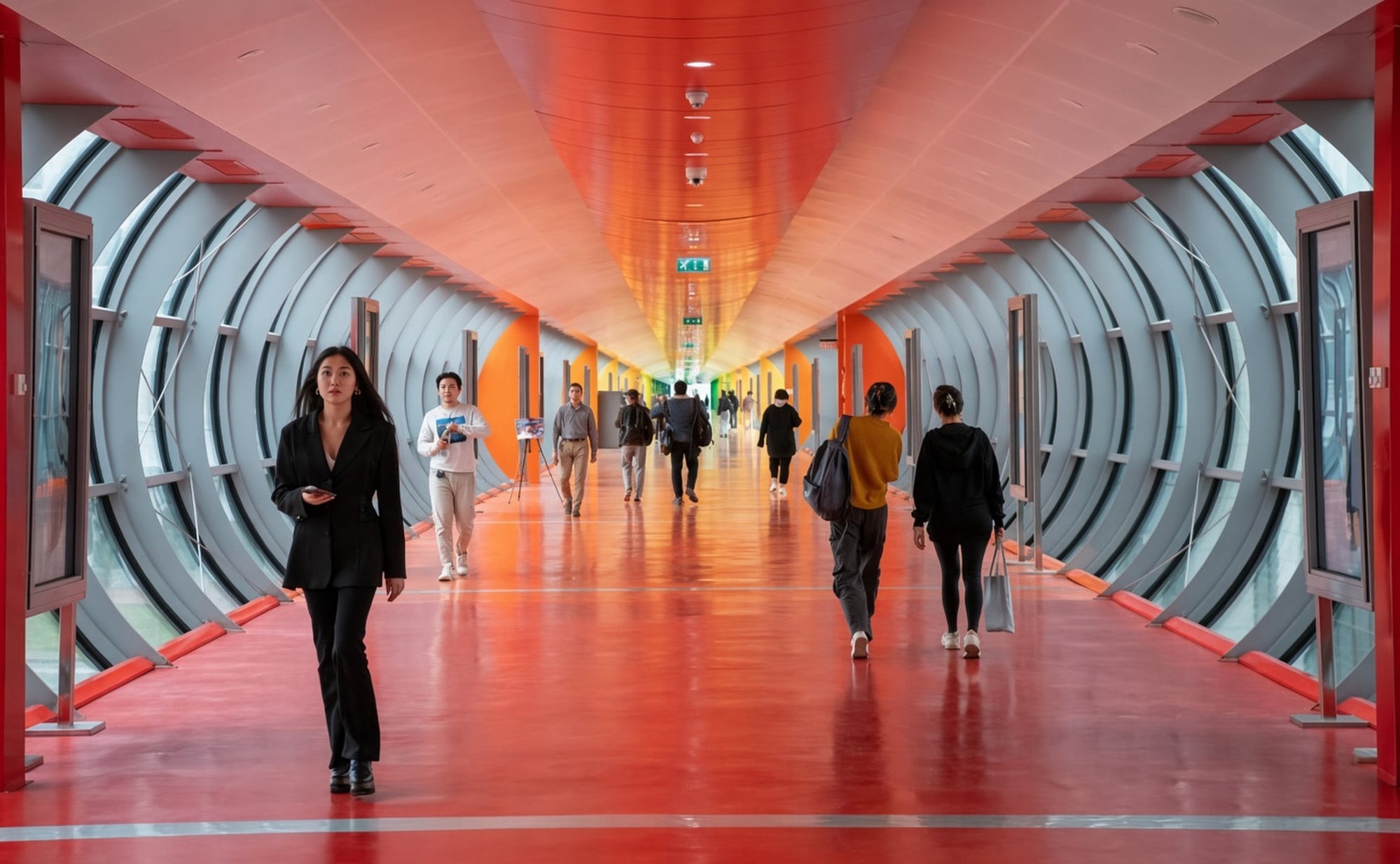
Among Hong Kong’s tertiary education institutions, City University (CityU) enrolled the largest share of Kazakhstani students.
CityU council chairman Michael Ngai Ming-tak told the South China Morning Post that students from Kazakhstan were among the university’s top-performing undergraduates and that the country’s government was committed to educating its young people.
Do you have questions about the biggest topics and trends from around the world? Get the answers with SCMP Knowledge, our new platform of curated content with explainers, FAQs, analyses and infographics brought to you by our award-winning team.
According to University Grants Committee (UGC) figures, Kazakhstan accounts for the largest number of students studying at Hong Kong’s publicly funded universities among the five countries that make up Central Asia.
The number of Kazakhstani students at the universities rose from 97 in the 2017-18 academic year to 493 in 2025-26, an increase of 408 per cent – the highest growth rate among Central Asian countries.
CityU enrolled 203 Kazakhstani undergraduates this year, a record 49 per cent rise from 135 the previous academic year.
Assem Kanabek, a third-year chemistry undergraduate at CityU, said Hong Kong’s proximity to her hometown, its Asian culture and the quality of its universities had prompted her to choose the city.
The 20-year-old is also the recipient of a CityU Entrance Scholarship, which covers full tuition fees and provides a living allowance.
“For me, I’ve always wanted to stay in Asia, closer to home. I know a lot of people from my cohort of high school students wanted to apply to the Ivy League or America or the UK. But I always felt like Asia is just a closer culture, would be a closer culture to me,” she said.
Kanabek said she had considered South Korea and Japan as well, but believed Hong Kong had Asia’s best universities, particularly for her subject.
She added that Hong Kong was also a popular destination in Asia among her peers.
“For my cohort of high school students, we had a countrywide group chat where a lot of people were applying for universities … there was specifically a group about Asian universities,” she said.
“In that group, maybe about 60 per cent plan to or are already seniors in Hong Kong.”
She added that the growing Kazakhstani community in Hong Kong had also made the city more attractive to people in her hometown.
“Out of all the places in Asia, Hong Kong is the most popular choice,” she said.
“There’s also a lot of support from Kazakh people who might have already graduated, who work here, who study here. We’re all really tight-knit, and we all like to try to support each other. We are growing, but we’re still a small community.”
Third-year computer science student Islam Seitzhanov, also 20, said the prospect of a scholarship and the popularity of his programme at the university were among his main reasons for choosing Hong Kong.
“From my childhood, I wanted to stay in Asia a lot. I had three top destinations. They were at the same level for me – Korea, Hong Kong and Singapore … I decided to stay in Hong Kong because CityU offered me a scholarship,” he said, referring to the university’s Entrance Scholarship.
He added that most Kazakhstani students at the university studied computer science, and that career opportunities in the city were another reason young people from the country chose Hong Kong.
“They think Hong Kong is a very rapidly growing city and it’s also a business centre in Asia. That’s why they think that they have a lot of opportunities here,” he said.
“We have students who have graduated [in Hong Kong] already. They talked to high school students and recommended it because they find that this is a really great space to flourish.”
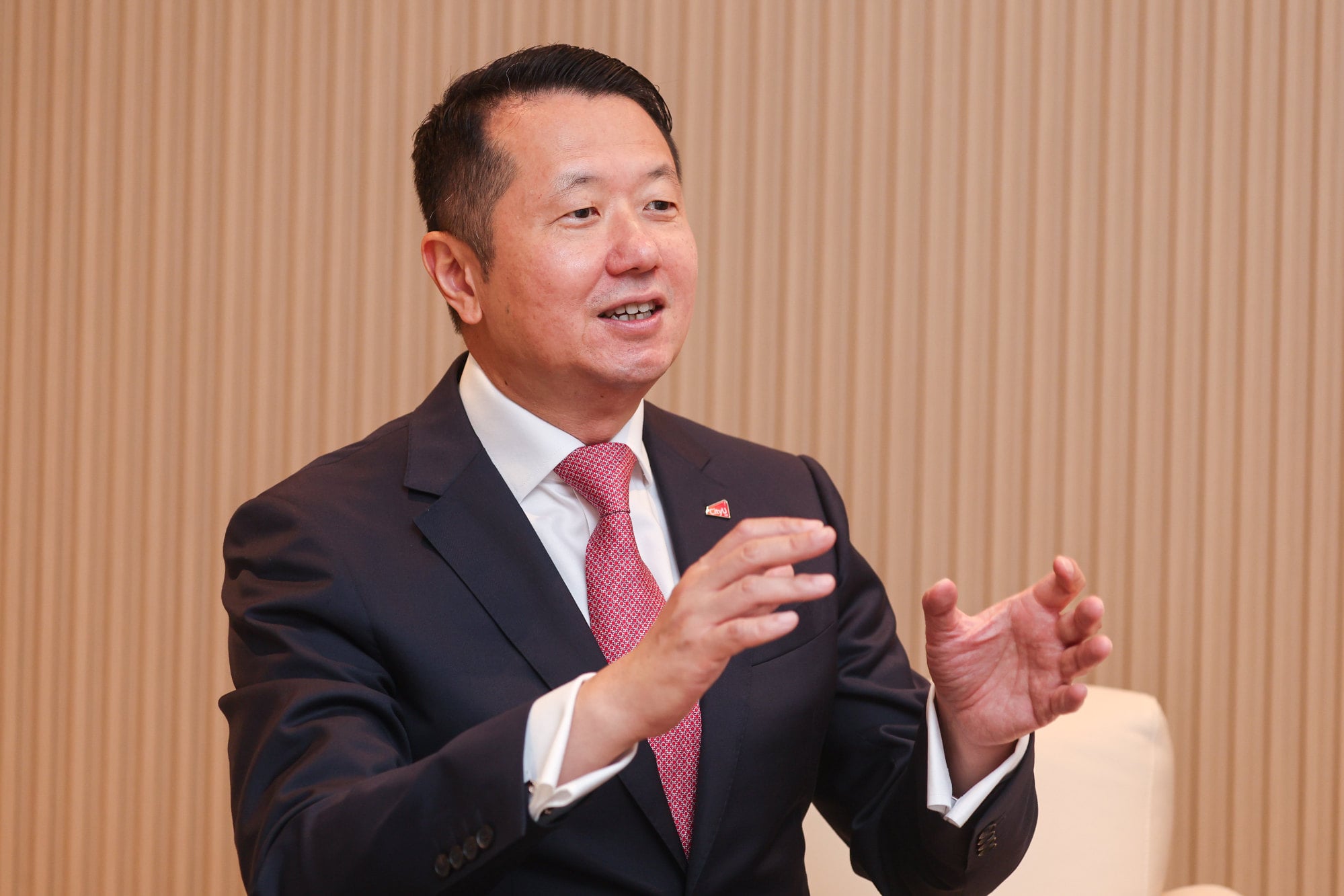
CityU council chairman Ngai said the first sharp rise in Kazakhstani student admissions had come after the university signed a memorandum of understanding (MOU) with the Central Asian country in 2023 to promote academic exchanges, talent development and research.
That agreement was followed by various other partnerships and collaborations.
“We can see that the government has the ambition to grow and also to train the young generation,” he said.
Ngai said students from the country were among CityU’s strongest academic performers.
“We have done statistics on the performance and the results of our students. The best performers in our university, on average, are Kazakh students,” he said.
He added that having the students learn in Hong Kong was a win-win situation.
“The government and the companies in Kazakhstan told us that the bottleneck for its growth is talent development. So that’s why they are sending students and professionals to Hong Kong,” he said.
“Hong Kong’s status as a finance centre will also benefit from the arrival of the students and professionals from Kazakhstan.”
The four other Central Asian countries – Uzbekistan, Kyrgyzstan, Tajikistan and Turkmenistan – have also continued to send students to Hong Kong in recent years, according to UGC figures.
The number of Uzbekistani students at Hong Kong’s public universities rose from one in 2017-18 to 29 in the most recent academic year.
The Hong Kong University of Science and Technology (HKUST) and the University of Hong Kong had the largest number of Uzbekistani students, with nine each in 2025-26.
Kyrgyzstan also had nearly 50 students in Hong Kong. Enrolment rose from nine students in 2017-18 to a peak of 102 in 2021-22 before falling to 47 in 2025-26. CityU had the highest number of students from the country.
Tajikistan had a comparatively small student population in Hong Kong. Its total peaked at 11 in 2020-21 and then steadily declined to four in 2025-26.
Turkmenistan had only two students studying in Hong Kong in 2025-26, both at HKUST.
Central Asia is a strategic region for China’s Belt and Road Initiative, the global infrastructure and trade strategy announced by Chinese President Xi Jinping in 2013.
The Hong Kong government has awarded dedicated scholarships to 833 students from 57 belt and road countries over the past decade for undergraduate and research postgraduate studies in the city.
Indonesia and Malaysia have produced the largest numbers of recipients, with more than 100 students from each country benefiting since 2016-17.
The annual quota for the scholarship was gradually raised from an initial 10 places to 150 for 2024-25. In total, 833 students from the 57 countries have received the scholarship.
The SCMP signed an MOU with Nazarbayev University in Kazakhstan on Monday to promote knowledge exchange between East and Central Asia, and expand Hong Kong’s media presence in the region.
The MOU was signed in Astana ahead of the SCMP’s China Conference: Central Asia 2026, which also examined Kazakhstan’s higher education sector and its collaboration with universities in Hong Kong.
The strategic partnership formalises links between the SCMP and Nazarbayev University – Central Asia’s top-ranked higher education institution – through academic dialogue and knowledge-sharing, and connects the city’s capital and media reach with the region’s tech and resource ecosystem.
More Articles from SCMP
Copper rally sets record price on LME as US tariff fears fuel ‘scramble’ for stockpiles
Could China sanction US for illegal international seabed mining? A study says yes
Asian Games organisers in final push to boost sluggish ticket sales for football, baseball
Hong Kong Ballet takes on China’s Mogao Caves in Dunhuang: In Search of Light
This article originally appeared on the South China Morning Post (www.scmp.com), the leading news media reporting on China and Asia.
Copyright (c) 2026. South China Morning Post Publishers Ltd. All rights reserved.

Related posts:

Fiction park: He was the best in class. He still wasn’t good enough

Gagan Thapa takes oath as Congress president, vows to regain public trust

Inside knowledge that has locals gripped by fear after gran’s body found decomposing in cattle dip

New property purchase disclosure rule in Japan sparks fears it may curb foreign investment

Dino-mite treasures: inside Singapore’s Fort Knox storing playthings of ultra-rich