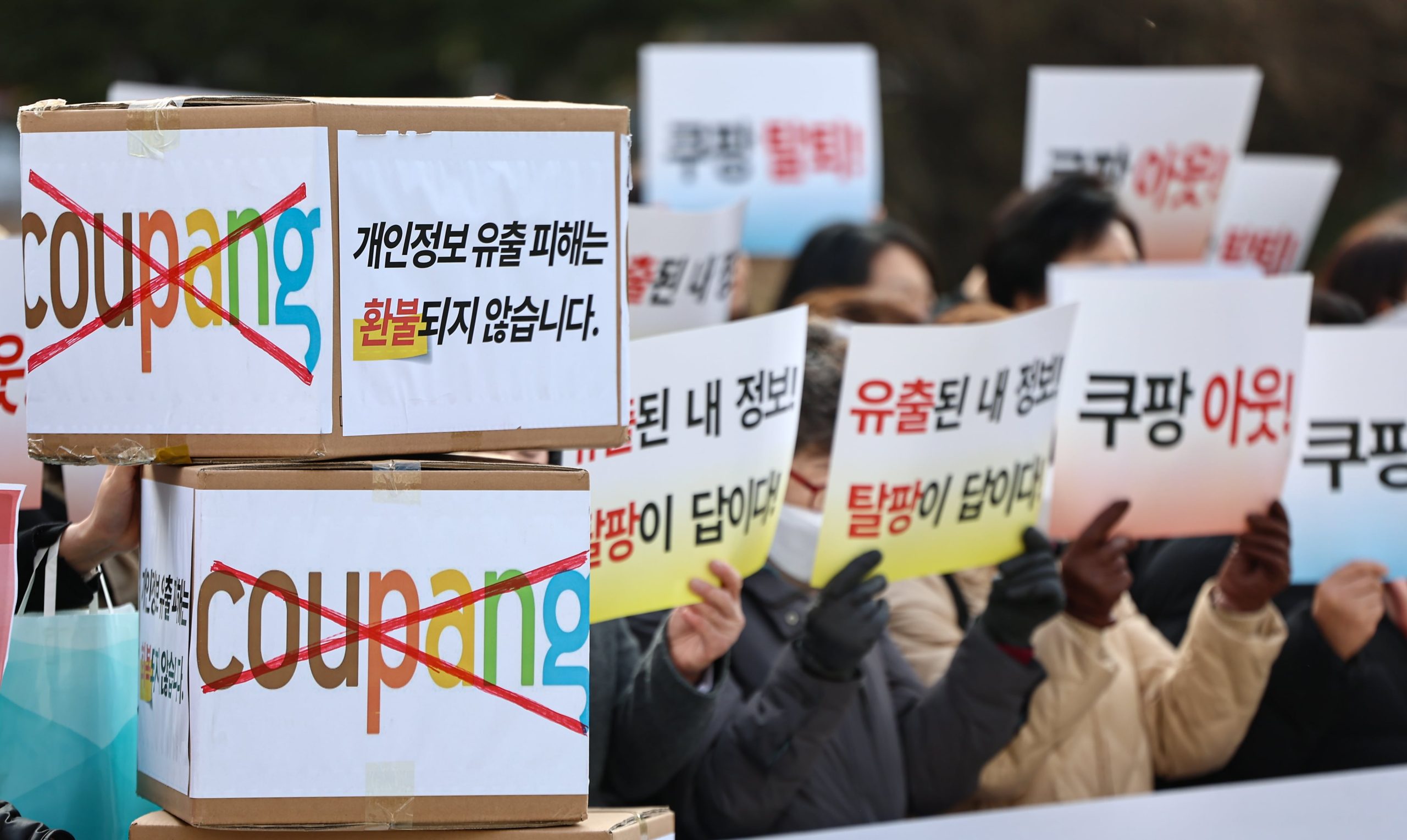
Coupang Inc, the parent company of Coupang, faced a class-action lawsuit from U.S. shareholders four years after its listing on the New York Stock Exchange (NYSE). The lawsuit alleges that the company damaged shareholder value by neglecting a large-scale personal information leak in South Korea. This legal challenge is expected to add pressure on Chairman Kim Bom-suk, who has remained silent amid domestic criticism. If the U.S. court accepts the plaintiffs’ claims and proceeds to a full trial, the U.S.-style “Discovery” system—which requires the disclosure of internal decision-making materials such as meeting minutes and emails—could become a significant burden for Chairman Kim and Coupang Inc.
The core issue is determining the extent of responsibility Coupang Inc, as a U.S.-listed entity, bears for the personal information leak in South Korea. Whether the incident is viewed as an operational issue of the South Korean subsidiary or a major risk the headquarters should have managed will significantly influence the legal liabilities the company and Chairman Kim must bear. During the legal battle, Coupang is expected to mobilize its extensive lobbying network in U.S. political and governmental circles to prevent the Korea-originated issue from escalating to the headquarters.
◇U.S. Litigation Risks?…Defenses Strong
On the 18th (local time), attorney Laurence Rosen and Coupang Inc’s U.S. shareholders filed a class-action lawsuit, stating, “A former employee accessed customer information without authorization for six months due to Coupang’s inadequate security protocols.” The plaintiffs cited “shareholder value erosion due to security failures” and insufficient disclosures as grounds for the lawsuit. If the court accepts these claims and applies the Discovery system, Coupang Inc may be forced to disclose sensitive internal documents, including meeting records and emails. If punitive damages are applied, the compensation amount could reach astronomical levels.
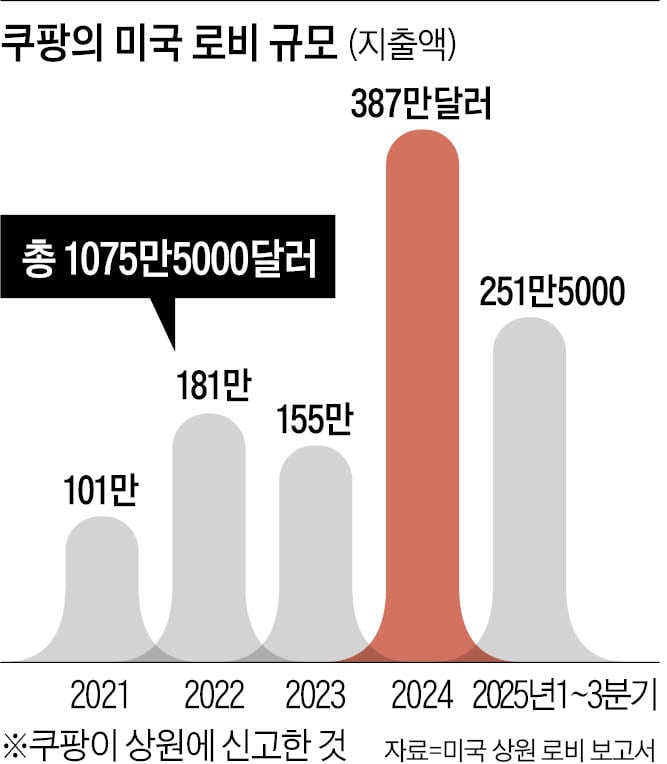
However, analysts suggest that Coupang’s robust lobbying efforts in the U.S. could act as a breakwater to prevent the spread of legal risks from South Korea. According to U.S. Senate lobbying reports, Coupang Inc spent a total of $10,755,000 (approximately 15.9 billion Korean won) on lobbying over four years since its listing. Notably, the increase in lobbying expenditures correlates with crises in South Korea. Lobbying costs, which were $1.01 million in 2021 (the initial listing year), surged to an estimated $3.87 million last year—a nearly fourfold increase. This period overlaps with when Coupang was fined 150 billion Korean won by South Korea’s Korea Fair Trade Commission and referred to prosecutors for allegedly manipulating search ranking algorithms and purchase reviews/ratings to boost PB (private brand) sales.
◇Lobbying in the U.S., Ignoring South Korea
Coupang has employed not only in-house lobbyists but also major lobbying firms such as “Miller Strategy,” led by a former Donald Trump campaign official, and “Akin Gump,” the top U.S. lobbying firm by revenue. Through these entities, Coupang has conducted extensive lobbying targeting core U.S. power institutions, including the White House, U.S. Trade Representative (USTR), Department of Commerce, and National Security Council (NSC).
Coupang’s lobbying strategy is clear: emphasizing that it is a “U.S. technology company operating in South Korea.” Lobbying reports submitted to Congress include agenda items such as “ways for U.S. agricultural producers and small businesses to utilize Coupang’s digital, distribution, and logistics services” and “measures to strengthen economic and commercial ties with allies like South Korea, Taiwan, and Japan.” The underlying message is that “targeting Coupang is against U.S. national interests.”
At a seminar on the South Korean business environment hosted by AMCHAM in Seoul last April, Rob Porter, Coupang’s U.S. headquarters chief global policy officer and former White House secretary, attended and stated, “Coupang is a U.S. technology company.” This emphasized that “Coupang is not a regulatory target in South Korea but a U.S. technology company protected by the U.S.”
When the National Assembly’s Political Affairs Committee attempted to adopt Chairman Kim Bom-suk as a witness for a National Assembly audit last October, AMCHAM sent a text message stating, “Calling a U.S. citizen to the National Assembly is inappropriate.” People Power Party lawmaker Yoon Han-hong described it as “essentially a threatening text message.”
☞Punitive Damages
A system that imposes significantly higher compensation than actual damages for malicious illegal acts caused by intentional or gross negligence. Its main purpose is to deter corporate misconduct. While common in the U.S., South Korea applies it restrictively under laws like the Personal Information Protection Act, limiting compensation to 3–5 times the actual damages.
☞Discovery System
A U.S. civil litigation procedure where parties disclose evidence to each other before trial. Aimed at preventing “blind trials,” it forces companies to submit sensitive internal materials, including deleted emails, internal messenger logs, and access records, making it “more terrifying than the lawsuit itself” for businesses.