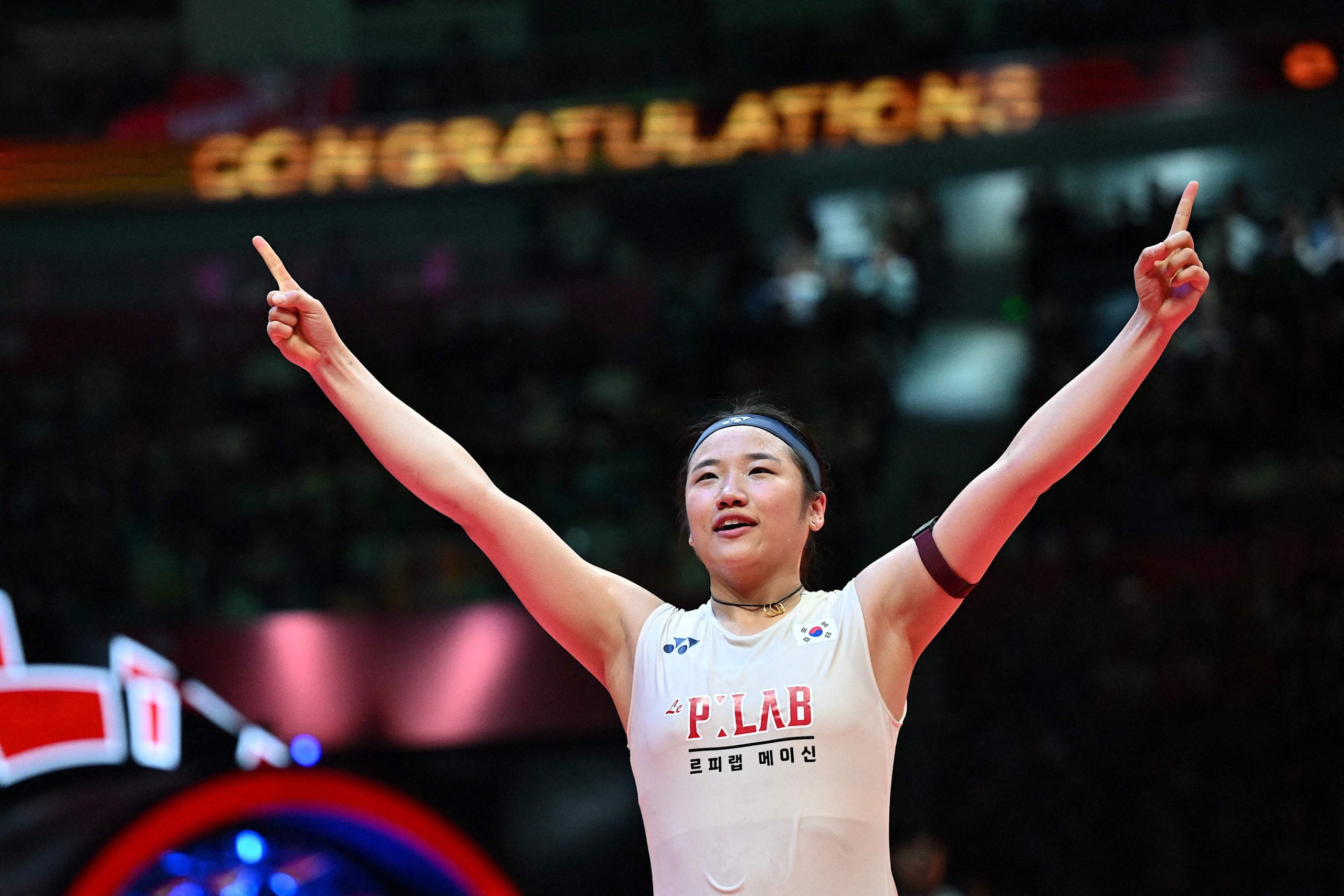
An Se-young, 23 years old, Samsung Life Insurance, has rewritten the history of world badminton. She set all-time records for the most wins in a season, highest win rate, and prize money. Not only An Se-young but also South Korea in both men’s and women’s doubles this season demonstrated their status as the world’s strongest. The self-proclaimed and widely recognized “golden era” of South Korean badminton has fully arrived.
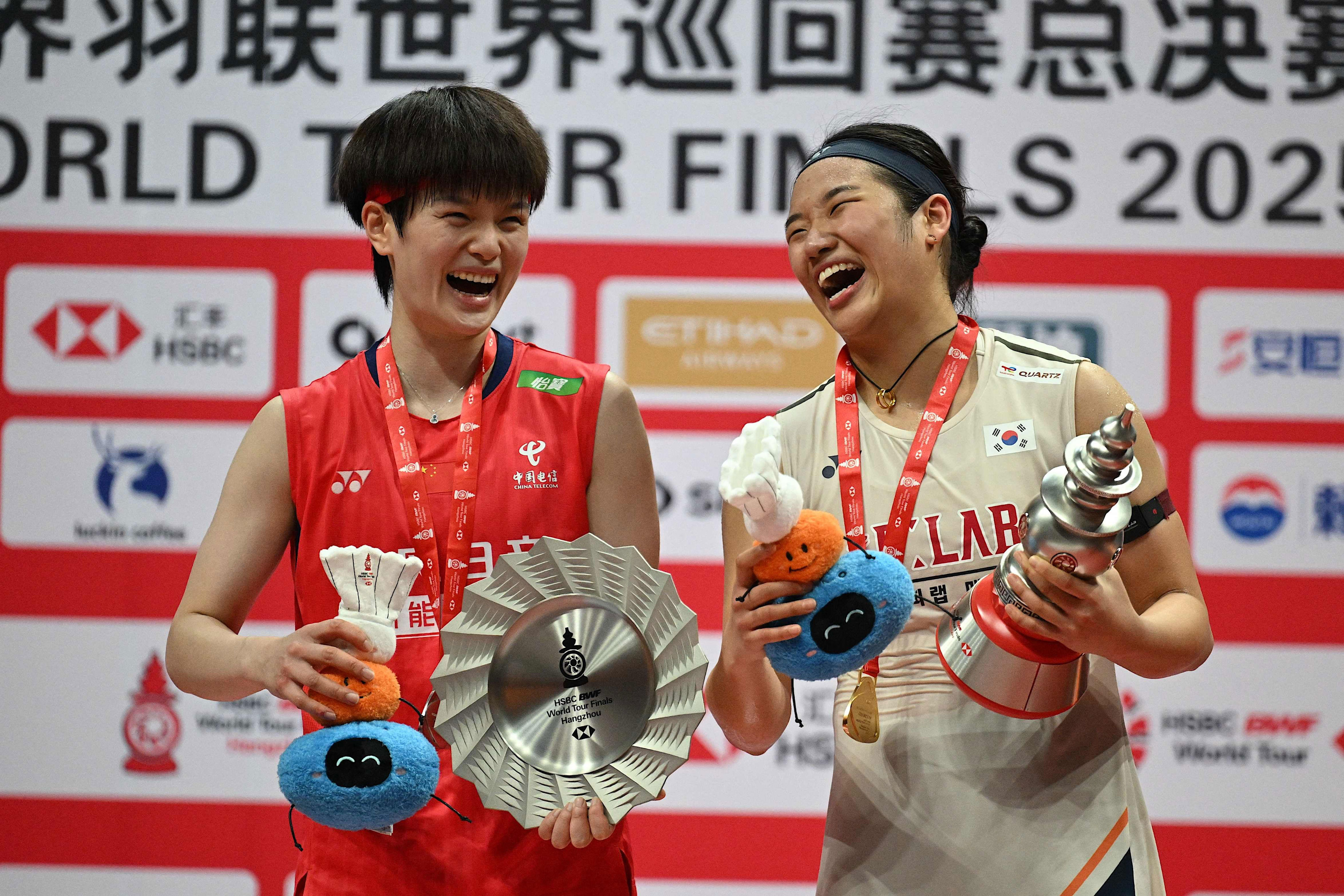
On the 21st, the Badminton World Federation (BWF) World Tour Finals held in Hangzhou, China. In this “champions of champions” event, which concludes the year, South Korean players consecutively stood on the highest podium. An Se-young, the world No. 1 in women’s singles, achieved her 11th victory of the year, matching the record for the most wins in a season set by Kento Momota (Japan) in men’s singles in 2019. Earlier in late November, she became the first woman to reach 10 wins in a season at the Australia Open.
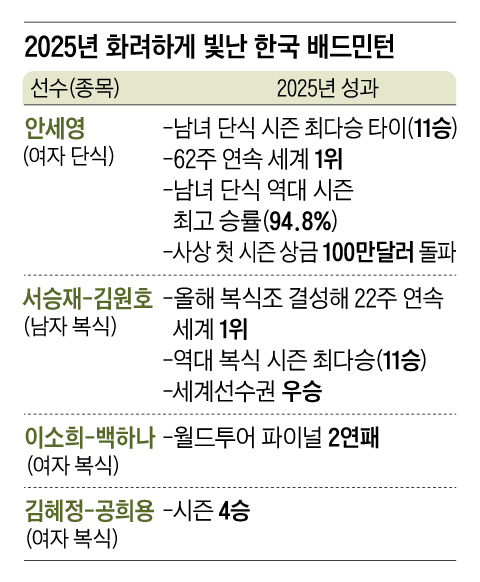
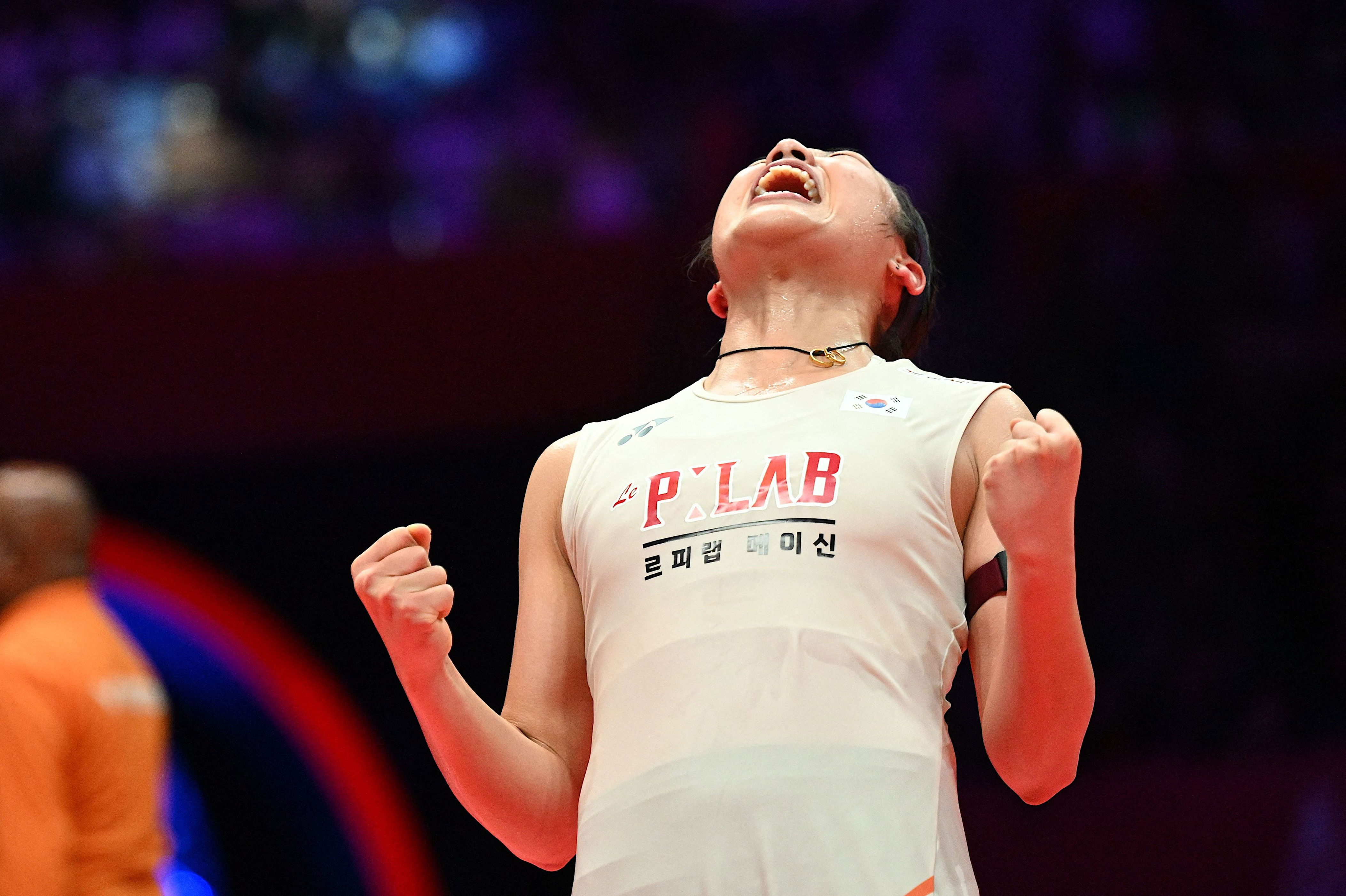
The record-breaking march did not stop there. She also surpassed the highest win rate for a single season and became the first player in badminton history to break the $1 million prize money mark in a season. An Se-young recorded 73 wins and 4 losses this season, achieving a win rate of 94.8%. Among players who have played more than 60 matches, this is the highest ever. The previous record was held by Lin Dan (China) in 2011 with 92.8% (64 wins, 5 losses).
An Se-young also received $240,000 in prize money (approximately 355 million Korean won) from her victory, bringing her total prize money for the season to $1,003,175 (approximately 1.485 billion Korean won). She is the first player in badminton history to surpass $1 million in prize money in a single season. Her cumulative prize money ($2,570,000, approximately 3.8 billion Korean won) also ranks first in history.
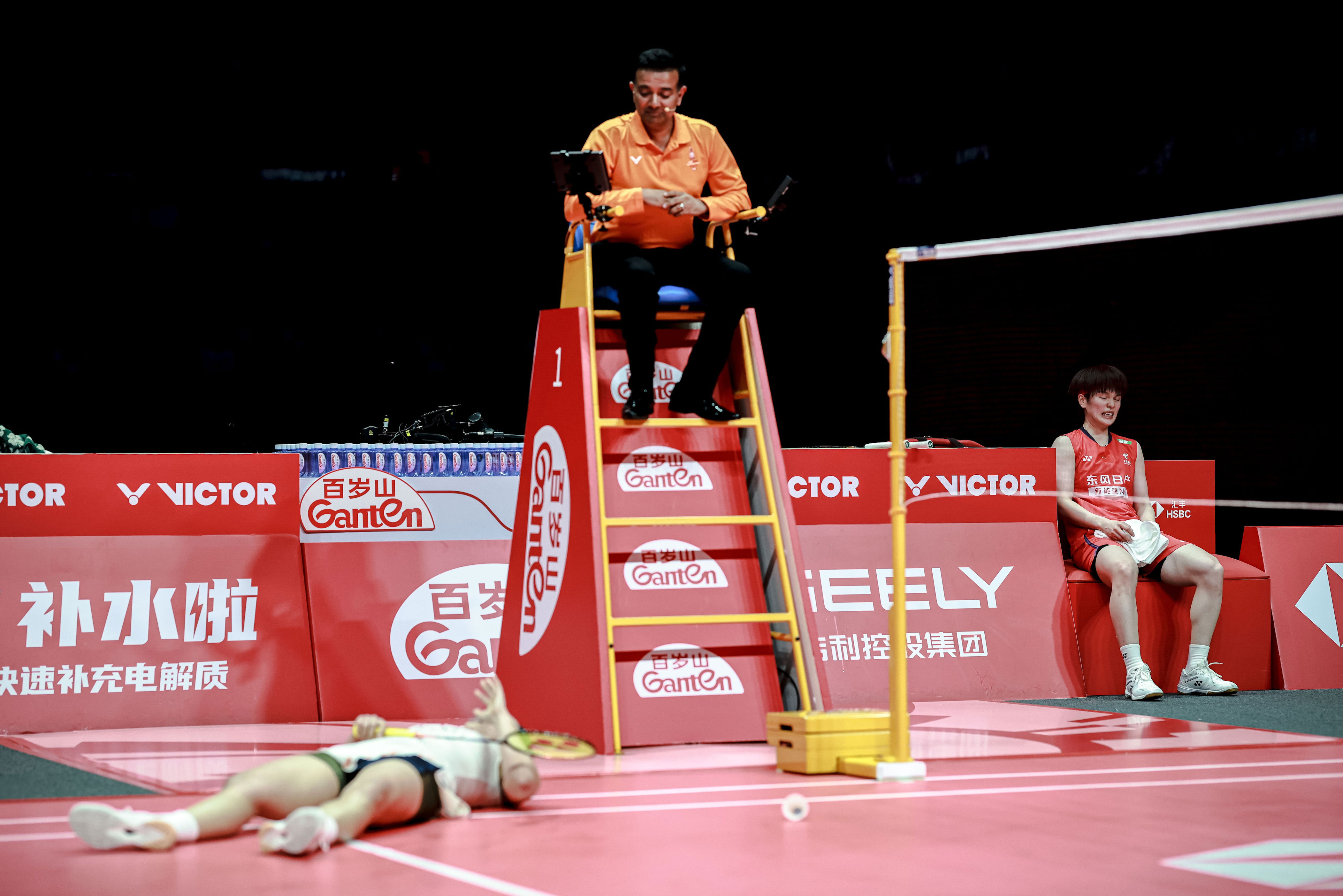
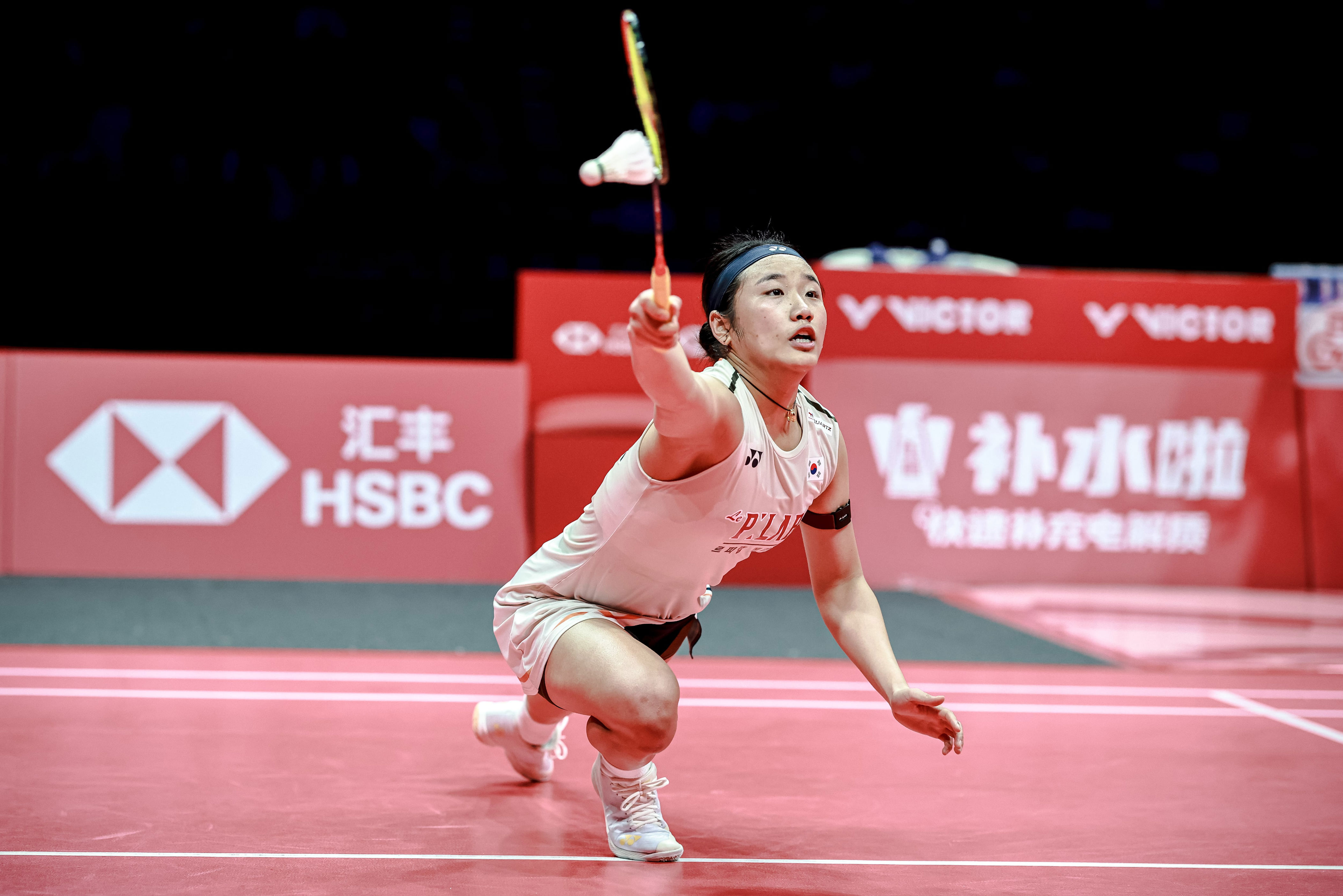
In the final on that day, An Se-young defeated world No. 2 Wang Zhiyi (China) 2-1 (21-13, 18-21, 21-10). Despite limping due to left leg pain in the closing stages of the match, she showed fighting spirit to secure the victory. After the match, An Se-young said, “I think I achieved the results of my efforts,” and added, “I want to achieve not only major tournaments like the World Championships but also the ‘Super 1000 Slam’.” The Super 1000 Slam refers to winning all four Super 1000 tournaments held in a single season.
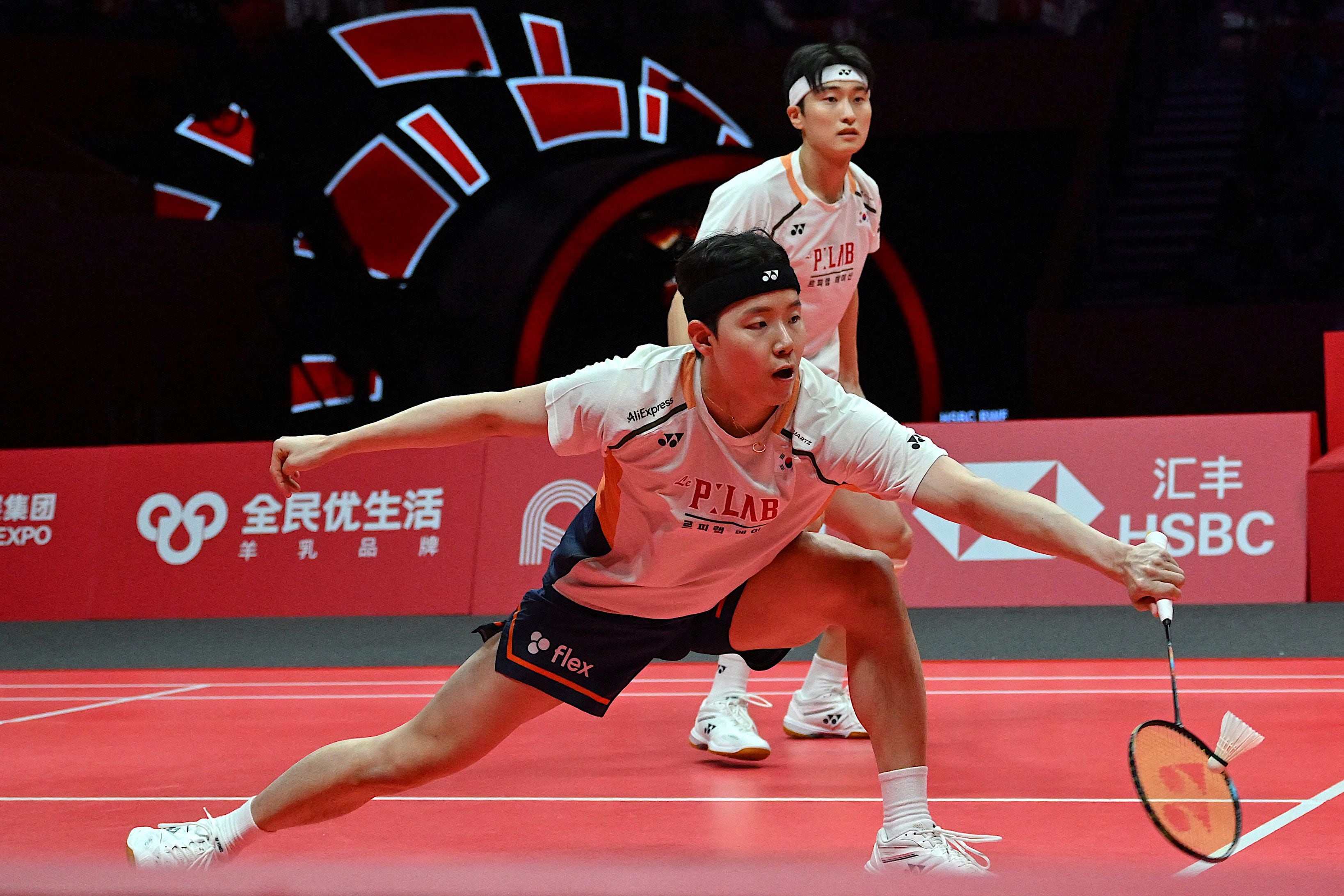
The world No. 1 men’s doubles pair Seo Seung-jae, 28, and Kim Won-ho, 26, Samsung Life Insurance, also set a new record of 11 wins in a season on that day. In the final, they defeated the world No. 5 pair Liang Weikeng-Wang Chang (China) 2-0 (21-18, 21-14). They have maintained their world No. 1 ranking for 22 consecutive weeks, showcasing overwhelming skills including winning this year’s World Championships.
The world No. 7 women’s doubles pair Lee So-hee, 31, and Baek Hana, 25, both from Incheon International Airport, also defeated the world No. 5 pair Fukushima Yuki-Matsumoto Mayu (Japan) 2-0 (21-15, 21-11) to claim victory. This marks their second consecutive title at the World Tour Finals, following last year’s win.
This is the first time South Korea has won three events at the World Tour Finals, which began in 2018. There are evaluations that a new golden era for South Korean badminton has arrived, centered around An Se-young. The current national team’s performance is in no way inferior to that of the 1990s legends Bang Soo-hyun, Kim Dong-moon, Park Joo-bong, and Ha Tae-gwon.
Experts analyze, “The focus on generational change to overcome the slump in the 2010s on the international stage has begun to yield significant results over the past two to three years.” By consistently fielding players in their late teens to early twenties, they allowed them to gain international experience even if immediate results were not achieved. An Se-young, who participated in the Asian Games at the age of 15 in 2018, is a prime example. Seo Seung-jae also started competing in adult international tournaments from the age of 18.
The change in the national team’s atmosphere after last year’s Paris Olympics also had a positive impact. With the appointment of Olympic gold medalist Kim Dong-moon as the association president and Park Joo-bong as the coach, personal sponsorship contracts for national team members were allowed, and many unfair practices within the team were reportedly eliminated. An environment has been created where young players can focus solely on their sport. Coach Park Joo-bong, who successfully led the Japanese national team for 20 years, is working to reduce the training camp period at the athletes’ village and improve the rigid organizational culture. A source from the badminton community said, “Expectations are growing that South Korean badminton will threaten world powerhouse China at next year’s Aichi Nagoya Asian Games.”