Nigeria’s Struggle Against Homegrown Violence
Nigeria, a nation not engaged in any external conflict, remains trapped in a brutal internal struggle. This conflict is driven by terrorists, bandits, and kidnappers who have transformed violence into a lucrative business. The result is a continuous wave of senseless attacks and bloodshed that has left communities in fear and uncertainty.
Beyond rhetoric, one of the key indicators of a country’s development is its government’s ability to protect the lives and property of its citizens. Security experts emphasize that no economy can thrive in an environment of instability. Globally, nations like Ukraine and Gaza provide stark examples of how conflict disrupts not only security but also the fundamental processes of governance and daily life.
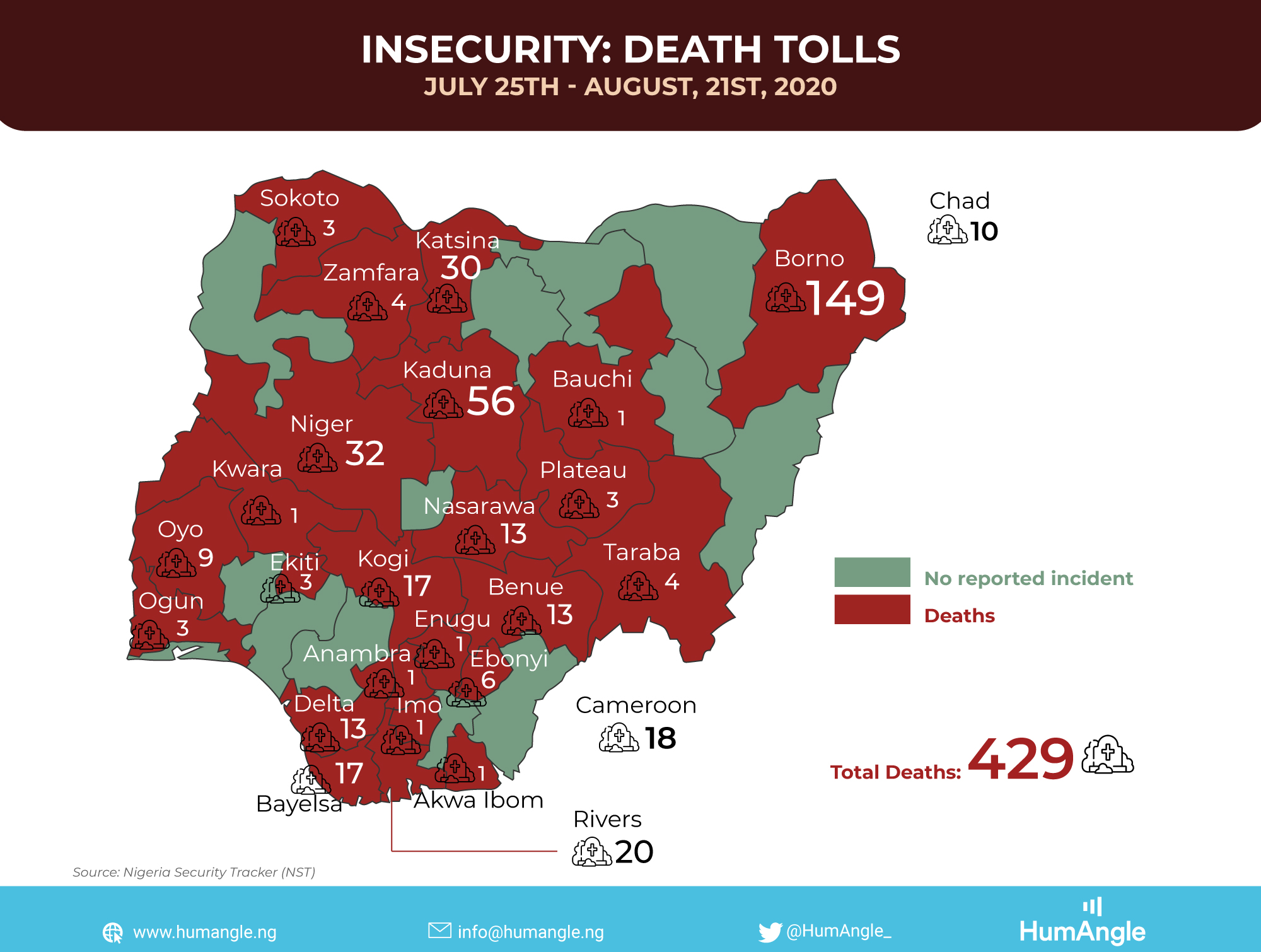
In Nigeria, despite not being at war with any foreign power, analysts argue that the country is under siege from internal threats. From Boko Haram in the Northeast to bandits in the Northwest and IPOB-linked violence in the Southeast, the human toll is staggering. Thousands of innocent Nigerians have lost their lives, and countless others have been displaced, living under the constant shadow of fear.
Controversial Numbers
Ironically, on December 17, 2024, the National Bureau of Statistics (NBS), an institution meant to help Nigeria understand its challenges, found itself at the center of public backlash after publishing a report that revealed alarming figures. The Crime Experience and Security Perception Survey indicated that an estimated 51.89 million crime incidents were recorded across Nigerian households between May 2023 and April 2024. It also reported 2,235,954 kidnapping incidents during that period, with victims and families paying a staggering N2.23tn in ransoms.
The report further revealed that 65% of affected households paid ransoms, with an average of N2.67m per incident. However, shortly after publication, the report disappeared from public view, with the NBS claiming its website was under attack. Despite attempts to restore access, the data remained inaccessible for months, leaving a void in understanding the true scale of Nigeria’s insecurity.
New Figures, Old Fears
While official data is missing, independent reports continue to shed light on Nigeria’s grim reality. Findings from Beacon Security and Intelligence Limited (BSIL) show that while there are marginal improvements in security operations, deep-rooted issues persist. Their August 2025 report noted a decrease in incidents, fatalities, and abductions compared to July. However, the report warned that these gains are overshadowed by systemic challenges and political dynamics.
According to BSIL, 545 incidents were recorded in August 2025, leading to 732 fatalities and 435 abductions. The report highlighted a trend where some communities in Katsina and Zamfara states are entering into peace deals with bandits, similar to the fragile stability seen in Kaduna State. While these agreements offer temporary relief, they raise concerns about the government’s failure to provide adequate security.
Deaths in Communities
From farmlands to prayer grounds, Nigeria’s blood-soaked reality continues to unfold. Banditry, herders’ attacks, kidnappings, terrorism, and communal clashes have spread across every region. In the North-Central region, farmers describe harrowing tales of herdsmen invading farmlands, resulting in cycles of violence. In Plateau, Bassa District witnessed the killing of 51 people in Zikke and Kimakpa villages. In Katsina, a deadly attack on a mosque killed 50 worshippers and abducted 60 others.
In Benue, 45 people were killed in an overnight raid by suspected herders. In Kwara State, the Oke-Ode community found 12 corpses, including the Baale of Ogbayo. These incidents reflect a widespread pattern of violence that shows no signs of abating.
For Security Experts: A Strategic Approach
For security experts, the solution lies in strategy rather than slogans. Kabir Adamu, Managing Director of BSIL, emphasizes that Nigeria must strike at the heart of criminal enterprises. He highlights that the funding for these activities comes from kidnapping, cattle rustling, and other illegal ventures. Without addressing this financial base, the cycle of violence will continue.
Adamu also warns about the availability of weapons and ammunition, often sourced from neighboring countries or even from local security forces. He stresses the need to prevent criminals from accessing these resources and to address recruitment as a persistent threat.
Going Forward
Anselm Ozueh, CEO of Chogon Private Security Ltd, argues that Nigeria’s fight against insecurity must evolve beyond traditional methods. He advocates for community policing, modern technology, and a focus on human capital development. Ozueh believes that revisiting core values and leadership training is essential to creating a more secure society.
He emphasizes the importance of AI-driven security technology and crime prevention strategies. “Prevention is better than the aftermath of criminality,” he said. “Any nation that wants to go far must pay attention to crime prevention.”
Conclusion
From vanishing crime data to recurring killings, Nigeria’s insecurity is caught between Scylla and Charybdis, reflecting a troubling state in desperate need of stability. Without reliable statistics and decisive action, the path to safety remains uncertain. Observers warn that the country must take proper accountability and implement effective solutions to safeguard its citizens.


