Leadership Transition and Political Reforms
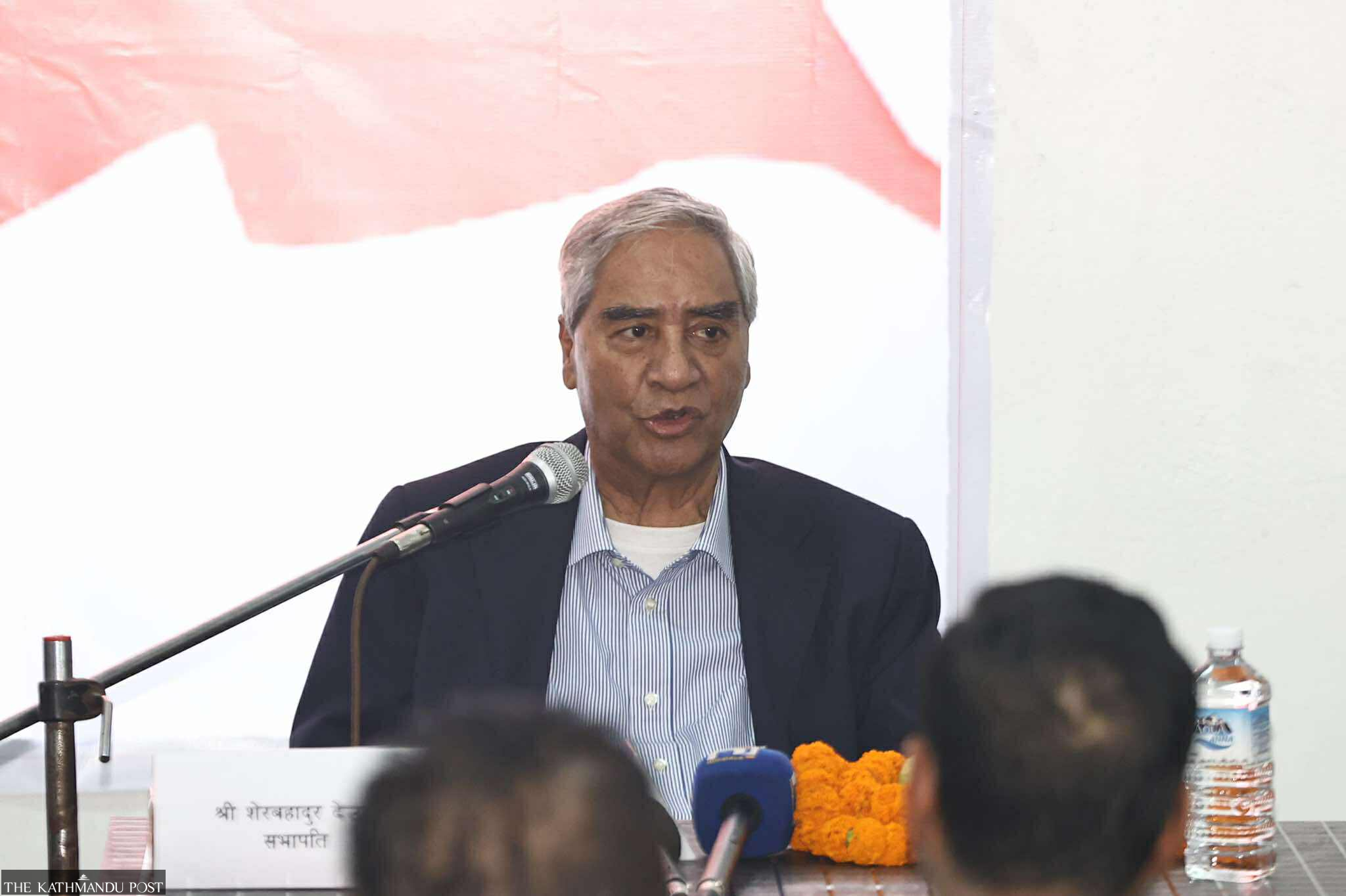
Kathmandu, Oct. 15 — Sher Bahadur Deuba, the former president of the Nepali Congress, has officially stepped down from his leadership role, marking the end of a six-decade-long political career. His resignation came after a violent incident during anti-corruption protests on September 9, when his home was set on fire and he and his wife, Arzu Rana Deuba, were physically attacked by an angry mob.
Deuba made his final appearance at the party’s central working committee meeting, where he announced his decision to step down. This move is seen as a response to mounting pressure from within the party, particularly from younger members and leaders who are pushing for a new era of leadership and reform.
Health Concerns and Medical Treatment
According to sources close to Deuba, he and his wife may soon travel to Singapore or Thailand for medical treatment. The preferred destination is Singapore, they said. Since the attack, Deuba has been experiencing health complications, including dizziness, which have raised concerns about his well-being. During the incident, he was injured in the back of his neck with a sharp object.
Deuba and his wife made their first public appearance at the party headquarters in Sanepa, Lalitpur, following the attack. They were rescued by the Nepali Army and have since been receiving medical attention.
New Leadership and Party Dynamics
In his address to the central working committee, Deuba handed over the responsibility of acting president to Purna Bahadur Khadka, the party’s vice president. Khadka will now oversee the organization of the party’s 15th general convention.
The party is currently debating whether to hold a regular or special general convention. As many as 54 percent of convention representatives have signed a petition in support of a special general convention. However, the establishment faction led by Deuba argues that preparations to hold the general convention by December are not sufficient. They prefer to align the convention with the timeline for general elections scheduled for March.
General Secretary Gagan Thapa emphasized that the party must proceed with a special general convention if a regular one cannot be held by mid-December. He also highlighted the importance of holding the convention in line with the government’s election schedule.
Convention Timelines and Party Charter
According to the party charter, if 40 percent of convention delegates make a written request for a special convention, the central working committee must call the convention. Senior party leader Krishna Prasad Sitaula cited the party statute, stating that no one, from central to district presidents, can remain in their positions for more than two terms.
Deuba had already indicated that he would not be a candidate for president in the 15th general convention. This means the upcoming convention will see a transfer of party leadership.
Several leaders, including Sitaula, Prakashman Singh, Bimalendra Nidhi, Shashanka Koirala, Gopalman Shrestha, and Prakash Sharan Mahat, have urged Deuba to back a single candidate for party president. However, Deuba has yet to reveal his choice.
Final Remarks and Legacy
During the meeting, Deuba reiterated that leadership is not permanent and emphasized that, according to party rules and his own decision, he will step down. He also presented a 13-page written statement covering the events of the Gen Z uprising, the attack on him and his wife, the dissolution of parliament, the formation of the government, and the announcement of elections.
Deuba reflected on his achievements during his tenure as prime minister, including landmark contributions such as the liberation of Kamaiya (bonded laborers), the declaration of Nepal as free from untouchability, and the initiation of various social transformation efforts. He specifically highlighted the Anti-Corruption Act of 2059 (2002) as a key achievement in fighting corruption.
Despite stepping down, Deuba remains a significant figure in Nepali politics, and his legacy will continue to influence the party’s future direction.