The Paradox of Inclusion in Nepal’s Political Landscape
Nepal has witnessed a significant shift with the formation of a new government, but amidst this optimism, one pressing concern continues to linger: inclusion. The Rastriya Swatantra Party (RSP), which has seen its leadership predominantly composed of men, has faced criticism for its lack of gender diversity. During the recent election, only 16 female candidates were fielded, and while 13 of them won their constituencies, the upcoming Cabinet appears to be lacking in female representation.
The RSP has appointed 48 women to its 57 Proportional Representation (PR) seats. However, a closer look reveals that 24 of these women are from Khas Arya or Newa origin, leaving the remaining half to be filled by other marginalized and indigenous groups. This imbalance raises concerns about the true inclusivity of the party’s approach.
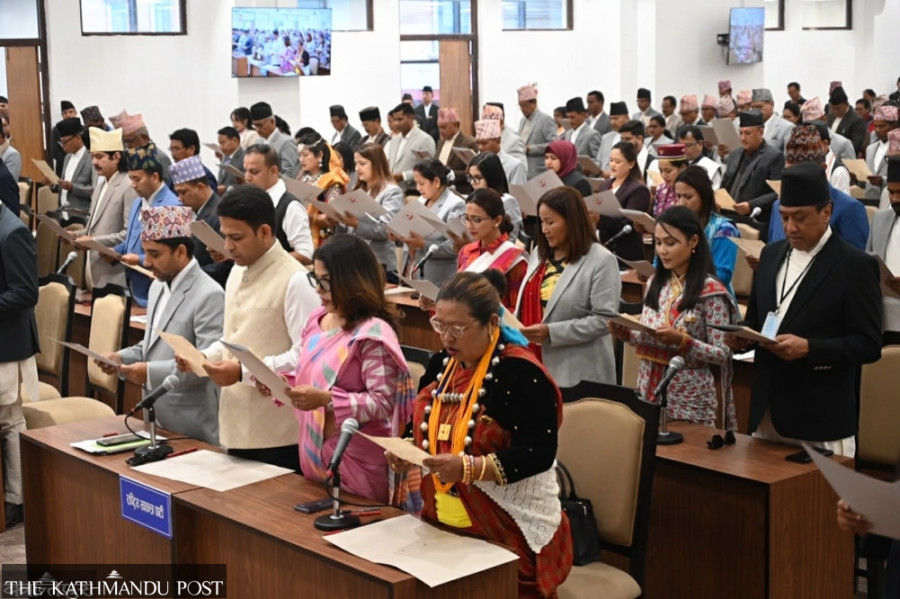
Despite these challenges, this election marked a milestone with 96 women becoming Members of Parliament (MPs), making up 35 percent of the total, which is the highest so far in Nepal’s history. Yet, as highlighted by both internal and external voices within the party, there seems to be a preference for certain women who may not have the necessary contributions to civil society to warrant such leadership positions.
Ironically, the Gen Z backlash against superficiality on social media has not translated into more meaningful selections within the party. Some individuals have been chosen based solely on appearance rather than merit, which is disheartening for those who have dedicated their lives to public service without expecting anything in return.
What is particularly concerning is that some newcomers have managed to secure higher positions on the PR list, bypassing more experienced female members who have garnered more votes. This behavior reflects an unscrupulous ethic that does not bode well for future conduct in public service.
The PR list was intended as a quota system to include historically marginalized groups. However, when privileged individuals take these spots, it undermines the very purpose of the initiative. It is akin to a wealthy American woman taking a place reserved for a Native woman, highlighting a systemic issue that needs urgent attention.
There is no justification for individuals who already possess the social capital and resources to run for office to be on the PR list. This situation is distressing, especially when repeated by the new party, and it becomes even more glaring during Women’s Day and the end of Women’s Month.
Inclusion means embracing real change, finding those who need a voice, and giving them the space to develop it. It also involves stepping back and allowing hardworking individuals to have their moment.
Many privileged, educated people lack awareness of real inequality outside their elevated environments. They often know little about the complexities of Nepali law and language, which are essential for any aspiring MP. Meanwhile, compassionate, low-income workers contribute significantly to community efforts, showing a commitment that should be recognized.
Balendra Shah, a figure whose character remains enigmatic, has shown courage by challenging KP Oli on his home ground. However, chutzpah alone does not guarantee good leadership. His priorities, such as addressing air pollution and garbage management, seem more critical than focusing on removing street vendors.
In today’s world, the money-power complex often neglects the most disenfranchised. A shift towards a circular economy with sustainable jobs is crucial. Creating meaningful employment for a population where 49 percent are under 25 will be a massive challenge. Will we continue to prioritize STEM fields over the arts and crafts?
Most parties, including the RSP, have made ambitious claims that seem unattainable with their current manifestos. Achieving seven percent annual GDP growth requires the establishment of dynamic industries, which takes time. These plans must be re-evaluated strategically with the good of all stakeholders in mind.
In film, character is defined by action. Similarly, in life, what you do speaks volumes about who you are. As the new RSP leaders take their places, their actions will define their true character. Their goodwill towards fellow citizens will determine their rise or downfall. We must hold them accountable for their actions.