Nike’s sharp drop in China sales underscores intensifying competition from home-grown brands amid changing consumer tastes
Alex Chen – a Beijing office worker in his late 30s – used to buy his trainers the way plenty of Chinese millennials did: by the swoosh, the stripes and the logo.
As a teenager, he would hunt down Nike and Adidas basketball shoes, pulled in as much by the mythology as the materials. These days, he said, he shops differently.
“I have always been a huge basketball fan of Michael Jordan and Kobe Bryant,” he said. “Back then, I would specifically seek out Nike and Adidas basketball shoes – wearing a pair of Jordan shoes made me feel like I was part of the sports community.
Do you have questions about the biggest topics and trends from around the world? Get the answers with SCMP Knowledge, our new platform of curated content with explainers, FAQs, analyses and infographics brought to you by our award-winning team.
“But now that I’m middle-aged, my priorities have shifted towards more balanced choices. I’m eager to try domestic brands, thanks to their relatively affordable pricing and improvements in quality, durability and comfort.”
He is still not immune to the pull of big-name branding – global reputation and that sense of belonging still matter – but they no longer automatically justify the premium.
That recalibration is increasingly common among Chinese consumers, and it is showing up in the results of foreign sportswear giants.
While Nike posted quarterly earnings and revenue on Thursday that topped analysts’ estimates – with sales growth in North America offsetting China declines – the athletic apparel retailer recorded a precipitous 16 per cent decline in Greater China revenue to about US$1.42 billion for its fiscal 2026 second quarter ended November 30.
Direct-to-consumer sales revenue fell 18 per cent year on year, digital business revenue dropped 36 per cent, and store revenue declined 5 per cent. Shares of Nasdaq-listed Nike fell 10 per cent in after-hours trading on Thursday following the earnings release.
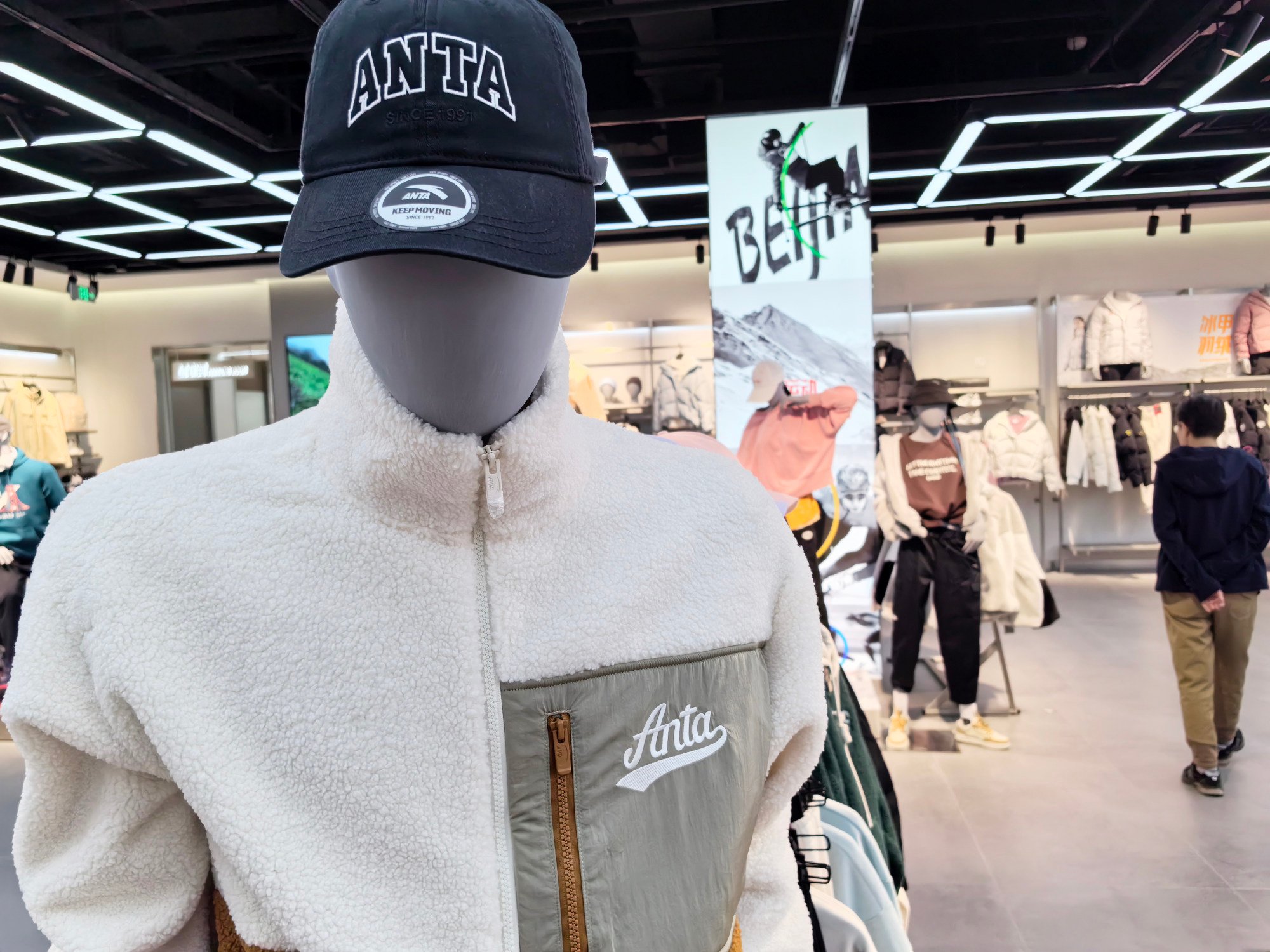
Nike’s weakening China performance has sharpened attention on the pressures facing overseas brands in a market where domestic champions including Anta Sports and Li-Ning have been steadily taking share.
Anta Group overtook Nike in China sales three years ago and has held its lead since, cementing its position as the country’s sportswear front-runner.
The group has also become the third-biggest sportswear company globally – after Nike and Adidas – to surpass 100 billion yuan (US$14.2 billion) in annual revenue, if sales from international labels it owns such as Fila and Arc’teryx are included.
Even so, Anta’s market capitalisation remains far less than that of Nike’s, underscoring the gap that still separates China’s market leader from the world’s biggest name.
Analysts said Nike’s latest figures pointed to more than a one-off dip.
“We believe Nike’s latest earnings report reflects more than a mere performance fluctuation; it reveals a fundamental shift in China’s sportswear market,” said Lin Min, an analyst at LeadLeo Research Institute, a Shanghai-based market research provider.
“The core reason that home-grown brands have gained consumer favour is that they have capitalised on key transformations in China’s sports consumption landscape,” she added.
Lin said Chinese consumers’ spending logic had moved “from embracing brand premium to valuing pragmatism”, while the emotional gravity of sports branding had shifted “from global narratives to local resonance”.
“In addition, home-grown brands, leveraging their digital supply chains and in-depth consumer insights, have been able to cut the time for China-specific products from concept to shelf to between three and six months,” she said.
She said Nike’s results underscored a strategic challenge: moving from simply selling in China to creating for China. The hardest part, Lin added, would be balancing the identity that has made Nike a global brand with the unique demands of Chinese consumers.
Nike has described China as one of the most promising long-term markets in the global sports industry. For the current financial year and beyond, the company said it would continue to optimise its operations in the Chinese market to build a foundation for future growth.
Nike still leads online sales among sports brands on major Chinese e-commerce platforms, according to Guosen Securities. In the third quarter, Nike held an 8.7 per cent market share, followed by Adidas at 8.1 per cent and Li-Ning at 7.9 per cent. Anta’s stand-alone brand accounted for 5.9 per cent, excluding the global labels within its portfolio, the research showed.
The broader regional picture also favours local players.
Asia-Pacific is set to overtake North America as the world’s largest consumer market by 2035, according to a report by Bain & Company and NielsenIQ released last week.
Looking ahead to 2026, the report said the region’s consumer landscape would be shaped by domestic and regional brands gaining share across most developing markets, with local players outpacing multinationals on innovation speed and market agility – and staying closer to the tastes and needs of local shoppers.
Chen’s shift captures a broader recalibration among urban Chinese consumers. Global brands still signal status and authenticity, but local labels are increasingly delivering the quality and comfort shoppers want, but without the hefty price tag.
More Articles from SCMP
Visitor targets in sight as Hong Kong back on map for tourists
The real war on Christmas is not being waged by Hong Kong or mainland China
J-16s vs Rafales: Chinese air force puts jets to the war-game test
The Christmas spirit of generosity, peace and goodwill could not be needed more
This article originally appeared on the South China Morning Post (www.scmp.com), the leading news media reporting on China and Asia.
Copyright (c) 2025. South China Morning Post Publishers Ltd. All rights reserved.