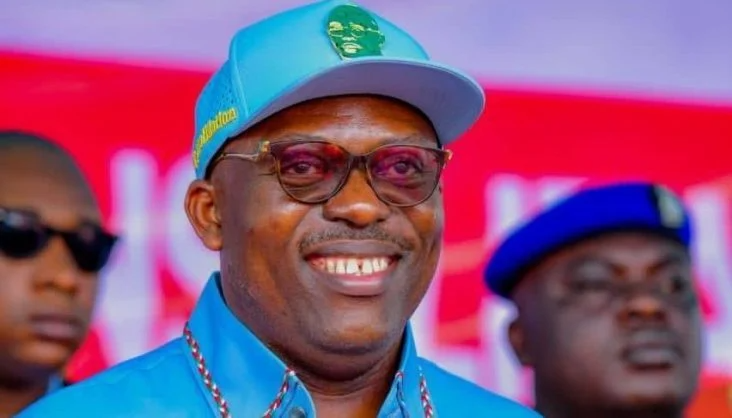
The End of the Emergency and the Return of Governor Fubara
On Wednesday, September 17, 2025, President Bola Tinubu announced the conclusion of a six-month state of emergency in Rivers State. This decision marked the end of a period during which suspended Governor Siminalayi Fubara, his deputy Ngozi Odu, and members of the State House of Assembly were prevented from carrying out their duties. With the emergency rule lifted, they were permitted to return to their positions starting Thursday, September 18.
However, Fubara’s absence on the day of the announcement sparked speculation about his intentions. Despite a large gathering of loyalists and political figures waiting for his arrival, he did not appear. This led many to believe that he might be considering stepping away from his role altogether. Some of his recent statements had hinted at a lack of eagerness to return to the Government House, further fueling these doubts.
It was later revealed that Fubara had not been in the country when the emergency ended. On Friday, he made a triumphant return to the state capital, signaling his readiness to resume leadership. His return came with lessons learned and a renewed determination to align himself with the expectations of the federal government.
For President Tinubu, the intervention was seen as a necessary exercise of federal power against elected officials who had failed to maintain governance in Rivers State. He justified the emergency rule, declared on March 18, 2025, as a response to what he described as a complete breakdown in governance, citing an irreconcilable conflict between the governor and the legislature.
Despite numerous legal challenges — over 40 cases reportedly filed across various courts — the president remained steadfast in his position, acknowledging that such litigation is common in a democratic system. However, the fact that most of these cases remained unresolved by the end of the emergency rule raises questions about their significance.
Tinubu’s message upon ending the emergency rule was clear and pointed. He emphasized the need for peace, order, and good governance, warning that only under such conditions can democratic dividends be realized. His tone seemed reminiscent of a moral lesson: “Governors and Houses of Assembly must remember that only in an atmosphere of peace, order, and good government can we deliver democratic dividends. Let this realisation guide your actions.”
This situation has raised important questions about the legality of the president’s actions. Legal experts have pointed out that the Nigerian Constitution outlines specific procedures for removing a governor, and the president’s involvement in this process remains controversial.
The broader implications of this episode are significant. Has the president set a precedent for similar interventions in other states? Will governors now hesitate to engage in political conflicts, fearing federal interference? Could this approach be used against governors from the same party, the All Progressives Congress (APC)? Or was Fubara chosen because he belongs to the opposition Peoples Democratic Party (PDP)?
Fubara’s return has not resolved all tensions. The wounds from his political exile remain deep. Questions about the current state of the State Assembly linger: Which faction holds power now? Are the lawmakers loyal to the governor or to his political godfather, Nyesom Wike, the Minister of the Federal Capital Territory?
The local government elections conducted during the emergency rule by Vice Admiral Ibok-Ete Ibas (retd) also raise concerns. Who truly influenced the outcome? The APC’s victory in 20 out of 23 local government areas suggests strategic consolidation. This shift marks a significant change in a state historically dominated by the PDP, positioning the ruling party strongly for the 2027 general elections.
Fubara may have returned, but his relationship with the State Assembly, his mentors, and the presidency will determine the rest of his term. Can he govern independently, or is he now dependent on federal support?
His recent visit to Abuja to inform the president of his return highlighted the dynamics at play. Describing the meeting as a “father-and-son” discussion, Fubara sought guidance to avoid future crises, echoing the president’s earlier warnings.
From a security perspective, the emergency rule’s impact on law and order remains unclear. Did it restore stability, or merely suppress dissent temporarily? From a governance standpoint, did it strengthen institutions or weaken them?
This episode has reignited debates about Nigeria’s federal structure. It highlights the fragility of the country’s federal system and raises questions about the balance between federal authority and state autonomy. How should constitutional safeguards be interpreted? Is Nigeria moving toward centralization, or was this a necessary exception?
Ordinary citizens in Rivers State bore the brunt of this prolonged suspension of democratic governance. As Fubara and others return to their roles, the question remains: Will this lead to better governance, economic progress, and stability? For now, it seems that political survival may take precedence over public interest.
Lifting the state of emergency is not an end but a cautionary tale. Nigeria must now decide whether federal power will continue to replace political dialogue or if the country will commit to strengthening democratic institutions.


