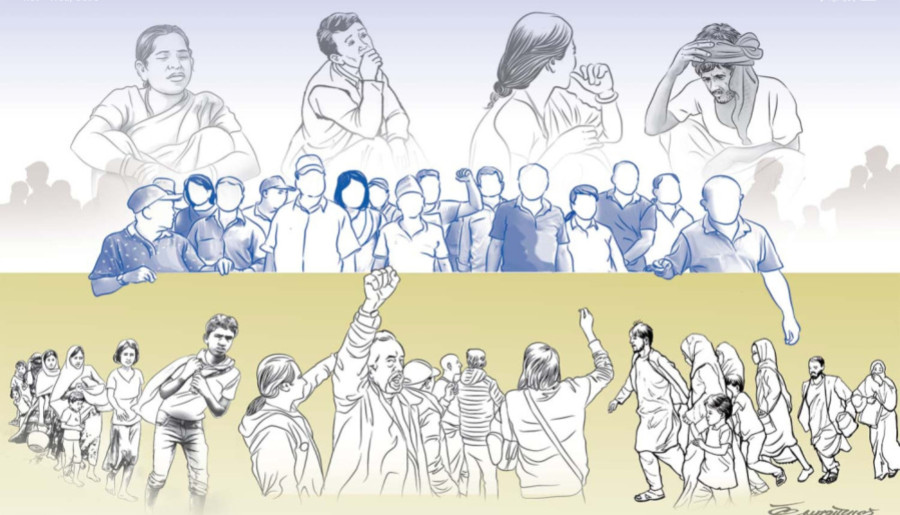
The Gen Z Movement and the Illusion of Progress
The events of September 8 and 9 in Nepal, often referred to as a Gen Z-led street protest that led to the collapse of the coalition government within 28 hours, have been hailed by many as a significant moment in the country’s political history. Some see it as a bold stand against the ruling class, with the destruction of Singha Durbar symbolizing a new dawn for the oppressed. However, the reality of the movement’s impact is far more complex.
While the national integrity and democratic system have managed to survive, the movement itself has not delivered substantial change. Democracy may have faced setbacks, but it remains alive. The constitution, though in a state of limbo, is unlikely to be completely erased. Yet, the question remains: what exactly did the Gen Z movement achieve?
The Silence on Caste Discrimination
One of the most concerning aspects of the Gen Z movement is its silence on caste discrimination. Activists from marginalized communities have claimed that the protests were against casteism, Brahmanism, and caste-based oppression. However, this assertion is questionable. In fact, the movement may have done more harm than good for the Dalit cause.
There is little evidence that Gen Z activists have ever engaged with the persistent issues faced by Dalits in Nepal. For instance, the mayor of Kathmandu, Balen Shah, who is seen as a leader of the movement, does not address the challenges faced by Dalit residents in his city. Many Dalits are forced to alter their family names to secure housing, yet this issue is ignored by those in power.
This lack of engagement with social justice issues is alarming. Unlike previous political movements in Nepal, which at least raised awareness about Dalit struggles, the Gen Z movement has largely avoided discussing caste discrimination. This silence is disconcerting, especially given the movement’s vocal stance on other issues like corruption and governance.
The Gen Z Government and Its Challenges
The Sushila Karki government, backed by Gen Z supporters, faces its own set of challenges. Despite being composed of younger individuals, the government is largely controlled by older leaders. This has led to inefficiencies and unmet promises, causing frustration among Gen Z activists themselves.
Moreover, the government has not made any significant strides in addressing caste discrimination. While there is a Dalit minister in the cabinet, his role has been minimal. The Minister for Agriculture, Madan Pariyar, has not spoken out against caste-based exclusion or introduced policies to combat systemic inequality. This raises questions about the true intentions behind his appointment.
Caste Discrimination as a National Issue
Some argue that now is not the time to focus on caste and ethnicity, emphasizing the need for good governance and election preparations. However, this perspective overlooks the deep-rooted nature of caste discrimination in Nepal. It is not just a social issue; it is the foundation of many problems, including poor governance and corruption.
How can there be effective governance when people are either respected or excluded based on their birth? How can there be fair treatment when Dalits are denied basic rights? Until these issues are addressed, the cycle of violence and injustice will continue.
The Role of Marginalized Groups
Many Dalit youths participated in the Gen Z movement, driven by a desire for equality and representation. They saw the destruction of government buildings as a way to challenge a system that had long marginalized them. Similarly, other marginalized groups, such as Madheshis, Tharus, Janajatis, women, and religious minorities, have also experienced systemic exclusion.
Violent uprisings are often fueled by issues of inequality and injustice, regardless of the slogans used. The Dalits, in particular, have suffered the most in Nepali society. Political parties and institutions, including the police and courts, have failed to provide them with equal treatment.
Until these systemic issues are resolved, peace and progress in Nepal will remain elusive. Politically active youths must recognize the urgency of addressing these issues, even if it means challenging the status quo.


