The Tragedy of the Commons in Nepali Politics
In 1968, ecologist Garrett Hardin introduced the concept of “The Tragedy of the Commons” in his essay, which described how individual self-interest can lead to the depletion of shared resources. This metaphor has since been used across various academic fields to emphasize the importance of sustainable practices. In the context of Nepali politics, this idea can be applied to understand how long-serving leaders have over-exploited the political capital built by their predecessors, leaving younger leaders with limited opportunities.
The Legacy of the Nepali Congress
The Nepali Congress is more than just a political party; it is a historical institution that emerged in the 1940s during a period of social and political upheaval against a feudal autocracy. Over the past eight decades, its founding members and subsequent leaders have played a pivotal role in shaping Nepal’s democratic landscape. Their efforts have been instrumental in fighting for a pluralistic and democratic system where citizens’ fundamental rights are protected.
Due to this legacy, the party has often been seen as synonymous with Nepal’s democracy. However, the ideals that once defined the party seem to have faded under the current leadership, which has engaged in undemocratic behavior.
A History of Leadership Struggles
One notable incident involves former President Girija Prasad Koirala, who was both revered and controversial for his leadership style. During the first Constituent Assembly elections, Koirala faced a challenging situation, as his party was expected to lose. Despite this, he ensured the elections were held and honored the results, even when the Maoist party had significant influence.
However, the democratic values set by these leaders have not been upheld by the current generation. The demand for generational change has grown louder within the party. Leaders like BP Koirala and later his brother GP ruled for many years, with GP not relinquishing power to younger members. His passing led to Sushil Koirala taking over, who then handed the reins to Sher Bahadur Deuba in 2016.
The Rise and Fall of Sher Bahadur Deuba
Deuba, once a firebrand leader from Dadeldhura, has become a shadow of his former self. He institutionalized coterie politics, mimicking the “divide and rule” tactics of his predecessors. His leadership reduced the central committee to a group of “yes men,” who were unable to voice concerns about his age and lack of vision.
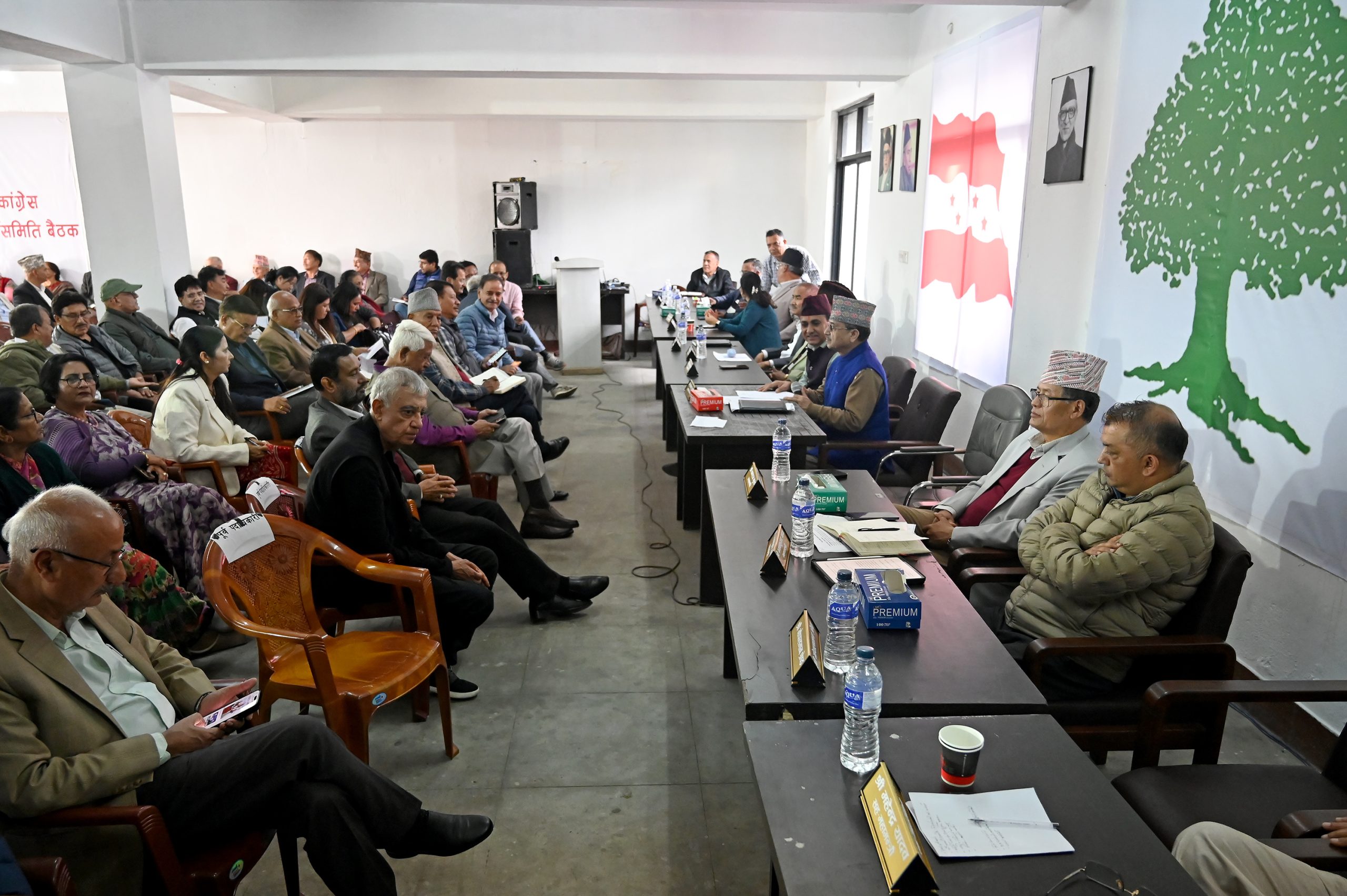
The Gen Z movement in early September marked a turning point, leading to Deuba’s unceremonious exit. However, this did not restore democracy within the party. Acting President Purna Bahadur Khadka, another leader from the remote Karnali region, continued the same coterie politics, disregarding calls for a national convention.
The Current State of Leadership
Khadka, who will turn 70 soon, is not alone in this transgression. There are several aging leaders who believe politics is a waiting game, securing positions through longevity rather than merit. These leaders are prolonging their careers by overspending the party’s hard-earned political capital, capturing resources and networks, and marginalizing younger opponents.
This approach ignores the demographic changes in the country and the aspirations of young voters. Political capital, like any other resource, is finite, and its depletion can happen quickly if mismanaged.
The Need for Change
The Nepali Congress must recognize that it no longer enjoys the same level of popular support as before. Young voters do not place much value on the party’s past achievements, such as the 1990 or 2006 movements. Moreover, the party’s performance in government has raised questions about integrity and effectiveness.
If the Nepali Congress continues to rely on aging and ailing leaders, it will struggle to attract the new demographic of voters in upcoming elections. With political parties proliferating like pastry shops, young voters have numerous choices.
This is the first of a three-part weekly series on Nepali political parties.


