
The Science Behind Women’s Sleep Needs
Sleep is often viewed as a universal human need, but research indicates that women not only sleep differently from men but also require more of it. This difference can be attributed to a combination of biological and societal factors that influence how women experience and prioritize sleep.
Biological Factors Affecting Sleep
On average, women sleep 11 to 13 minutes longer than men each night. Some studies suggest they may need up to 20 extra minutes to support complex daytime functions such as multitasking, emotional regulation, and hormonal balance. During the first half of the menstrual cycle, the follicular phase, rising estrogen levels improve sleep quality and increase REM sleep, which is linked to dreaming, memory, and emotional processing.
However, during the second half of the cycle, the luteal phase, rising progesterone levels can make women feel sleepy, paradoxically leading to worse sleep. This includes more frequent night wakings and up to 27% less deep sleep.
Shantani Moore, a body intelligence coach in Los Angeles, shared her personal experience with PasarModern.com, explaining how she plans her daytime schedule around her menstrual cycle and sleep patterns. “When I don’t get enough sleep, it’s a toxic marriage between feeling wired and tired,” said Moore. “Then there’s brain fog, poor decision-making, snapping at your partner, saying yes to things you shouldn’t… it all adds up.”
Societal and Structural Influences
Beyond biology, social and structural factors significantly impact how women sleep. For Sabrina, who lives in Karachi, Pakistan, the demands of daily life are a major source of exhaustion. She typically only gets six to seven hours of sleep a night, which she feels is insufficient. “To feel rested, and keep my mind fresh throughout the week, I need 12 hours [of sleep per night]. It’s more than the average eight,” said Sabrina.
Her routine includes ironing clothes, preparing meals, cleaning the house, and making dinner. When she’s too exhausted, she starts mentally beating herself up, even for small tasks. On weekends, when she visits family, she sleeps 12 to 13 hours straight without interruption.
Experts like Emerson Wickwire, a sleep expert at the University of Maryland, emphasize that this burden is systemic. “Women experience shift work disorder more often [than men], and they also work more non-traditional shifts, and suffer more from the negative effects of that,” he explained.
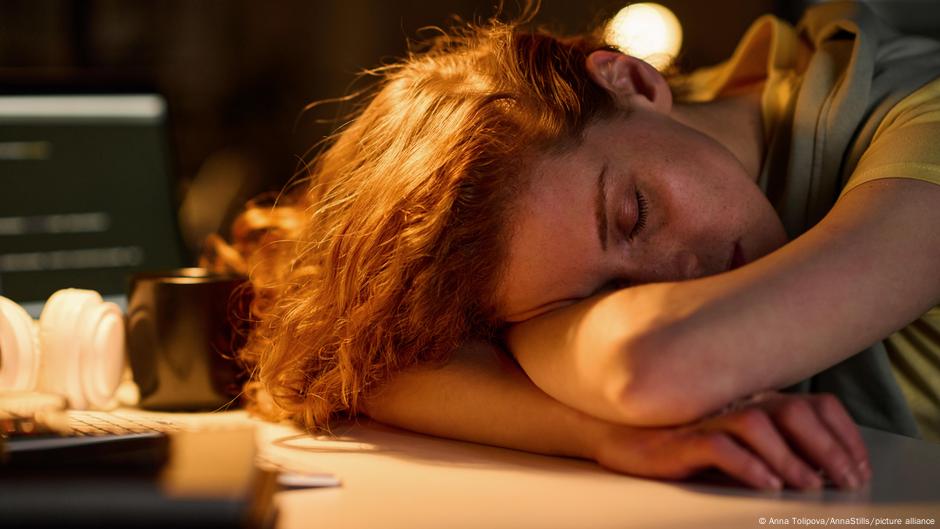
Clara Paula, a self-employed professional in Berlin, has found a solution in freelancing. Her flexible hours allow her to get more sleep whenever she needs it. “I get seven, eight, even nine hours of sleep now,” said Clara. “There’s nobody telling me I have to sit in front of the computer. I start later, take breaks, and finish faster.”
The Importance of Sleep Quality
It’s not just about the quantity of sleep but also the quality. Research suggests that women need to sleep deeper because of their physiology. “By that, we mean more stage N3, the deepest stage of non-REM sleep, and often more REM sleep as well,” said Julio Fernandez-Mendoza, a sleep psychologist and clinical researcher at Penn State Health.
Even in tightly controlled lab studies, where healthy men and women are monitored without stress or sleep debt, women consistently sleep longer and deeper. “That’s the foundation for the idea that women may biologically need more sleep,” said Fernandez-Mendoza.
This may come down to biological resilience, a protective system observed in other areas of research, such as cardiovascular health and longevity. “It makes sense that when a body is designed to create life, it has to be protected. A woman has to be able to sleep and function even while carrying another human being,” he added.
Yet despite this built-in resilience, women report insomnia symptoms twice as often as men. “That starts as early as puberty,” said Fernandez-Mendoza. “Around age 11 or 12 years, girls begin reporting more trouble sleeping than boys, and that trend continues into adulthood.”
The Impact of Sleeping In on Weekends
Does sleeping in on weekends help? According to Fernandez-Mendoza, “Sleeping in can help you feel alert again — you’ve restored your sleep debt.” However, that doesn’t mean your body has fully recovered. “It may alleviate sleepiness, but it may not reverse the accumulated effects on health,” he said.
Studies show that cognitive functions, including attention and reaction time, take much longer to bounce back. Therefore, while sleeping in can provide temporary relief, it does not fully address the long-term consequences of sleep debt.


