A job offer is only the first step, deaf Malaysians say. True inclusion means equal opportunities and room to rise
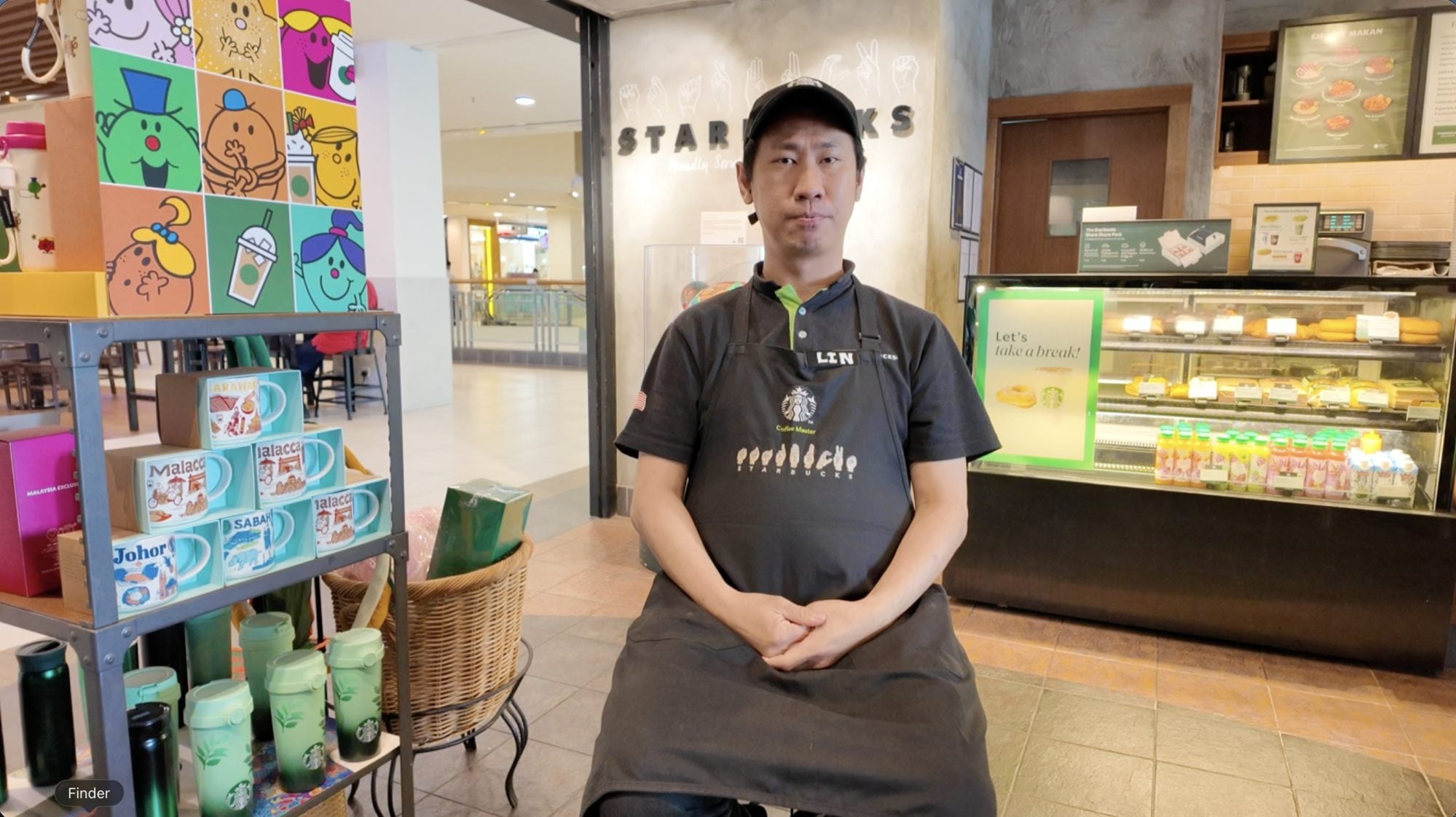
Yap Yee Lin has been serving espresso at a Starbucks in Malaysia since 2012, longer than many of his colleagues have worked anywhere.
But it was only last year, after 13 years with the company, that he was promoted to shift manager at a branch in Kuala Lumpur’s Bangsar Village II.
The wait says less about Yap, who is deaf, than it does about how rare that kind of promotion still is for deaf workers in the Southeast Asian nation – and how much has had to change around him to make it possible.
Do you have questions about the biggest topics and trends from around the world? Get the answers with SCMP Knowledge, our new platform of curated content with explainers, FAQs, analyses and infographics brought to you by our award-winning team.
Yap, 36, works at what Starbucks calls a Signing Store: an outlet staffed by deaf baristas working alongside colleagues trained in sign language, where visual alarms replace buzzers and dual screens allow staff who cannot hear to confirm an order without it needing to be called out.
The Kuala Lumpur branch was the first of its kind in the world when it opened in 2016 and has since become something of a flagship for corporate inclusion.
“The hearing and the deaf, they are also given the opportunity to be independent and an opportunity for promotion,” Yap said.
Across Malaysia, structured career progression for people with disabilities remains the exception rather than the rule. And it often depends on their employer taking the initiative.
Room to rise
The idea for a Signing Store has its roots in a project that Starbucks began rolling out in 2016 to create job opportunities for people with disabilities, according to Rina Siew, head of sustainability and social impact for Berjaya Food, the licensee that operates Starbucks in Malaysia and Brunei.
At first, deaf recruits were mainly employed as cleaners, but the company soon found that offering routine work with little room for career growth was unsustainable.
Deaf employees wanted to become baristas, Siew said, so the coffee giant worked to make it happen.
“That was how the concept of the Signing Store was born,” she said. “We wanted a place where they could build their careers like all of us here at Starbucks.”
Achieving this meant redesigning the outlets themselves, training hearing staff in Malaysian Sign Language and integrating deaf employees into the same professional-development and performance-review track as everyone else.
“At Starbucks, we have a career progression plan for all partners,” Siew said.
A decade later, the results are clear to see in the company’s organisational structure. Starbucks Malaysia now has its first deaf store manager-in-training, based in Penang, alongside deaf shift managers working in branches across Kuala Lumpur, Johor and Sarawak.
Globally, the company operates more than 26 Signing Stores, including in the United States, Japan, South Korea and China.
Siew said the ultimate goal was to make that level of inclusion the norm rather than the exception, incorporating it into Starbucks everywhere, not just a few designated branches.
Standing in the way of the ambition to hire more workers with disabilities is a lingering workplace stigma, however.
Some employers still viewed deaf staff as less productive, or asked why they should receive the same pay as hearing colleagues, Siew said, adding that there was also a chronic lack of sign language interpreters.
“Interpreters in Malaysia are really scarce,” she told This Week in Asia.
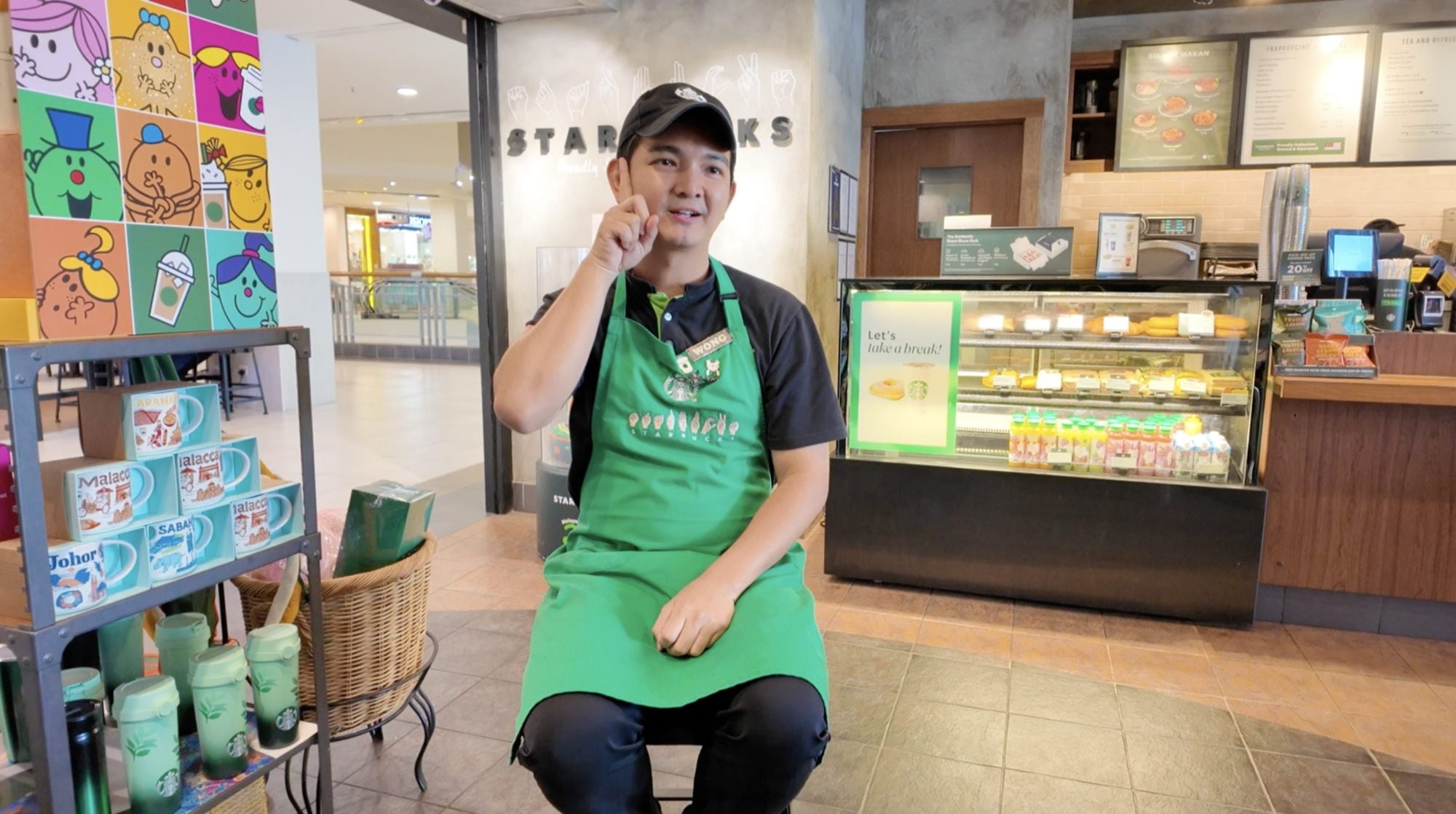
Wong Yi Xiang, 34, knows that struggle all too well. He joined Starbucks six months ago, after a job search hamstrung not by his qualifications, but by communication difficulties.
“My biggest barrier is communication, especially during interviews, because some employers do not understand deaf people,” he said. “All I want is a fair chance to show my work-related skills.”
What Wong really desires from a workplace is simple: hearing colleagues willing to meet him halfway and learn enough sign language to work alongside him as an equal.
Opportunities for deaf people are scarce in Malaysia and many employers who do hire them largely treat it as a quota-filling exercise – a truth Yap knows from firsthand experience.
“It’s difficult for deaf people to look for a job,” he said. “In most places, you only get one or two [deaf employees].”
A place to belong
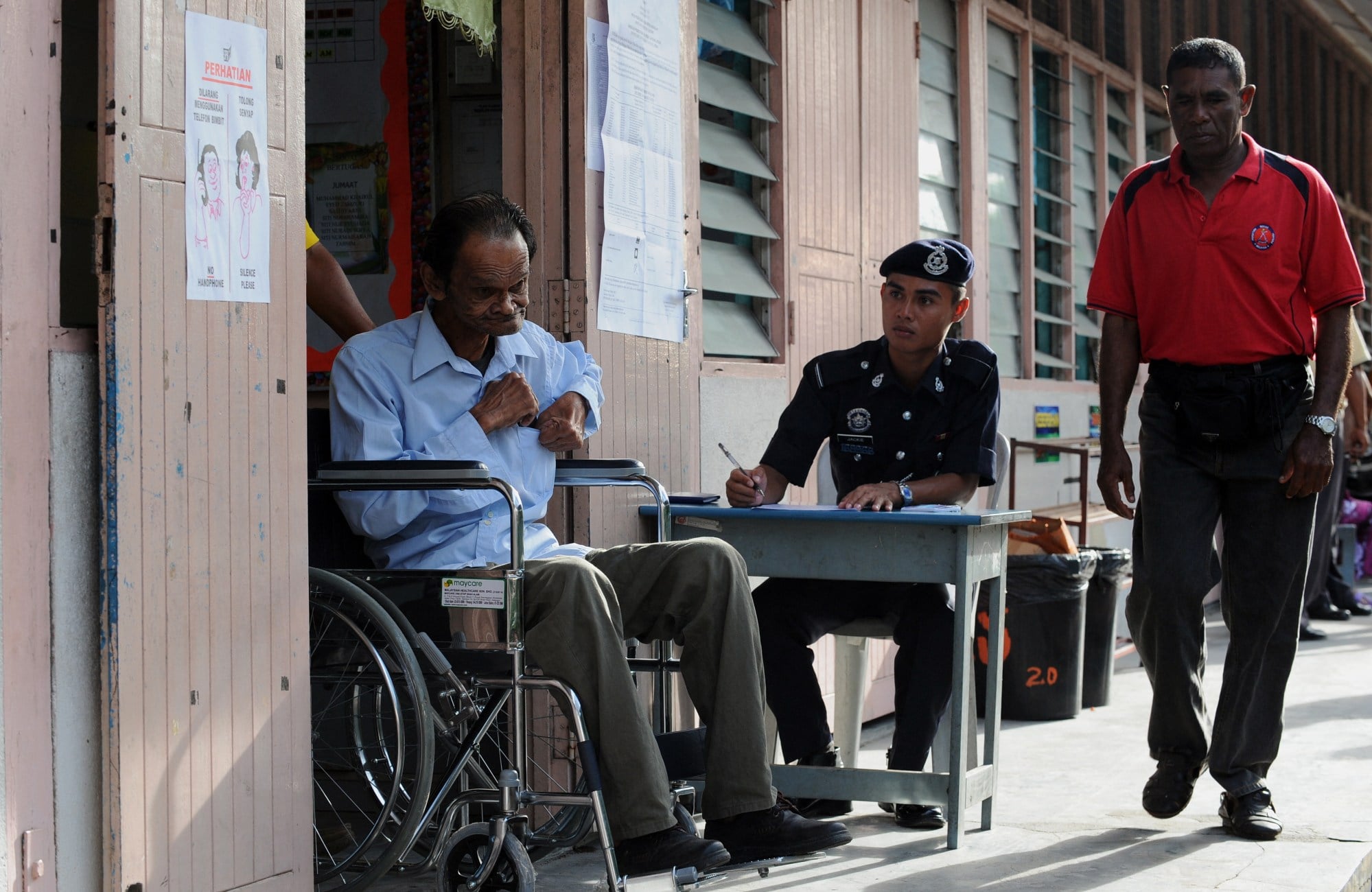
More than 800,000 people were registered as persons with disabilities in Malaysia in 2024, according to the country’s Department of Statistics, representing 2.4 per cent of the population.
Employment among that group has inched upwards: 4,209 people with disabilities held civil service jobs in 2024, the latest year for which figures are available, up from 3,901 the year before.
Yet the main obstacle remains acceptance and understanding, according to the Malaysian Federation of the Deaf.
Its executive director Mohamad Sazali Shaari, who is himself a member of the deaf community, said deaf jobseekers were still routinely asked to prove their competence before being considered for a role in a way hearing candidates rarely were.
“Limitations arise when colleagues are not accommodating of deaf employees’ communication needs or when there is poor access to information,” he said.
“This can become more difficult in workplaces with high staff turnover, where new colleagues may not understand the support deaf employees need, undermining efforts to build an inclusive workplace.”
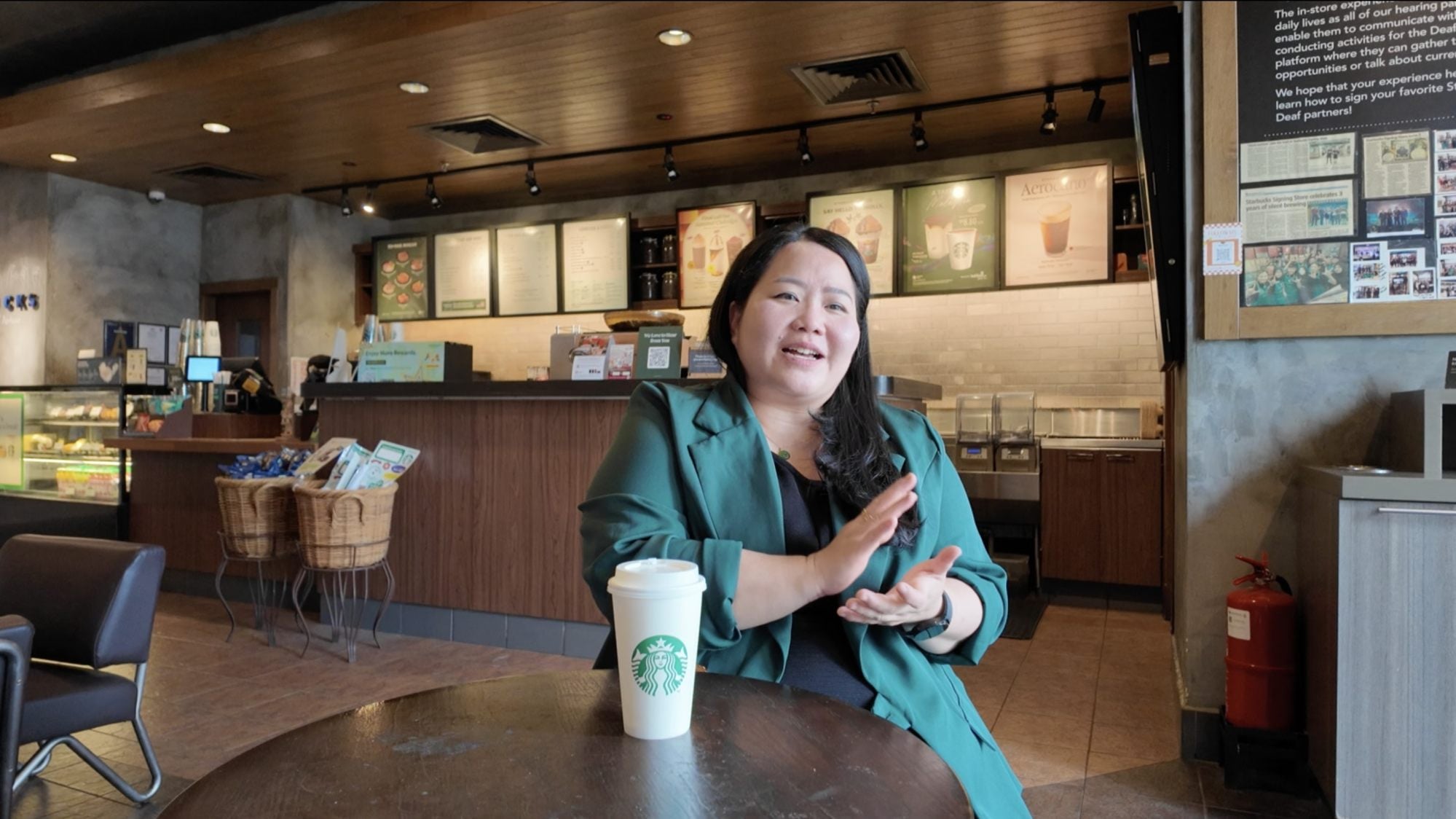
Government incentives had helped, Sazali said, but this was not the same as a sense of belonging.
“We will never feel welcome if our needs aren’t in place and sensitivity towards these needs will help to ease our discomfort in society at large,” he said.
Malaysia’s government has said it is pushing for precisely that kind of change in perspective.
At a gathering in December to mark the International Day of Persons with Disabilities, the cabinet minister who oversees social welfare, women’s rights and family development said the country should move away from viewing disabled citizens as a group in need of assistance and start treating them as one capable of contributing, creating and leading.
“This shift requires a change in mindset: from sympathy to respect, from simply giving to empowerment and from assistance to the recognition of rights,” Women, Family and Community Development Minister Nancy Shukri said.
Malaysia is not alone in trying to move disability employment beyond simply getting people into work.
Singapore has set a target of 40 per cent employment among resident people with disabilities aged 15 to 64 by 2030, up from the 34.7 per cent recorded in 2024-25.
Its Ministry of Manpower said in March that 6,800 employers had received government wage support to hire 10,800 residents with disabilities last year, with a separate scheme helping more than 2,400 disabled jobseekers find work over the previous four years.

Even so, officials in the city state have drawn many of the same conclusions Starbucks reached in Malaysia – that getting people through the door is not the same as offering them a place to belong.
“Inclusive workplaces cannot be built on incentives alone,” said Shawn Huang, senior parliamentary secretary for manpower, during a parliamentary meeting about the country’s annual budget, adding that Singapore would also focus on training, employer support and career resilience.
For Yap, helping manage a Signing Store means more than just a pay cheque; it is a way of being accepted by society. After years of seeing deaf workers elsewhere relegated to one or two token roles per company, a shift manager’s badge feels like a quiet victory.
“I really enjoy it [my job],” he said. “There are so many tourists coming here from all over the world. I really thank them for coming to visit our place and it’s a really amazing experience for us.”
Wong, earlier in his career, is thinking about what he can pass on rather than what he has been given.
“I hope to become a coffee master and learn more about coffee,” he said. “I want to share my knowledge about my work and teach other people.”
More Articles from SCMP
China launches plan for 3D satellite network to monitor sun and cosmic explosions
How can future doctors blend clinical rigour with AI fluency and empathy?
Meet Alix Earle’s influencer sister Ashtin – they’re both on Netflix’s Earle Meets World
How bizarre 1969 spy thriller The Chairman pitted Gregory Peck against Mao over ping-pong
This article originally appeared on the South China Morning Post (www.scmp.com), the leading news media reporting on China and Asia.
Copyright (c) 2026. South China Morning Post Publishers Ltd. All rights reserved.

Related posts:

Fiction park: He was the best in class. He still wasn’t good enough

Gagan Thapa takes oath as Congress president, vows to regain public trust

Inside knowledge that has locals gripped by fear after gran’s body found decomposing in cattle dip

New property purchase disclosure rule in Japan sparks fears it may curb foreign investment

Dino-mite treasures: inside Singapore’s Fort Knox storing playthings of ultra-rich