Participants sailing to Guangdong province’s Dongao Island say voyage was eventful although bureaucracy and costs were hurdles
Retired harbour pilot Alex Yu Chi-leung sailed his 50-foot wooden yacht, Bowline, from Causeway Bay in Hong Kong to Dongao Island in Zhuhai under a new cross-border yachting scheme last week, but bureaucratic hurdles and shallow waters tempered the excitement of the leisure trip.
It was Yu’s first voyage under the scheme, but it could also be his last unless mainland Chinese authorities improve certain requirements.
“If the procedures are simplified – because right now they are too numerous, complicated and ambiguous – then I will come back again,” he said.
Do you have questions about the biggest topics and trends from around the world? Get the answers with SCMP Knowledge, our new platform of curated content with explainers, FAQs, analyses and infographics brought to you by our award-winning team.
“If I have to do a massive round of work just to sail for one or two days, I might as well sail in Hong Kong.”
He added that he would rather take a commercial ferry to Dongao for a holiday.
Still, the 66-year-old veteran mariner gave the voyage a score of 60 out of 100 and viewed it as a worthwhile test run.
Yu was among 139 participants aboard 16 yachts from Hong Kong and Macau that sailed to Dongao under the Guangdong-Hong Kong-Macau individual yacht scheme. Launched in June, the scheme allows eligible Hong Kong and Macau vessels to enter designated Guangdong waters for tourism.
The voyage, which took place over the weekend, was the scheme’s largest cross-border flotilla to date. It gave visitors a taste of the island’s seafood, hotel suites and natural scenery.
An eventful voyage
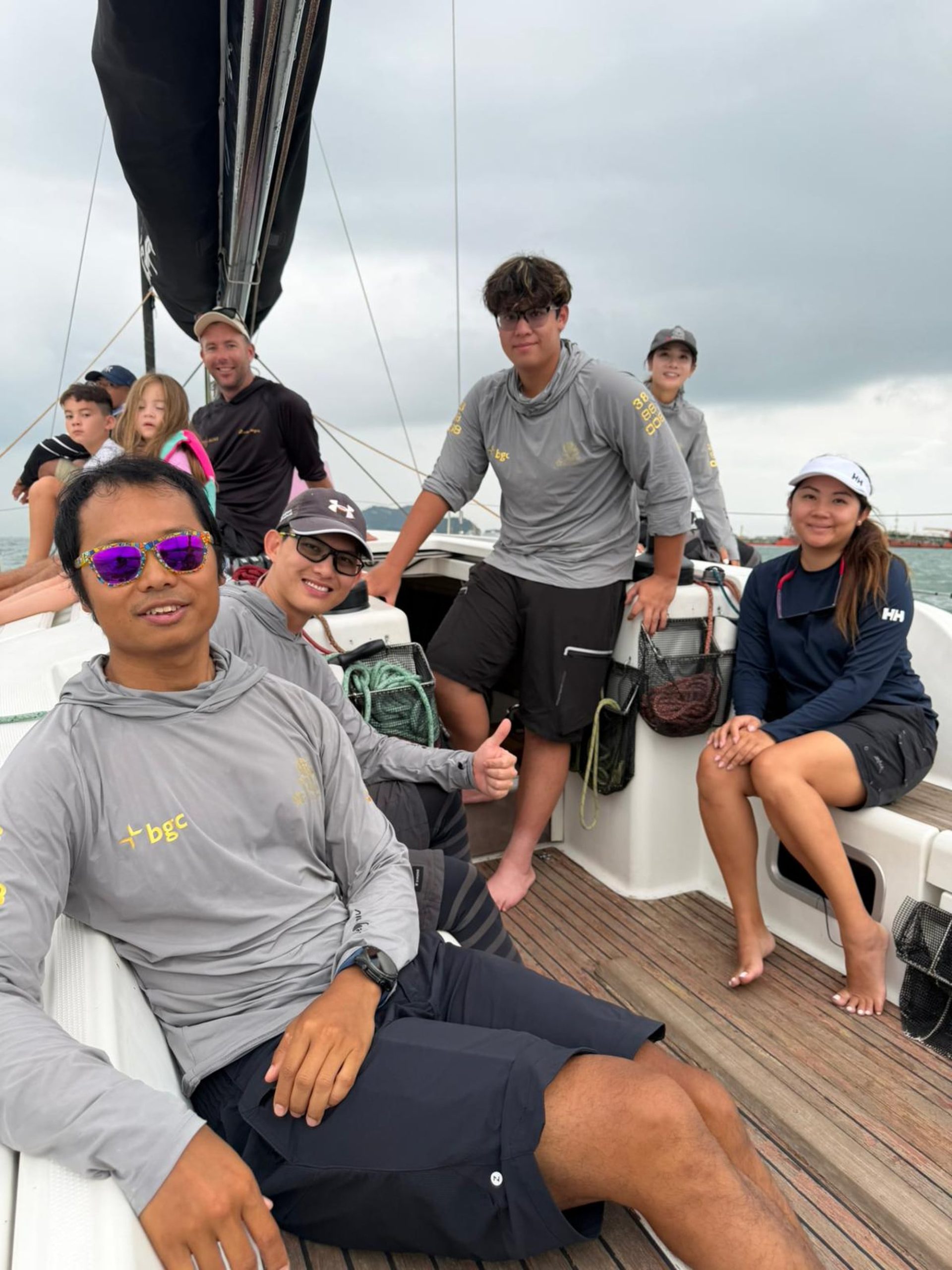
Early on August 29, the flotilla left the Royal Hong Kong Yacht Club in Causeway Bay for Dongao, about 36 nautical miles (53.7km) southwest of the city.
The journey took between 6 1/2 and 8 1/2 hours, depending on the yacht’s speed.
For participants such as 60-year-old financial executive Noel Chan and his 16-year-old son Nigel, it was family time. Chan sailed his 45-foot cruiser, Rampage, in 15-knot winds, while the pair chatted and shared drinks on deck.
“The wind speed was very good, conditions were great,” Nigel Chan said.
Mabel Tsim, an IT professional and sailor, described the eight-hour journey as a stress-relieving bonding experience.
She compared Dongao Island’s idyllic setting and sea views with those of a Southeast Asian resort in Thailand or Bali, Indonesia.
“For us as crew members, we focus on the journey itself,” she said. “The destination is a place for leisure, but more importantly, the process is sailing … For city dwellers, it is very stress-relieving.”
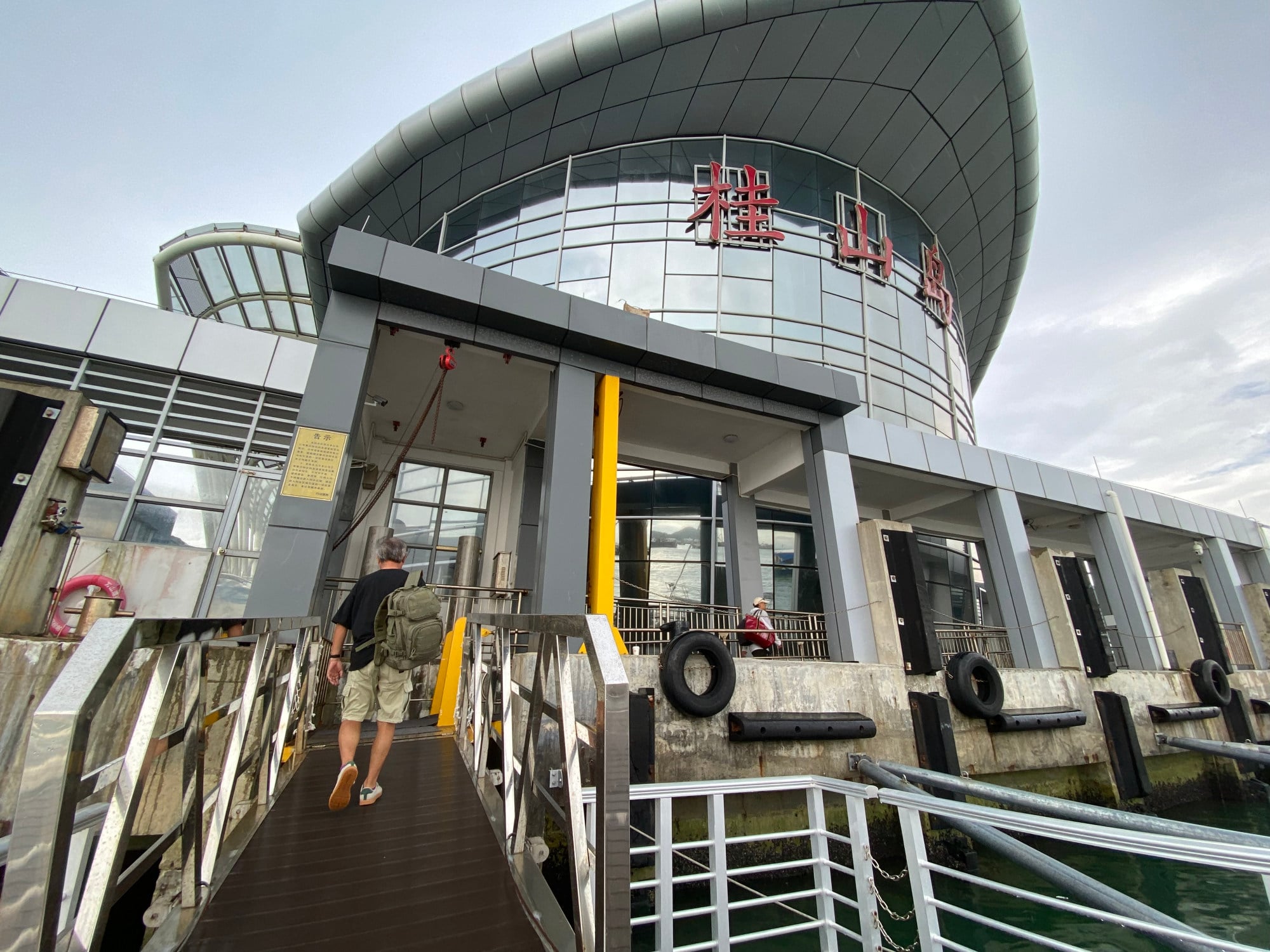
But hardware limitations soon became apparent. Immigration procedures at the designated port on Guishan Island took about 20 minutes – visitors entered a building, went upstairs for home return permit and baggage checks, then waited downstairs while officers checked vessel documents.
However, there was only one yacht berth, meaning vessels had to circle at sea for about 15 minutes while waiting for the previous yacht to clear.
One yacht suffered an incident at the port when its propeller broke off and sank to the seabed.
After navigating intermittent rain, the fleet arrived at Dongao, an island heavily reliant on mainland families visiting at weekends. But its temporary pontoons proved inadequate, with one yacht running aground twice in shallow water.
In the end, 13 of the 16 yachts stayed on the island for one night, while the rest remained for two.
Before setting sail, a yacht typically had to spend thousands of Hong Kong dollars to meet government requirements, including a US$1,500 vessel inspection and 3,000 yuan (US$447) in clearance fees, excluding hotel, food and other expenses.
For some participants, the time and expense were still worthwhile.
“I think out of 100 marks, I would say 85 to 90, so no such complaint … [the mainland is] really, really helpful for this [scheme] … [they] didn’t give you any hassle,” Noel Chan said.
His son Nigel compared the cost of sailing to Zhuhai with a friend’s experience in the United Kingdom.
“It’s 100 per cent more affordable, and it’s a much more pleasant experience,” he said.
While committed sailors and industry advocates regard the scheme’s early problems as necessary growing pains on the path to a world-class Greater Bay Area maritime economy, more pragmatic yacht owners remain divided over whether sailing north is worth the effort.
The yacht economy
For those with a team to navigate the administrative hurdles, the value proposition can be striking. Noel Chan said he spent just several thousand yuan on Marriott sea-view suites and other expenses for his group of 12.
He said the trip cost a fraction of a comparable stay in Hong Kong, and voiced concern that it could lead to a further outflow of Hong Kong consumer spending to the mainland.
“You go to Hong Kong, have a bad dinner, you spend that money already. So I think it’s a big challenge [for the] Hong Kong economy,” he said. “The money moved here again by sea instead of Hong Kong cars going [through the northbound vehicle scheme].”
The flotilla was a boon for some hotels.
A representative from the island’s five-star Gree Dongao Hotel said that the flotilla booked nearly 70 rooms, filling the 268-room property on August 29.
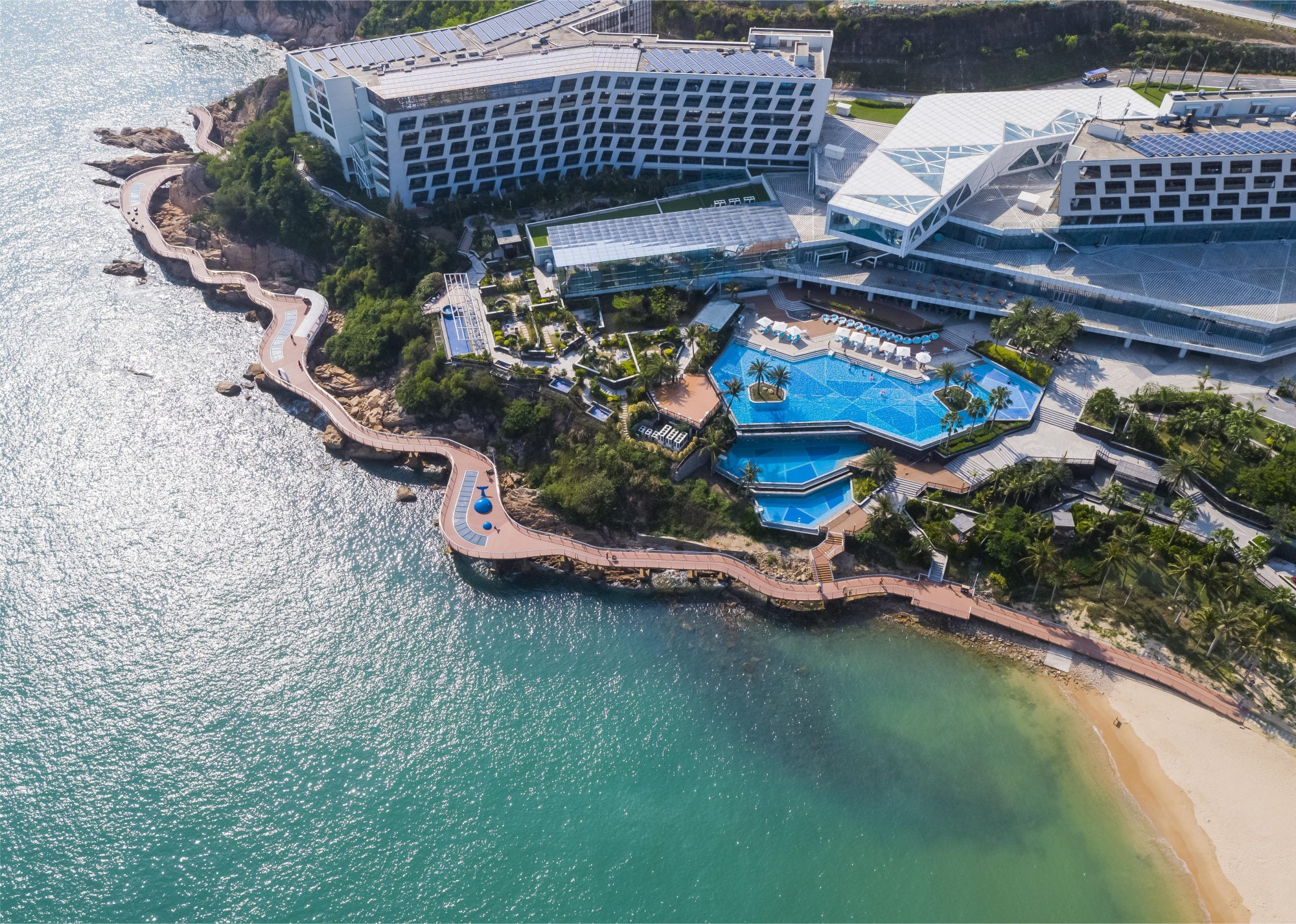
The hotel is part of the state-owned Zhuhai Gree Group, which has invested about 4 billion yuan since 2009 to develop a high-end hotel cluster on Dongao. The cluster also includes a 257-room Marriott and the cliffside Alila resort, which has 103 suites and is already attracting Hong Kong yachting people.
Dongfa Seafood Restaurant co-owner Zhou Shunfang, 60, marvelled at the flotilla but said she had not seen an influx of high-spending yacht guests. She suspected touts had intercepted them at the pier before they discovered her long-established restaurant.
Charting a smoother course
Liao Kai, president of the Zhuhai Yacht Association, said about 50 yachts had obtained temporary nationality certificates, allowing them to use the scheme to travel to the Greater Bay Area.
Participants broadly agreed that the cross-border experience would require major upgrades to both its policy framework and physical infrastructure before it could unlock the full economic potential of Greater Bay Area waters.
At the policy level, reducing the barriers to entry is crucial. The Royal Hong Kong Yacht Club had called for cross-border costs to be harmonised, vice-commodore Joseph Chu said. He suggested that northbound fees should be cut from thousands of Hong Kong dollars to match the nominal HK$58 charged for southbound vessels.
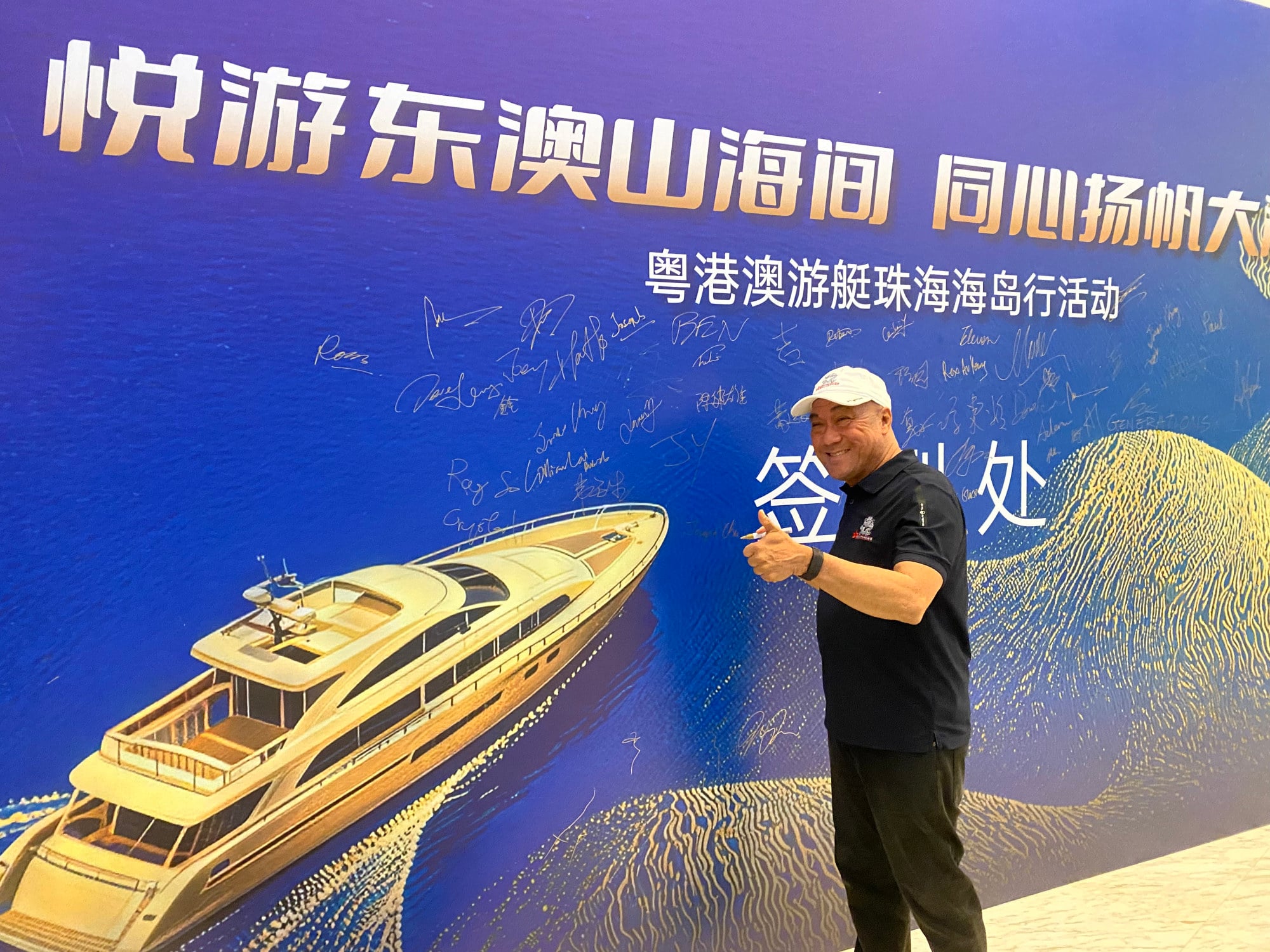
He argued that equalising the fees would turn special expeditions into more frequent trips, similar to Hong Kong residents travelling to Shenzhen for afternoon tea before returning home.
Yu echoed the call for less bureaucracy. He urged authorities across the border to drop the allegedly redundant “temporary nationality certificate” and accept surveys carried out by Hong Kong-approved professionals, rather than requiring separate and costly mainland inspections.
Workarounds to reduce costs are also emerging. Liao said traditional commercial shipping agencies had charged tens of thousands of dollars for customs clearance, prompting the Zhuhai Yacht Association to set up a dedicated agency to deal with paperwork. The move helped reduce outbound clearance fees to around 3,000 yuan for the flotilla.
On the water, relatively simple logistical changes could reduce delays. Noel Chan recommended staggered arrival times for yachts at clearance ports such as Guishan, to prevent bottlenecks that leave vessels circling offshore.
Tsim said authorities should find a way to process several boats at once. She also called for less rigid point-to-point travel rules, allowing yachts to visit more than one destination on the same itinerary.
Infrastructure remains a major constraint. Both Yu and Noel Chan said robust floating moorings, and more of them, were urgently needed at destinations such as Dongao Island to stop yachts having to “double park” in unsafe conditions.
Gao Jun, an associate professor at Sun Yat-sen University’s school of tourism management, said Zhuhai needed to improve tourist spending opportunities and amenities to extend the value chain beyond its 20-year manufacturing base in Pingsha.
By taking advantage of new self-navigating repair policies in Jinwan, cross-border access points and related services, Zhuhai aims to capture longer-term value from yacht maintenance and berthing, rather than relying solely on weekend tourism.
Liao said four yachts had successfully sailed to Jinwan, undergone major repairs and returned to Hong Kong since the self-navigating vessel repair policy was launched in March.
He added that more than 20 other vessels were applying to use the service.
Industry leaders urged patience. Chu compared the scheme’s early administrative and infrastructure problems with the chaotic early days of Hong Kong International Airport before it developed into a global aviation hub.
Stakeholders are now preparing for the anticipated launch of southbound travel.
Liao said he had heard from local authorities that the southbound scheme might open in September.
More Articles from SCMP
Hong Kong’s first astronaut Lai Ka-ying to give live lecture from space
As Hong Kong feels the heat, it needs a robust climate resilience strategy
China launches plan for 3D satellite network to monitor sun and cosmic explosions
Viral Jennie clip tests limits of South Korea’s AI deepfake laws
This article originally appeared on the South China Morning Post (www.scmp.com), the leading news media reporting on China and Asia.
Copyright (c) 2026. South China Morning Post Publishers Ltd. All rights reserved.