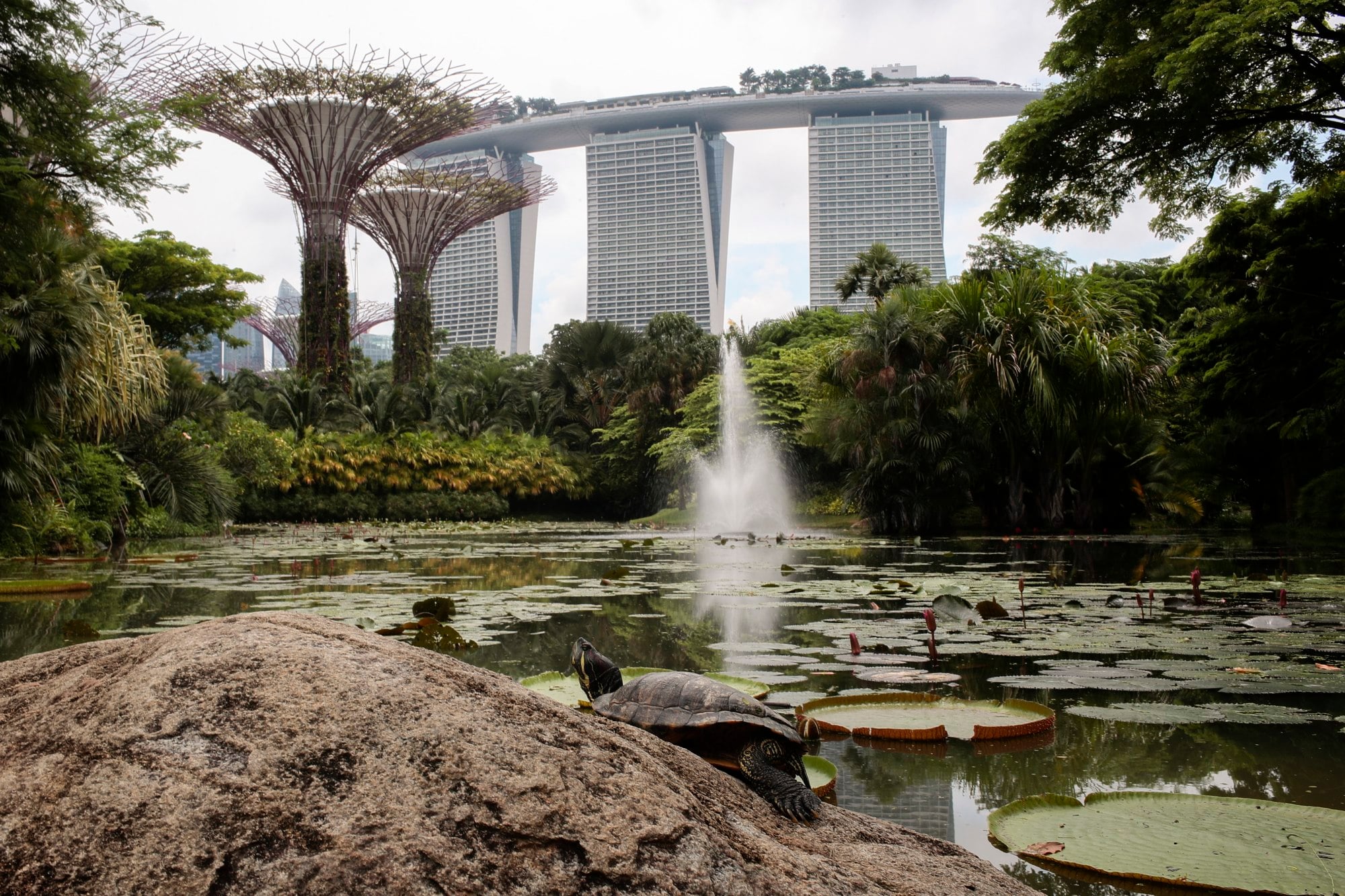
Marina Square’s future revamp typifies the rise of mixed-use developments incorporating retail, office, residential and other components
While the announcement last week of the closure of a 40-year-old mall in Singapore‘s Marina Bay district for redevelopment has caused an outpouring of sentiment among shoppers and tenants, experts say the prime real estate has to be updated into a mixed-use site to survive in the city state.
Last Monday, property developer Singapore Land Group (SingLand) said in a statement that Marina Square, which was completed in 1986, would close on March 31 for a redevelopment that would include features such as luxury residences, serviced apartments and offices with a gross floor area of more than 360,000 sq m.
The revamp, slated for completion in 2031, will have a 304-key hotel that will place guests close to the Marina Bay area, and Marina Square will be refreshed into a four-storey shopping centre offering a wider variety of food and drink options and pet-friendly environments, according to SingLand.
Do you have questions about the biggest topics and trends from around the world? Get the answers with SCMP Knowledge, our new platform of curated content with explainers, FAQs, analyses and infographics brought to you by our award-winning team.
Three new towers will be integrated into the site, including a 49-storey residential tower hosting 204 luxury homes, while offices will occupy eight floors of a new mixed-use tower, providing around 13,000 sq m of lettable space.
Local media reported that the news of Marina Square’s closure came with disappointment from shoppers and tenants alike. Parents lamented the loss of the shopping centre known for its indoor playgrounds and children’s retail outlets, while tenants said they were shocked by the short notice.
Retail experts point out that consumers today are increasingly seeking experiences, community and connection, and this shift is fuelling the growth of mixed-use developments around the world.
Speaking to This Week in Asia, Tina Qiu, partner and head of Southeast Asia and China at PLP Architecture, the development’s master planner and lead designer alongside local firm DP Architects, noted that the current Marina Square mall was built in the 80s, before much of the iconic Marina Bay precinct had come into existence.
“It was really quite unique of its time because it was the only object there. But in the last 40 years, everything around it to the south of the bay has really been developed,” said Qiu.
Marina Bay was built through a decades-long land reclamation and water management project that transformed open sea and docking points into a modern downtown financial and lifestyle district. The iconic Marina Bay Sands building was opened in 2010.
Qiu noted Marina Square was built in an “introverted” way since malls were then designed to keep shoppers inside the building and the focus was internal attractions like department stores, bowling alleys and cinema complexes, without much connection to pedestrians walking on the street.
“It remained quite by itself, tucked away. Meanwhile, it holds this massive jewel [of being] in the centre of this bay front,” Qiu said.
Without any rejuvenation, the mall would have struggled to keep up with everything else happening around Marina Bay, and there was a need to prepare for the next 40 years to stay relevant, she added.
The revamped mall will have better wayfinding, sports facilities like padel courts, a botanic loop, gardens, covered bridges linking it to other buildings in the area like the coming NS Square and places for members of the public to sit.
Marina Square is the latest example in Singapore of a shopping centre being redeveloped to offer a wider range of amenities. Union Square along Havelock Road is slated to become a mixed-use landmark with offices, retail, and luxury residences, while Tanglin Shopping Centre near Orchard Road is slated for a similar transformation.
These projects are being upgraded with support from the Urban Redevelopment Authority’s (URA) Strategic Development Incentive (SDI) Scheme, which encourages the rejuvenation of older commercial buildings in some areas into innovative developments that will transform the surrounding urban environment.
The scheme allows developers to apply for customised planning parameters, including higher density allowances to the gross floor area and gross plot ratio, permission to change land use, like introducing residential or hotel components into commercial areas and greater flexibility for taller or distinct architectural building profiles.
Experts noted that such upgrades in Singapore reflected a global shift to mixed-use developments for shoppers, homeowners and office tenants to enjoy a more diversified experience.
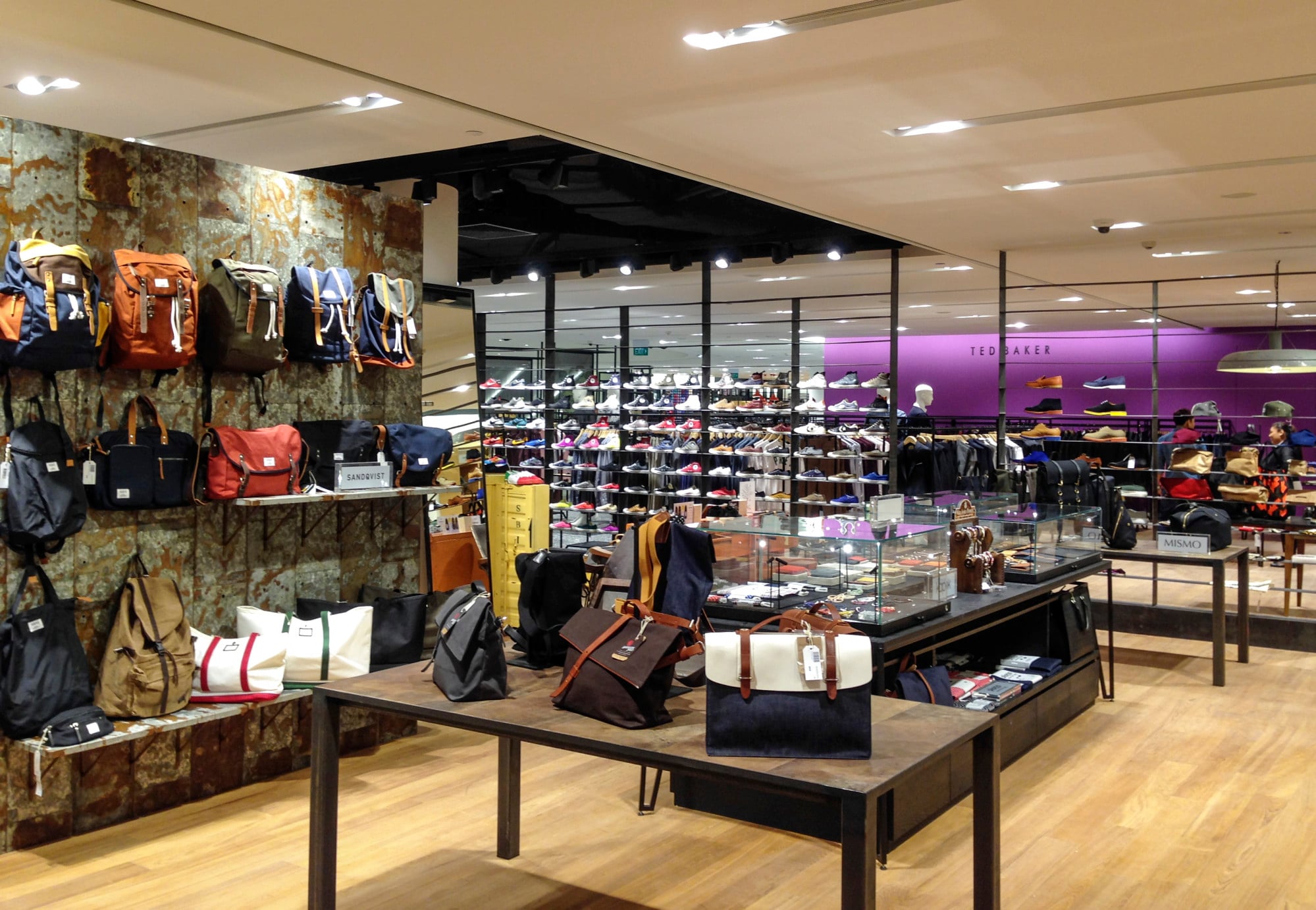
Seshan Ramaswami, an associate professor of Marketing Education at Singapore Management University, called the redevelopment of Marina Square “another little chipping off of the traditional bricks-and-mortar shopping model”, which was based on large malls, department stores as anchor tenants and a huge array of specialty stores.
In recent years, several major department stores in Singapore, including John Little, Robinsons and Metro, have either ceased or wound down their operations due to evolving lifestyle trends.
Ramaswami likened modern retailing to a real estate business where a developer would build what would generate the greatest value in returns over the long term.
“Increasingly, all physical retail is facing very powerful competition from e-commerce outlets across the world. And then, in Singapore, there is also the proliferation of physical malls built up over the last decades. Some estimate that over 50 new malls have been developed in Singapore since 2000,” Ramaswami said, noting that every town in Singapore had its own mall with similar offerings.
“The attractiveness of centrally located malls in the Orchard and central business district area has reduced considerably consequently,” he added.
Sona Aggarwal, managing director and head of retail sales and strategy in Asia-Pacific at Cushman & Wakefield, noted that for asset owners too, mixed-use developments offered the added advantage of diversified income streams and greater resilience across market cycles.
“By integrating retail with residential, office and hospitality components, these developments can generate consistent footfall throughout the week, benefiting retailers while enhancing the overall appeal and long-term value of the asset,” said Aggarwal.
She noted that across Asia, many of the most successful retail destinations were now part of large-scale mixed-use developments that integrated retail, offices, hotels, residences and public spaces into a single, connected precinct.
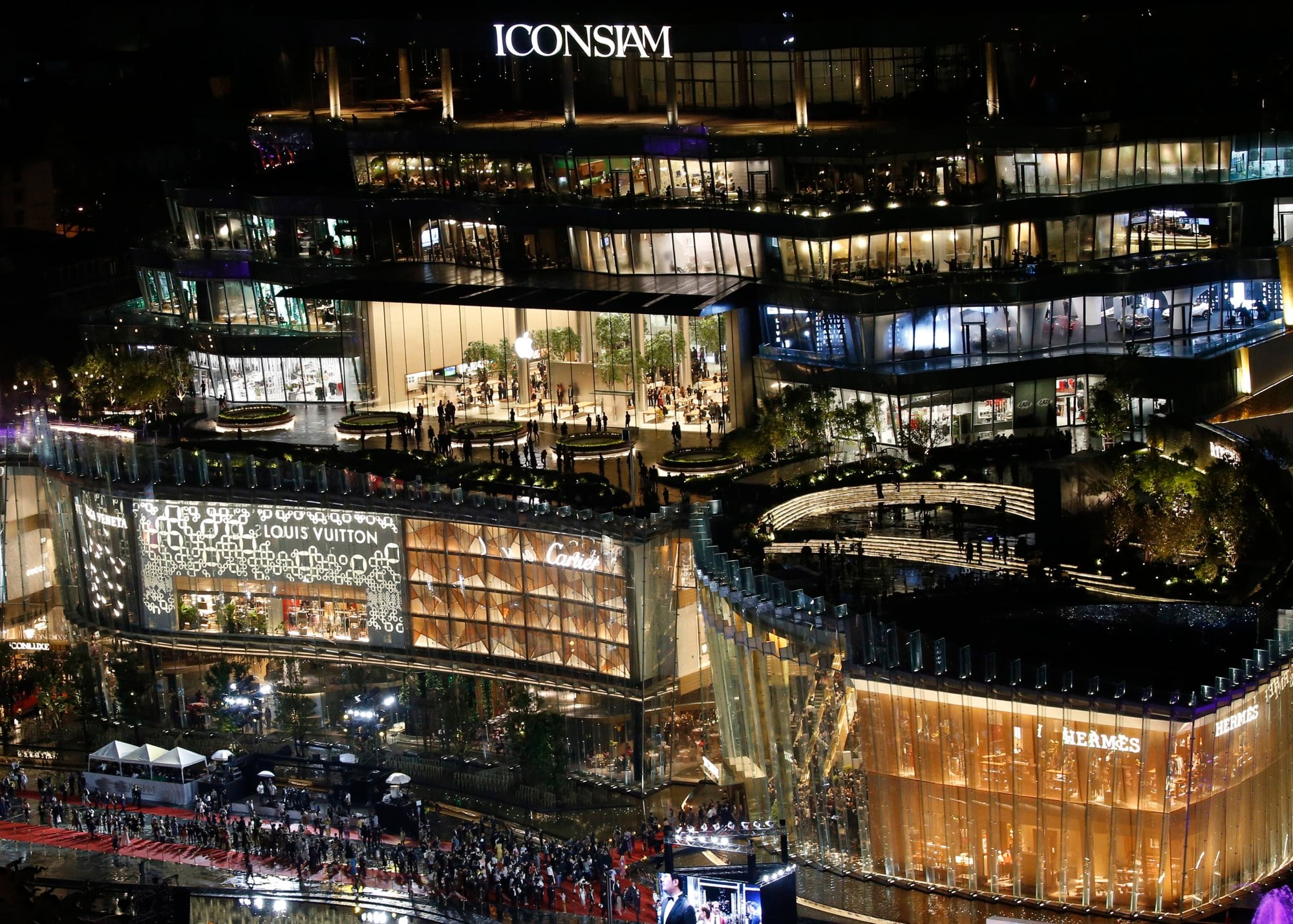
These included Bangkok’s IconSiam and One Bangkok, Omotesando Hills in Tokyo and Taikoo Li in Shanghai, which combined retail with lifestyle, cultural and public space elements to create vibrant urban precincts, Aggarwal noted.
She pointed out that particularly in land-scarce Singapore, mixed-use developments enhanced land productivity and created stronger and more consistent footfall.
“As consumer preferences continue to change, the modern mall is no longer just a place for commercial transactions, but a destination for community, connection and shared experiences,” Aggarwal said.
Sulian Tan-Wijaya, executive director and head of retail at Savills Singapore, noted that what made Singapore unique was the “level of government orchestration”.
“Through precise planning incentives like the SDI scheme, Singapore’s URA pushes developers to think about urban renewal, sustainability and community placemaking much faster than market forces alone would dictate,” Tan-Wijaya said.
She also noted that the Marina Square example showed redevelopment no longer meant demolition since the plan was to retain the existing retail podium structure, which would minimise the project’s carbon footprint.
“It shows that cities can radically reinvent themselves for the next century without erasing their architectural heritage or destroying the environment,” said Tan-Wijaya.
Helen Kuan, a regular at Marina Square, said she had been going to the mall since it opened, when it was the largest shopping centre in the country. With about 59,000 sq m of retail space at the time, it was said to be the largest shopping complex in Southeast Asia.
Kuan, a retired regional human resources director, recalled family outings at the mall when her children were young.
“Now that it will be redeveloped, I’m going to miss it but it’s for the good of the future and its expansion. I’m looking forward to seeing the new Marina Square,” said Kuan.
More Articles from SCMP
China’s export machine strengthens in August as US critiques trade imbalance
Vietnam’s To Lam visits Russia and France amid South China Sea tensions
Hong Kong families hit as volcanic ash strands up to 200 helpers in Indonesia
Hong Kong’s MTR Corp wins bid as part of group to build new Sydney station, properties
This article originally appeared on the South China Morning Post (www.scmp.com), the leading news media reporting on China and Asia.
Copyright (c) 2026. South China Morning Post Publishers Ltd. All rights reserved.

Related posts:


Japan’s protest over Russian soldier statue aggravates ‘summer of tension’

Nepal announces ‘scholarship bank’ for children orphaned or displaced by floods

Pakistan’s Enduring Commitment to Religious PluralismPublished on: September 10, 2026 4:31 AM

63% reject Yong Hye-in nomination, 47% criticize Kim Seung-won’s