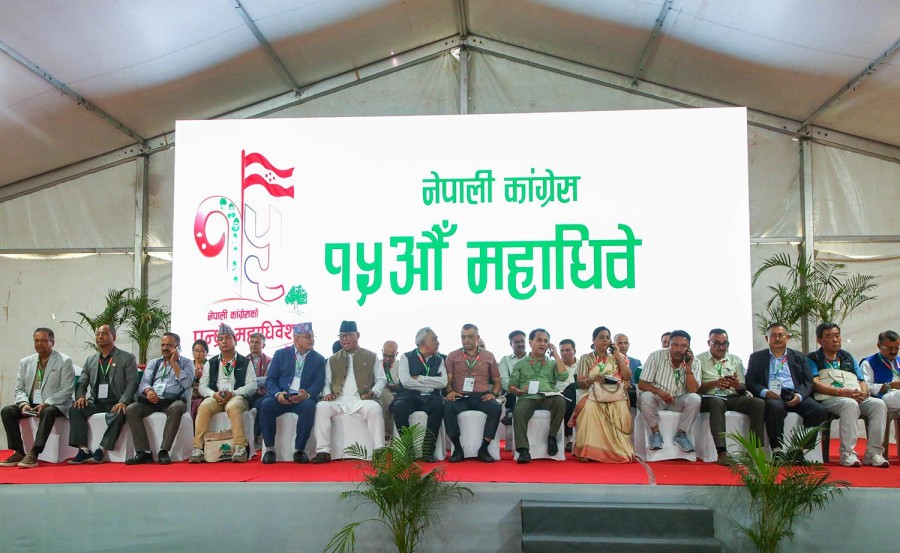
Nepal, Oct. 11 — Nepali politics, even after the 2025 Gen Z uprising, has changed only partially, in both organisational and substantive terms. Riding the wave of instant popularity from major parties’ failures to project an image and deliver, the Rastriya Swatantra Party (RSP) has been catapulted to power, with Balendra Shah as Prime Minister.
Yet, one shift since then is in the Nepali Congress (NC), as its second-generation leaders try to read the country’s changing political landscape more objectively. The new reality is that politics as usual can neither be sustainable nor attractive because of the mounting pressure from the country’s youth. People were also disgusted with old politicians who turned politics into a fiefdom, with a few leaders, mostly from the three parties-the NC, the CPN-UML and the NCP-forming a triumvirate, holding the post of prime minister; people wanted change in any form. That change was prompted by the Gen Z uprising of September 8 and 9, 2025.
The two NC leaders, Gagan Thapa and Bishwa Prakash Sharma, the party’s then general secretaries, made a bold decision to hold a special convention, as per the party’s provisions, and change the party’s nature and mission in tune with the new generation’s demand to rejuvenate it. This decision was taken following the refusal of Sher Bahadur Deuba, the then President of NC, to comply with their proposal to go ahead either with the regular convention or a special one to prepare the party for the upcoming elections.
It was expected that the NC would be able to project its new image before the people. However, due to paucity of time and the sweeping anti-establishment winds blowing against the major parties, the NC was badly thrashed in the March 2025 election by the newly formed RSP and the public craze for Balendra Shah.
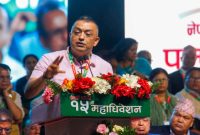
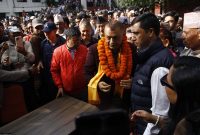
When Thapa and Sharma failed to persuade the Deuba group to reconsider their decision about holding the 15th party convention under the leadership of Thapa (elected by the special convention, and endorsed by the Election Commission and the Supreme Court), the 15th party convention was held, sidelining the disgruntled leaders opposed to Thapa’s presidency. The opening ceremony of the Convention on 4 October, 2026, was not only impressive due to the attendance of about 40,000 people but also due to the management skill of the NC. Attended by leaders of all recognised parties and a few other dignitaries, the convention is likely to resurrect the image of the oldest party.
Now the NC is a transformed party with tall agendas of rejuvenating it. Some of the points endorsed by the convention are restricting the party from grassroots level to central level, two terms for prime minister, denial of alliance politics before election, new political culture, division of functions between centre, province and local level governments, addressing the demand of Gen Z youth, selection of candidates through election, amendment to the constitution based on national consensus, sharing of production by the private sector, and so on.
The new leadership’s odyssey seems daunting but not insurmountable given the clarity of ideas, missions and the determination of leaders who are not, as of today, corrupt. Since the NC has less chance of coming to power soon, the grace period would spare the party from being tainted with charges levelled against the past governments. How the NC’s new leaders navigate the party’s direction in the turbulent sea of political uncertainty created by ‘demagogic populism’, heightened by the party’s distractors as well as by outsiders, needs to be watched.
It is contingent upon Shah’s own performance to deliver. It is also difficult to sustain the popularity earned instantly. As politics in Nepal is still fragile and unpredictable despite being governed by a party having a near two-thirds majority in Parliament, no political pundits can hazard any guess about its longevity. Today, threats to the government come more from mass upsurges, fueled by the slightest excuse, than from institutionalised opposition parties in Parliament or outside. Since they are too weak to topple the present government, movements outside Parliament would be disastrous, as happened in 2025.
In the current political horizon of Nepal, the NC has rekindled the hope of rectifying maladies afflicting the democracy’s evolution. While other parties’ prospects appear to be dim, a contest between the NC and the RSP seems likely. The decline of the communist movement in South Asia had not stalled the growth of left parties in Nepal. However, the situation is different now. The left parties, especially the CPN-UML and the Nepali Communist Party-a conglomeration of former Maoists and UML members-would be unable to stop the march of other ‘non-communist’ parties like the NC and the RSP. Even KP Oli’s leadership is blunted by his own high-handedness and obdurate behaviour. As populism is a momentary phenomenon, it does not help resolve the crisis in his party.
The resurgent NC, led by Gagan Thapa and Bishwa Prakash Sharma, is likely to stage a comeback with an equally powerful appeal and agenda as the Balen-Rabi wave during the 2025 election. Since leadership is a crucial variable in political management, the renewed NC leadership seems poised to invigorate the odds against it, thus transforming despair into hope. NC leaders can also eat into RSP’s vitals if the latter becomes incapable of retaining public confidence-a fleeting aspect of liberal democracy. The leadership of the renewed NC must turn the tide. Early signals are not disappointing: the new generation of NC leadership will restore the lost political space and emerge as the only alternative force to the RSP.