Germany’s Strong Support for Israel
On Tuesday, events across Germany took place to commemorate the Hamas attack on Israel on 7 October 2023. Foreign Minister Johann Wadephul expressed strong support for Israel during an interview with Paul Ronzheimer, host of Germany’s number one daily current affairs podcast.
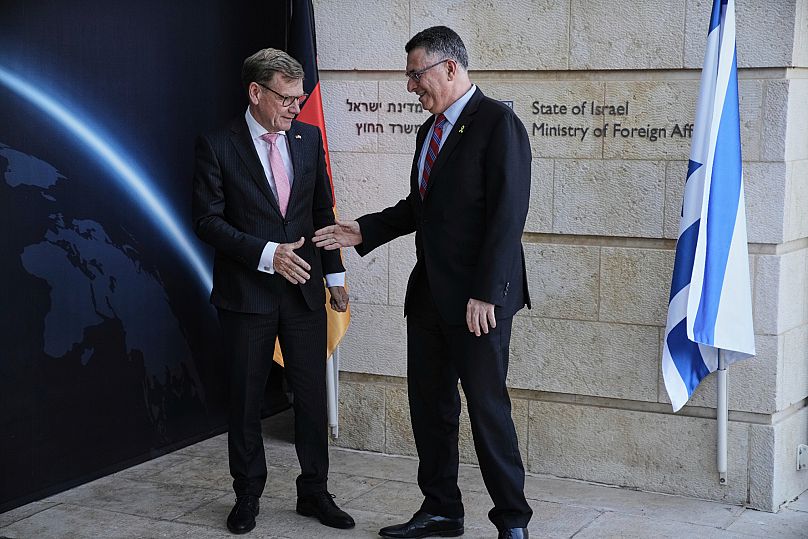
Wadephul emphasized his personal stance, stating, “As a German, I am automatically the clearest defender of Israel, not just as Johann Wadephul.” He highlighted that he often stands out as the most vocal supporter of Israel among his EU counterparts in Brussels.
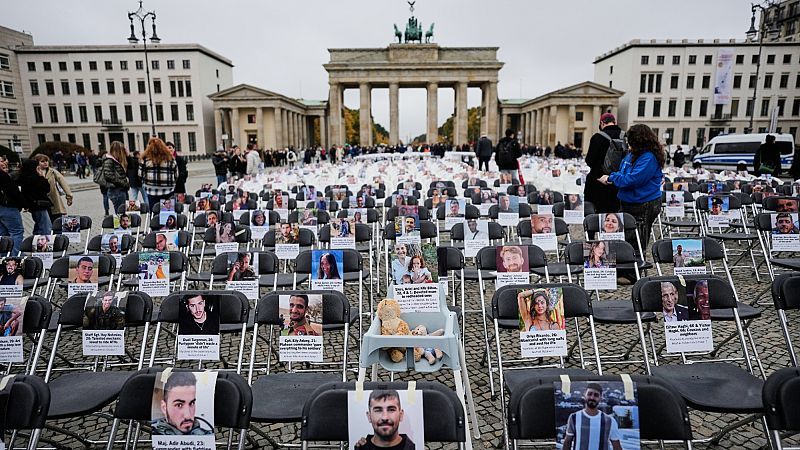
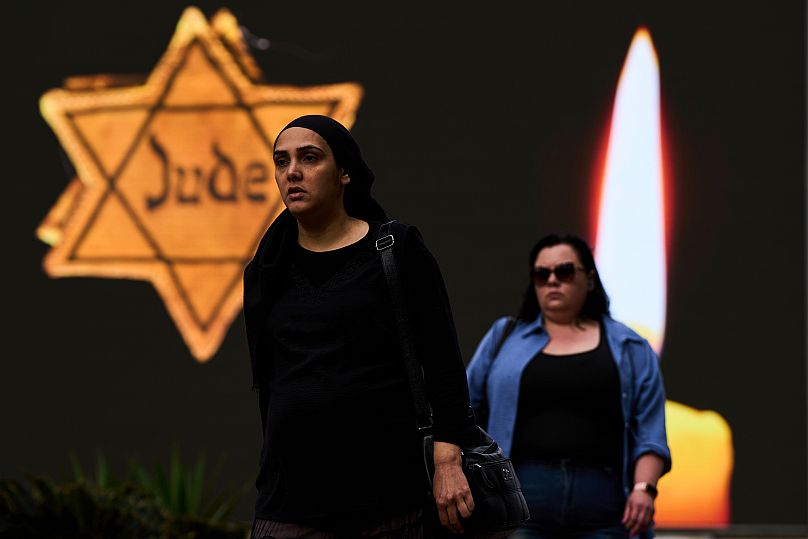
At the Brandenburg Gate in Berlin, the names of Israeli victims from the attack were read out during a ceremony. Chancellor Friedrich Merz, a Christian Democrat like Wadephul, used the occasion to address the growing levels of antisemitism and urged Germans to show solidarity with their Jewish compatriots.
“Let us all show that we stand by their side and that we will do all we can to ensure that Jews can live here in Germany with confidence and without fear,” Merz said in a video message published on X.
Just two days earlier, Merz suggested that Germany should consider boycotting next year’s Eurovision Song Contest if Israel is excluded. “It’s a scandal that this is even being discussed. Israel has a place there,” he stated.
More recently, Berlin did not recognize Palestinian statehood, unlike some of its neighbors, and rejected sanctions on Israel as proposed by the EU Commission.
Why Is Germany Israel’s Closest Ally in Europe?
Germany stands out as the most vocal and closest ally of Israel within the European Union. One of the primary reasons for this relationship is Germany’s Nazi past, which involved the persecution and murder of millions of European Jews.
In 1949, when Germany became a democracy again and the Federal Republic was founded, a political concept called “Vergangenheitsbewältigung” or “coming to terms with the past” took root. This concept aimed to confront the crimes committed by Germans, bring perpetrators to justice, process the Holocaust in art and culture, and pay tribute to the victims.
As Germany’s first post-war president Theodor Heuss stated, “There is no collective guilt, but collective shame.” Since the 1950s, subsequent German governments believed they had a historic obligation to fight antisemitism and protect Israel’s statehood.
Following the 1952 Luxembourg Agreement, signed by Chancellor Konrad Adenauer and Prime Minister David Ben-Gurion, Germany agreed to pay 3 billion Deutsche Mark (approximately $714 million at the time) to Israel to help the young country absorb more than half a million Holocaust survivors.
In total, German payments to Israel and Jewish organizations amounted to $90 billion in indemnification to individuals for suffering and losses from Nazi persecution.
After the official establishment of diplomatic relations between Germany and Israel in 1965, both countries worked together closely. However, deep mistrust of the German people remained widespread in Israel and the Jewish diaspora communities for many years after.
Today, Germany and Israel maintain a “special relationship,” a central pillar of which is Berlin’s commitment to Israel’s security as part of its Staatsräson (reason of state), a phrase coined by Chancellor Angela Merkel in 2008.
After a visit to Israel in 2022, Chancellor Olaf Scholz reinforced it: “The mass murder of the Jews originated in Germany. It was planned and carried out by Germans. This gives every German government the perpetual responsibility for the security of the State of Israel and the protection of Jewish life. We will never forget the suffering and victims of millions.”
Over the years, Germany has become the second largest supplier of weapons to Israel, after the United States, providing nuclear-capable submarines, tank engines and ammunition.
In 2023, Germany exported €300 million military equipment, ten times more than in 2022. Germany’s new rearmament doctrine even makes explicit reference to Israel, stating that “Israel’s security is in the German national interest.”
Against this backdrop and the mounting hunger crisis in Gaza, Chancellor Friedrich Merz took many Germans by surprise when, last August, he decided to partially freeze arms to Israel “until further notice.” While his decision was applauded by his junior coalition partner, the Social Democrats, and parts of the opposition, it triggered a fierce backlash among his own Conservatives.
Merz’s move was remarkable, as Germany used to refrain from excessive criticism of Israel, even when Berlin didn’t agree with everything Israel was doing.

Germany’s interest is also to have a stable and peaceful Middle East. After all, the country is home to Europe’s largest Palestinian population of 100,000 people. And Germany has long been one of the biggest donors to UN aid efforts in the Palestinian territories, with only the United States and Saudi Arabia giving more money.
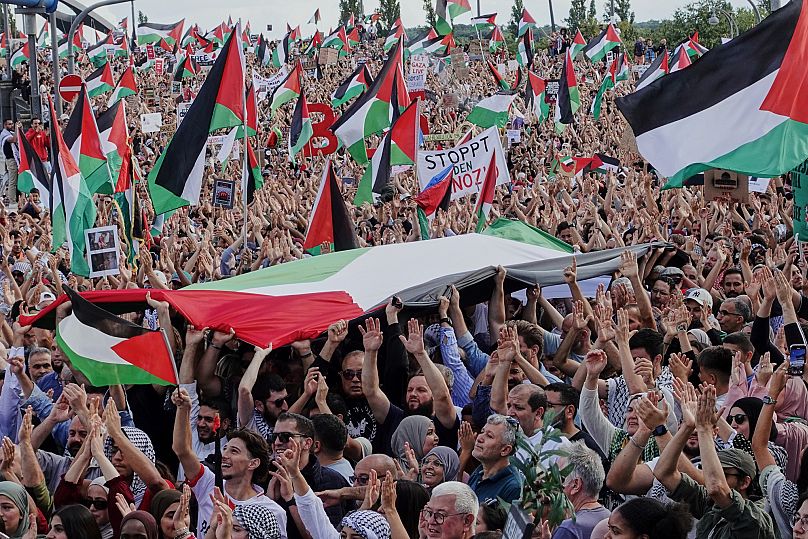
On the European level today, Germany’s pro-Israel stance has few allies: Only Austria and some Eastern European states usually side with Berlin when it comes to the war in Gaza in particular.
But when Germany puts its political and economic weight on the brake, it is enough to block moves against Israel, much to the frustration of EU foreign policy chief Kaja Kallas.
Asked by Euronews’ Shona Murray last month how she would convince the German government to take steps against Israel, Kallas said, “If you agree on the diagnosis that the situation is extremely grave, the situation is disastrous and untenable, then the question is what do we do about this?”
“If you don’t support these measures, then what measures can you support? Bring alternatives,” Kallas added.
One alternative is now on the table: the Gaza plan by US President Donald Trump that Chancellor Merz almost immediately supported.
In a phone call with Israel’s Prime Minister Benjamin Netanyahu last Sunday, Merz pushed for a swift conclusion to negotiations in Egypt. And Netanyahu, in an interview with Euronews on the same day, praised Merz for his position and his decision not to recognize a Palestinian state.
For many observers, that was the “special relationship” on display.


