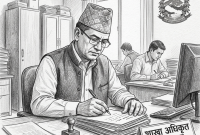
The Call for Accountability in Ghana’s Public Sector
President John Dramani Mahama has reignited discussions on accountability within Ghana’s public sector through his strong advocacy for the prosecution and imprisonment of officials found guilty of financial misconduct. His statements have sparked renewed debate about the effectiveness and limitations of the Public Accounts Committee (PAC), a parliamentary body tasked with reviewing national accounts but lacking the power to enforce legal action.
The Cycle of Financial Mismanagement
The Auditor-General’s Annual Report consistently highlights irregularities across Ghana’s ministries, departments, agencies, and local government entities. These include unaccounted funds, unsupported payments, procurement violations, unauthorized payroll entries, and misappropriation of resources. Despite these findings, the PAC only conducts annual reviews, often resulting in public hearings that attract significant attention but rarely lead to meaningful reforms once media coverage fades.
Year after year, the same institutions appear before the PAC, facing similar accusations. Analysts and civil society groups have criticized this process as a “ritual of accountability without consequence,” highlighting the lack of tangible outcomes despite public scrutiny.
A Watchdog Without Teeth
The limitations of the PAC are rooted in Ghana’s constitutional and legislative framework. While the committee is empowered to examine financial accounts and ensure compliance with regulations, it does not have the authority to impose sanctions or prosecute violations. Its role is confined to making recommendations to the Attorney-General and law enforcement agencies, which often result in delayed investigations or stalled cases due to political interference.
Parliamentarians have expressed frustration with this dynamic, noting that they can expose wrongdoing but cannot enforce consequences. This gap between exposure and enforcement weakens deterrence and erodes public confidence in the governance system.
Mahama’s Vision for Legal Accountability
Mahama argues that the absence of punishment has led to a culture of indiscipline in public finance management. He emphasizes the need to move beyond symbolic gestures like televised hearings and instead implement genuine legal accountability. According to him, billions of cedis are lost annually due to financial leakages that could be redirected toward critical sectors such as education, health, and infrastructure.
His call for accountability is not new, but it serves as a reminder of the importance of punitive measures in ensuring that public officials face repercussions for their actions. Mahama suggests that holding individuals personally accountable would send a clear message that corruption and negligence will no longer go unpunished.
Structural Challenges in Accountability
Experts agree that Ghana’s accountability issues stem from both legal and institutional shortcomings. Multiple bodies, including the Auditor-General, the PAC, the Attorney-General’s Department, the Office of the Special Prosecutor (OSP), and the Commission on Human Rights and Administrative Justice (CHRAJ), each have distinct roles. However, coordination among them remains inadequate, leading to fragmented efforts and inconsistent enforcement.
The Auditor-General has the authority to disallow unlawful expenditures and issue repayment orders, but these are often met with resistance. Similarly, the OSP, established to independently prosecute corruption, faces challenges such as limited resources and bureaucratic delays. As a result, accountability becomes diffuse, with no single entity taking full responsibility.
Public Sentiment and Political Will
For many Ghanaians, Mahama’s call reflects growing frustration with what appears to be superficial discourse. Citizens have witnessed repeated scandals without justice, ranging from ghost schools to inflated contracts and unaccounted public funds. Civil society organizations, such as the Ghana Integrity Initiative (GII) and IMANI Africa, have long advocated for stronger political will to address financial misconduct.
They argue that while Ghana’s anti-corruption framework is robust on paper, its implementation is weak. Political will, they say, means allowing investigative and prosecutorial bodies to operate independently, protecting whistleblowers, rewarding compliance, and depoliticizing the fight against corruption.
Preventive and Corrective Measures
While Mahama focuses on punishment, experts also emphasize the need for preventive reforms. Many infractions at the local level stem from poor training, inadequate record-keeping, and weak internal audit systems. Implementing automation through platforms like the Integrated Financial Management Information System (GIFMIS) can reduce human intervention in public accounts. Strengthening the Internal Audit Agency and conducting routine compliance audits can help prevent irregularities proactively.
However, deterrence remains essential. Without clear consequences for misconduct, preventive strategies alone will not be sufficient. As Mahama stated, “The fear of punishment is part of what makes accountability real.”
From Exposure to Enforcement
Transitioning from exposure to enforcement requires systemic reform and bipartisan consensus. Proposals include amending laws to allow the PAC to directly refer cases to the OSP or judicial entities. Others suggest establishing a Financial Infractions Tribunal to handle audit-related cases more efficiently.
Regardless of the path taken, it is clear that Ghana cannot afford to continue losing billions due to persistent violations while turning accountability into a spectacle for public consumption.
Reclaiming Public Trust
Mahama’s proposal also addresses a deeper issue: public trust. Citizens are increasingly skeptical of oversight institutions that identify misconduct but fail to deliver justice. Restoring confidence requires actions that demonstrate equality before the law.
If implemented, prosecuting and imprisoning officials responsible for financial losses would send a powerful message: that public office is a public trust, not a private opportunity. It would also reassure taxpayers that their money is being safeguarded with integrity.
Conclusion: From Ritual to Responsibility
The PAC plays a vital constitutional role, but its lack of enforcement authority creates a significant gap in Ghana’s accountability framework. Mahama’s call for the imprisonment of corrupt or negligent officials is not just a political gesture—it is a direct challenge to the moral integrity of governance.
Until PAC recommendations translate into tangible legal outcomes, the committee will remain a watchdog that barks but cannot bite. Ghana must now decide whether its annual public hearings will remain a ritual of exposure or evolve into a mechanism of responsibility that truly safeguards the public purse.