Overview of the Judicial Probe Commission
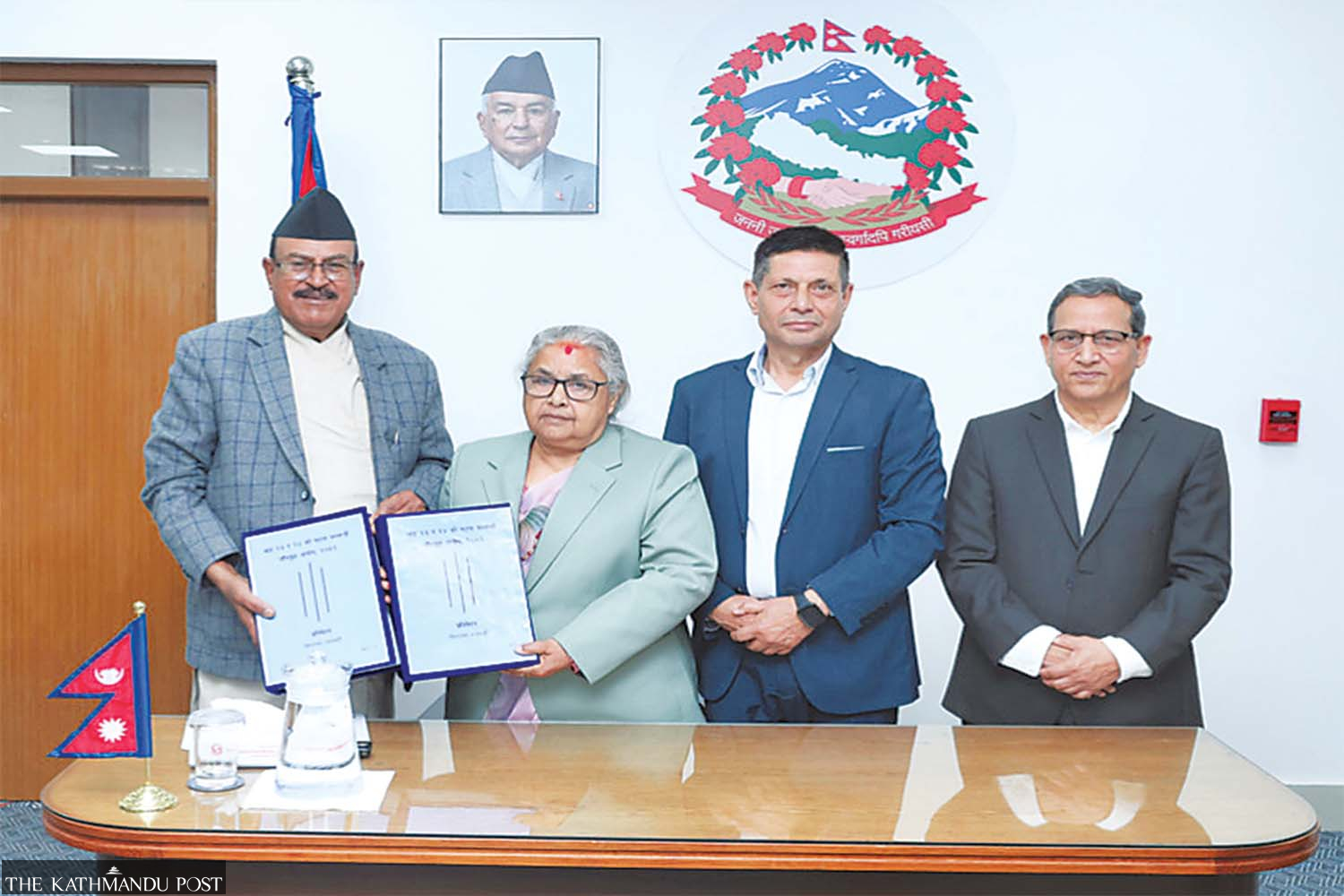
A judicial probe commission, led by former chair Gauri Bahadur Karki, was established to investigate the events surrounding the September Gen Z protest. The commission’s report, which was recently leaked to the media, has raised concerns about its impartiality and thoroughness. Formed on September 21, the commission was tasked with examining both days of the protest—specifically, the state atrocities on September 8 and the arson and vandalism on September 9.
Despite its mandate, the report appears to have focused more on the first day of the protests while neglecting the second. The commission has recommended criminal investigations against several high-profile individuals, including then-prime minister KP Sharma Oli, then home minister Ramesh Lekhak, and former chief of Nepal Police Chandra Kuber Khapung. However, it has not made a significant effort to investigate those responsible for the widespread destruction on the following day.
Evidence and Recommendations
The report acknowledges that the commission was unable to gather sufficient evidence to recommend prosecution for the events on September 9. It cites the sheer scale of the incidents as a reason for not implicating anyone involved in the vandalism. Additionally, the report clarifies that the limited scope of the commission’s mandate prevented it from fully investigating the events.
Even in cases where clear evidence was presented, the commission did not take any action. For instance, Satya Raj Joshi, then jailor at Nakkhu prison, claimed he was coerced into signing a document that allowed the release of Rabi Lamichhane, the Rastriya Swatantra Party chair. Joshi stated that his signature was obtained under duress and is therefore legally invalid. Following Lamichhane’s release, thousands of prisoners resorted to violence and escaped. Despite this, the Karki panel did not conduct a proper investigation into Joshi’s claims or hold anyone accountable for the mass prison escapes.
Military Response and Accountability
The report also highlights the Nepali Army’s delayed response on September 8. On that day, the army was called for assistance at Parliament in New Baneshwar but did not arrive immediately. It reached the location only at 3 pm. The army claimed that protesters obstructed their path, but the report suggests that they could have proceeded on foot. The report notes that the army left the Parliament premises after the BICC building started burning on the afternoon of September 9.
Furthermore, the report points out that the army made little effort to stop the mob from heading towards the Ministry of Home Affairs, even though the route passes through an area housing an army battalion. While the report criticizes the army’s non-cooperation, it recommends action against only a few officials under the Military Act, leaving room for them to face only departmental actions.
Contradictions and Biases
The Karki commission report has drawn contradictory conclusions on various issues. For example, its recommendations for criminal investigations into political and security leaderships are based on the conclusion that excessive force was used and restraint was lacking. However, the report also suggests that the police’s tactical withdrawal on September 9 was improper, despite the police’s policy of non-retaliation.
Another controversial decision involves recommending both reward and disciplinary action for Additional Inspector General of Police Siddhi Bikram Shah. The report praises him for preventing attackers from entering through the main gate and ensuring the safety of the Police Headquarters, yet it also recommends departmental action against him for failing to perform his duties properly.
Criticisms and Reactions
Former deputy inspector general of Nepal Police, Hemanta Malla, described the Karki commission report as completely biased. He emphasized that an objective report should focus on uncovering facts rather than appealing to emotions. Senior advocate Bipin Adhikari also criticized the report, stating that it is more opinionated than objective.
Bishweshwar Prasad Bhandari, a senior advocate and member of the probe panel, acknowledged that the report focused more on September 8 due to time constraints. However, Malla disagrees, arguing that a commission with a clear mandate cannot justify neglecting one day due to a lack of time.
Legal Ambiguities and Reforms
Bhandari cited ambiguity in the law as a reason for the commission’s failure to recommend action in several instances. He pointed out that agencies such as the Nepal Police, Armed Police Force, and Nepali Army have overlapping jurisdictions and outdated laws. Malla added that the decision to recommend action against the police chief but not the army chief may have been due to the police being responsible for broader public security, but this does not justify punitive actions.
Malla also suggested forming a separate investigative committee to gain a fuller picture of the events. The commission, which cited a lack of time for submitting a complete report, has nonetheless offered extensive recommendations on reforms in sectors ranging from journalism and the postal service to broader institutional changes.
Controversies and Reactions
The report’s attempt to stretch its mandate into other sectors while failing to address its core task has sparked controversy. The Nepal Bar Association has taken serious exception to the report, claiming it attacks the values and principles of an independent judiciary and casts aspersions on legal professionals. The association has decided to submit recommendations to the Supreme Court of Nepal and has formed a separate committee to conduct a detailed study of the report.