The House of Representatives Fails to Meet Quorum, Highlighting Parliamentary Discipline Issues
In a surprising turn of events, the House of Representatives in Nepal failed to meet the required quorum during a critical session on Tuesday, August 13. This incident has sparked renewed discussions about parliamentary discipline and accountability, particularly given the ruling Rastriya Swatantra Party (RSP) holds a near two-thirds majority in the House.
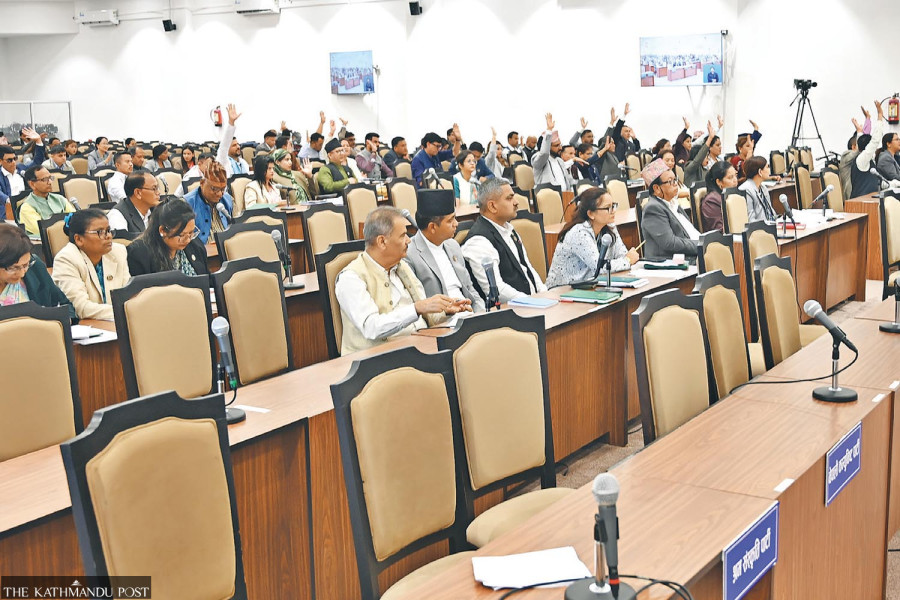
The session began at 1 pm with 223 lawmakers recorded as present. However, by 8:05 pm, when Speaker DP Aryal called for a vote on the Mines and Minerals Bill, 2026, only 61 MPs remained in the chamber. This lack of attendance led to the failure of the bill’s advancement, raising concerns about the ruling party’s ability to ensure legislative progress.
Constitutional Requirements and Quorum Failure
According to Article 94 of the Nepalese constitution, at least one-fourth of the total membership of either house of the Federal Parliament must be present before any motion or proposal can be put to a decision. With 275 members in the House, at least 69 lawmakers were required to conduct a vote. The headcount revealed that only 61 lawmakers were present, which was below the required threshold.
This failure was particularly notable among the ruling benches. Of the 182 lawmakers supporting the government, only 52 remained, including one minister. The opposition, which has 92 seats, had just eight lawmakers in the chamber. Despite the presence of Minister Gauri Kumari Yadav and Deputy Speaker Rubi Kumari Thakur, the quorum requirement was not met, leading to the deferral of the Mines and Minerals Bill until the next sitting on August 17.
Accountability and Leadership Response
Following the session, RSP whip Krantishikha Dhital addressed the issue in a WhatsApp group, urging party lawmakers to reflect on their absence. She emphasized that the blame for the lack of quorum would fall on all MPs, but the primary responsibility lay with the ruling party. Dhital pointed out that the failure was not an isolated incident but reflected a broader problem of absenteeism and a lack of focus on Parliament’s core functions.
Former National Assembly secretary Rajendra Phuyal highlighted the need for lawmakers to prioritize their responsibilities while Parliament is in session. He suggested that parliamentary leadership should examine where lawmakers go after signing the attendance register and structure business in a way that encourages sustained participation.
Opposition whip Nishcal Rai also commented on the situation, stating that while the opposition has a responsibility to uphold the dignity of Parliament, the greater burden lies with the ruling side. He questioned why ruling party members would be absent during government business, emphasizing that proposals pass by majority and that opposition voices are often unheard.
Broader Pattern of Absenteeism
Parliament Secretariat records indicate a wider pattern of absenteeism. Between April 2 and July 15, the House held 41 sittings, but only six lawmakers attended every session. Among them were RSP lawmakers Sunil KC, Ratna Kumari Thapa, and Govinda Panthi; Nepali Congress lawmakers Narendra Kumar Kerung and Bharat Bahadur Khadka; and NCP lawmaker Nirasha Chaudhary Dagaura.
Prime Minister Balendra Shah, who leads the RSP parliamentary party, attended just six sittings, despite repeated requests from Speaker Aryal for lawmakers to attend. Similarly, former prime minister Pushpa Kamal Dahal attended five sittings, citing illness and an official visit to Sri Lanka. Other senior leaders, such as RSP president Rabi Lamichhane and UML parliamentary party leader Ram Bahadur Thapa, had varying levels of attendance.
Ministers also showed low attendance, with several failing to attend even half of the House sittings. For instance, Minister for Energy and Water Resources Biraj Bhakta Shrestha attended only seven sittings, while Minister for Education and Sports Sasmit Pokharel attended eight.
Despite these challenges, some ministers demonstrated better attendance. Finance Minister Swarnim Wagle and Minister for Communication and Information Technology Bikram Timilsina attended 15 sittings each, while Minister for Health and Food Safety Nisha Mehta attended 16.
Future Steps and Reforms
In response to the quorum failure, RSP whip Prakash Chandra Pariyar stated that the parliamentary party would take measures to prevent a repeat of the incident. He mentioned conducting a thorough review and preparing a report, along with issuing clear directives to enforce responsibility and tighten the lawmaker evaluation system.
Pariyar and fellow RSP whip Krantishikha Dhital have already been tasked with reviewing parliamentary attendance. The recent quorum failure will now form part of that assessment, indicating a commitment to addressing the underlying issues of absenteeism and lack of accountability.
As the House continues to face these challenges, it remains crucial for all political parties to prioritize the dignity and functionality of Parliament. Ensuring consistent attendance and active participation will be essential for maintaining the integrity of the legislative process and fulfilling the expectations of the public.