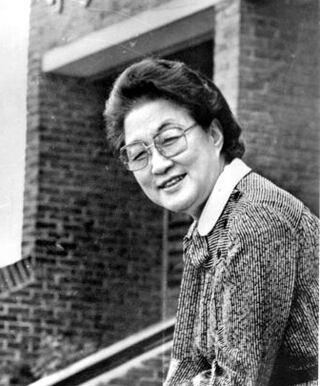
‘Lee Tae-young, the first female judge.’
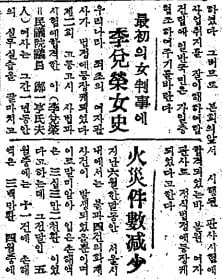
The Chosun Ilbo on July 3, 1953, reported the birth of South Korea’s first female judge.
“South Korea’s first female judge has appeared in court. Lee Tae-young (wife of National Assembly member Jeong Il-hyung), who passed the second high-level state examination’s legal affairs section, completed one year of practical training and passed the judge qualification exam. She is said to have officially appeared in court as the first female judge in the country’s history.” (July 3, 1953, page 2)
The report turned out to be incorrect. Lee Tae-young (1914–1998) was never appointed as a judge. It was reportedly due to reasons such as “a female judge is premature” and “she is the wife of an opposition party member.” Lee eventually became South Korea’s first female lawyer. The first female judge was Hwang Yun-seok (1929–1961), who passed the third high-level state examination’s legal affairs section and was appointed in 1954.
Lee enrolled at Seoul National University’s law department in 1946 at age 32, with four children. Her husband Jeong Il-hyung (1904–1982), a sociology Ph.D. graduate from Drew University in the U.S. and ten years her senior, actively supported her, saying, “Now it’s your turn.” Lee graduated in 1950 and, during the Korean War in 1952, became the first woman to pass the high-level state examination’s legal affairs section.
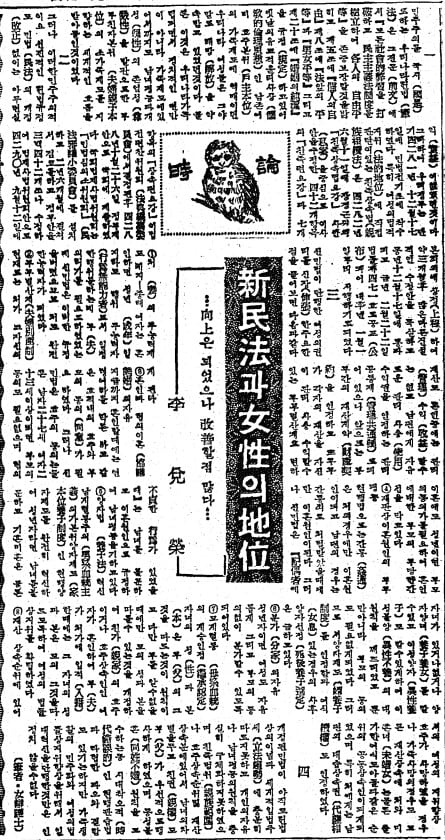
After starting her law practice in 1954, she worked to improve women’s rights. She frequently contributed articles on related topics to newspapers. These included ‘Defending Women’s Rights and Our Resolve’ (December 16, 1954, page 4), ‘Marriage Within the Same Clan and Lineage—Critiquing the Principle of Prohibited Marriage’ (three-part series, April 9–11, 1957), ‘The New Civil Law and Women’s Status—Improvements Have Been Made, but There Are Still Areas for Reform’ (December 28, 1958, page 2), and ‘The Path for Women to Empower Themselves—Ending the Month of Emphasizing Marriage Registration’ (May 18, 1959, page 4).
After the Democratic Party came to power following the April 19, 1960 revolution, Lee accompanied her husband Jeong Il-hyung, who was appointed foreign minister, to the UN General Assembly and inaugural receptions for foreign ambassadors, and contributed her reflections to the Chosun Ilbo. While Western societies valued the diplomatic roles of spouses of diplomats, South Korea at the time viewed such accompaniment with disapproval. Lee, who wrote a five-part series on her experiences in diplomatic settings, was conscious of this criticism. She began her first installment with an explanation:
“There seem to have been various rumors about my decision to accompany my husband, who was departing for the UN General Assembly to address South Korea’s membership and unification—key tasks of the Second Republic. Even after our return, there appeared to be misunderstandings and criticism. Foreign experts strongly recommended that I join, emphasizing that diplomacy is not solely the husband’s responsibility, but some family members strongly opposed it.” (January 3, 1961, page 4)
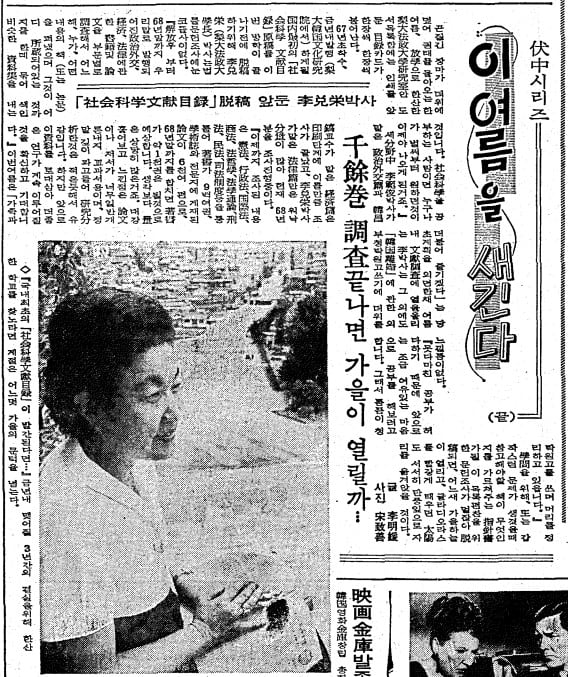
Lee added, “I decided to accompany him out of my own funds earned through my work as a lawyer.”
After the May 16 coup, her husband became an opposition politician. Lee joined the Shinmin Party, the opposition party, and participated in declarations for democratic restoration. She also appeared in the Chosun Ilbo’s series ‘People Who Protect Human Rights’ on December 11, 1971. Following the March 1 Democratic Rescue Declaration in 1976, her husband lost his National Assembly seat, and Lee had her lawyer qualification revoked.
She was reinstated in March 1980, after the death of President Park Chung-hee. In 1981, she began writing for the Chosun Ilbo’s main column ‘Morning Commentary,’ contributing articles such as ‘The Ban on Marriage Within the Same Clan and Lineage Should Be Abolished’ (June 17, 1981), ‘Democratizing the Family… To Be a Democratic Citizen’ (July 14, 1981), and ‘The Current Family Law Is Unconstitutional’ (August 18, 1981), focusing on women’s rights and family law.
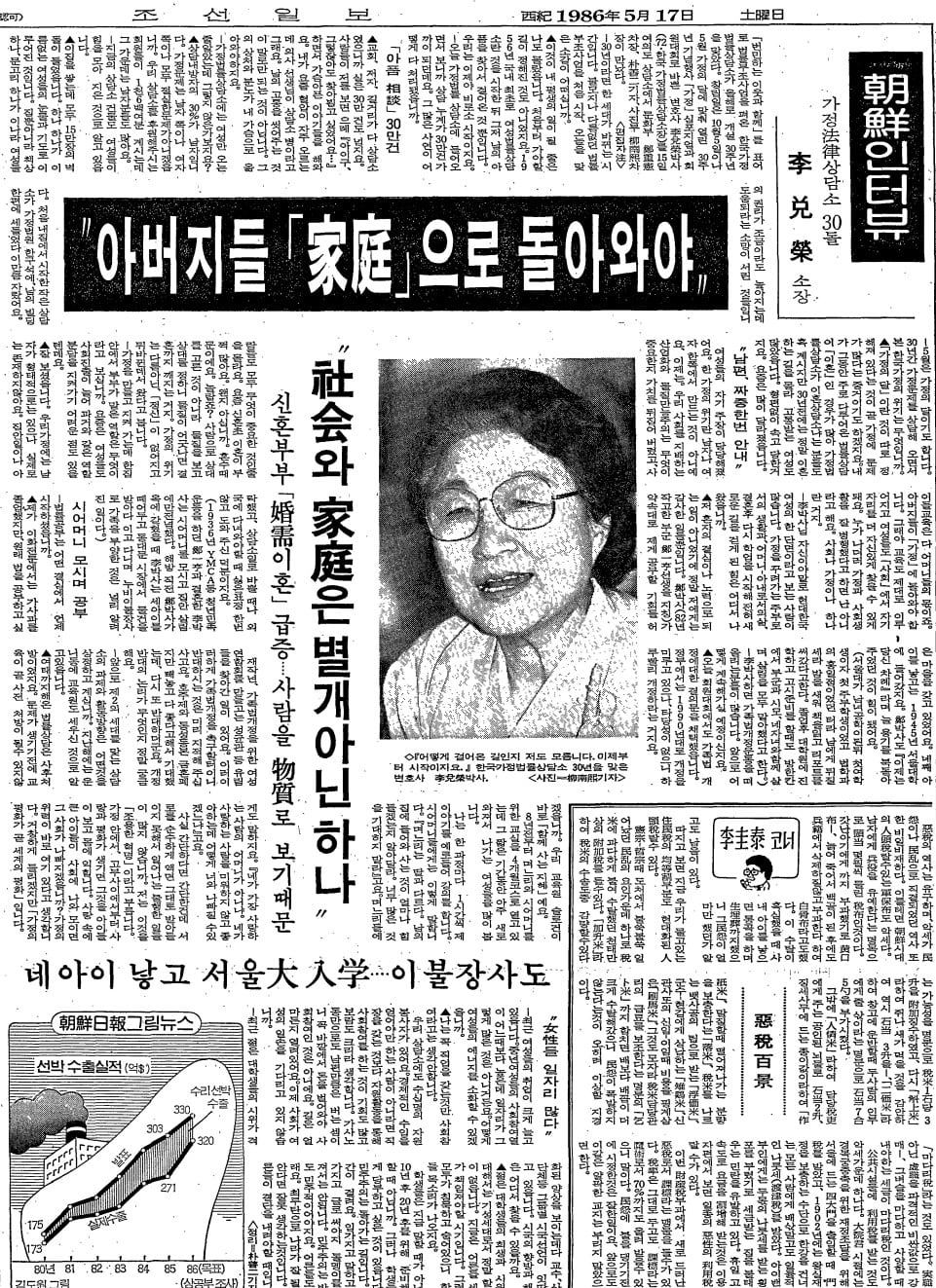
Lee founded the Korean Family Legal Office in 1956 to advocate for women’s rights. In a Chosun Ilbo interview marking its 30th anniversary, she said, “I never imagined this would be my lifelong work.”
“I didn’t have a predetermined path from the start. After establishing the country’s first legal counseling center for women in 1956, I’ve simply walked the path of addressing others’ pain.”
In the interview, Lee urged men to take on greater roles:
“Men exist only nominally in our families. Household chores and children’s education are left to mothers. Fathers must return to the ‘family.’” (May 17, 1986, page 5)