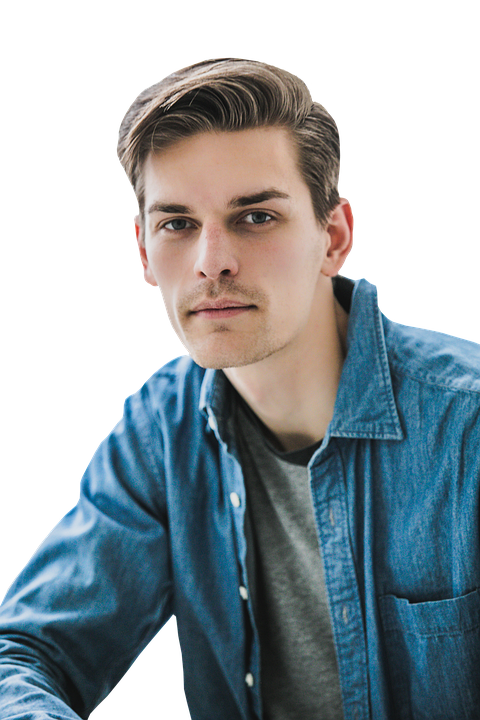
The Journey of Self-Discovery and Advocacy
Tosin Odunlami, a Nigerian-born intersex advocate, has shared his journey of self-discovery, transition, and ongoing efforts to promote intersex visibility and inclusion in Nigeria. His story is one of resilience, courage, and the fight for understanding in a society that often misunderstands intersex individuals.
Intersex is a term used to describe people who are born with physical or biological traits—such as chromosomes, hormones, or reproductive organs—that don’t fit the typical definitions of male or female bodies. While estimates vary, research suggests that intersex variations are a natural part of human diversity, not disorders or abnormalities. This perspective is supported by organizations such as the United Nations Free & Equal campaign and the World Health Organisation.
Odunlami emphasized the importance of clarifying common misconceptions about gender identity. “Intersex persons are not transgender. Neither are they gay or lesbian,” he said. “Intersex means being born with biological variations, it could be internal, chromosomal, or genital.”
A Life of Secrecy and Struggle
Tosin began his journey by living 25 years as a female, which he described as a difficult experience. “It wasn’t easy,” he admitted. He grew up under societal pressure to conform to the gender assigned at birth, which led to internal conflict during puberty. “I started seeing some changes in my body, and I was scared. I couldn’t talk to anyone because when you tell them this is what you’re seeing in your body, they decide to discriminate or tell you you’re taboo.”
His mother discovered his condition and sought medical help, but doctors were confused. “The doctor did not even know who I am. They tried to confirm me to their ascribed gender and said they had to do surgery to cut off what they were seeing,” he recalled. Instead of undergoing surgery, his mother turned to religious interventions, taking him to several churches where they gave him soaps and prayers to make him grow breasts.
At university, he continued to live as a woman in secrecy. “I lived with two females in the same room, and when we were dressing up, I shifted myself to the corner. I wore padded bras because I wanted to fit in.”
Transition and Acceptance
Odunlami’s transition came after a medical consultation confirmed that his hormones were predominantly male. “The doctor said my hormones are more male hormones. That was when I told the doctor, ‘Okay, I think I’m going to come to the male gender,’” he explained.
He shared how people reacted to his transition, noting that some were surprised, some were supportive, and some were still anxious. “But I’m always open to share with them.”
On his sexual orientation, Odunlami clarified that he is attracted to females. “I’m attracted to women, emotionally, mentally, and physically,” he said, emphasizing that being intersex does not define his sexuality.
Faith and Community
Speaking about his church community, he revealed how he came out to his pastor and congregation. “On a Sunday, he said I should come out and you know, it’s also a form of advocacy — educating people, mothers, adults, youths on all of this.” Although initially shocked, the community eventually accepted him.
Some members distanced themselves, especially after he became a children’s teacher. “Some were like, ‘Don’t near my female daughter,’ and I was a children’s teacher, so I had to step back to see how they received the information. But later they were all open arms, they received me back, and I started teaching again.”
Intersex and the LGBTQIA+ Community
Tosin clarified that while intersex individuals are part of the broader LGBTQIA+ community, they maintain their distinct identity. “The ‘I’ in the LGBTQIA, that’s intersex,” he explained. “We can stand alone, and as well we cannot stand alone. We are part of the community because we work together in different ways, for programming, advocacy, and education.”
He also noted that being intersex does not automatically determine sexual orientation. “An intersex person does not necessarily identify as lesbian, gay, or bisexual,” he said.
Building a Supportive Community
Tosin highlighted the growing intersex community in Nigeria, which meets regularly for support and advocacy. “We have intersex persons in different states across Nigeria. We hold monthly check-ins and community meetings. On October 26, we’ll celebrate Intersex Awareness Day, a day to celebrate our growth, resilience, and visibility.”
He also mentioned collaborations between Nigerian intersex advocates and global organizations. “There is international support,” Tosin noted. “The Executive Director of Intersex Nigeria, Obioma, is part of the Intersex Alliance Movement globally, working to advance advocacy and programming. We also receive funding and support from international organisations for our work here in Nigeria.”
A Message of Empowerment
Reflecting on faith and acceptance, he described how his church community ultimately responded positively. “I had this peace, that I am living my full self,” he said.
Now an active intersex advocate, Odunlami continues to champion inclusion and awareness through public speaking and advocacy efforts. “It’s not a disability,” he affirmed again. “I’m a normal person like every other person.”


