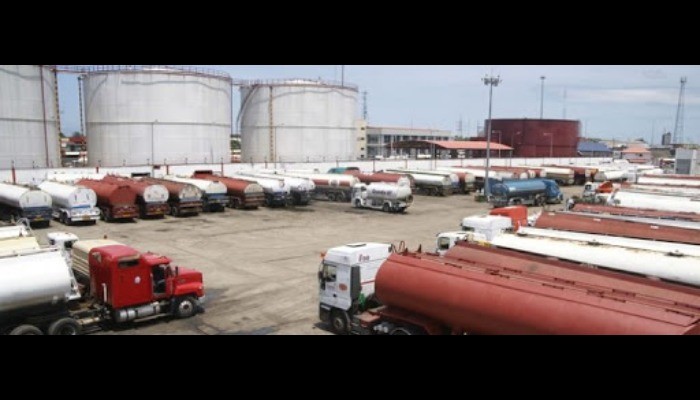
Rising Petrol Prices and Supply Challenges in Nigeria
Amid worsening supply challenges and rising pump prices, petroleum marketers have begun to take independent steps to import petrol as the commodity approaches the N1,000 per litre mark across major cities in the country. This move comes in response to supply constraints and production glitches at the Dangote Petroleum Refinery, which have created fresh pressure in the downstream oil market.
The National Publicity Secretary of the Independent Petroleum Marketers Association of Nigeria, Chinedu Ukadike, confirmed this development during a telephone interview. According to him, members of the Depot and Petroleum Products Marketers Association of Nigeria are finalizing arrangements to begin petrol importation as part of efforts to stabilize retail prices.
Ukadike stated that petrol prices would soon drop as competition returns to the market if additional competition is introduced. “Yes, petrol price is still going to come down because I also know that some marketers, especially DAPPMAN members, have applied and they are going to import petrol products. Peradventure, their prices are cheaper than Dangote’s, we would have no choice but to patronise them. The essence of this market is that where it is cheaper, we will buy. But prices will come down once there is a struggle for the market,” he said.
The PUNCH reports that petrol prices rose from about N865 to around N950 per litre on Monday. Checks by The PUNCH on Tuesday showed that the pump price of Premium Motor Spirit, popularly called petrol, now sells between N920 and N955 per litre in many retail outlets, while some stations in Abuja, Sokoto, and Lagos charge as high as N1,000 per litre, depending on location and brand.
This situation has raised concerns among motorists and consumers already struggling with high transportation and food costs, threatening to further fuel inflationary pressures across the country.
Supply Glitches and Market Adjustments
Reacting to the situation, the Independent Petroleum Marketers Association of Nigeria has blamed depot owners for the sudden surge in petrol prices. IPMAN President, Abubakar Shettima, told The PUNCH that depot owners increased their prices when they discovered that the Dangote refinery had stopped fuel loading for some days.
Our correspondent reports that depots hiked their prices on Monday from an average of N830 to about N890. According to Petroleumprice.com, depots like Matrix, Fynefield, and Liquid Bulk sold petrol at N900 as of Tuesday. Northwest offered N895; Pinnacle, N885; RainOil, N890; NIPCO, N850; Aiteo, N878; and Sigmund, N890.
Following this, filling stations adjusted their pump prices to reflect the new pricing regime. The Nigerian National Petroleum Company Limited retail outlets sold premium motor spirit at N928 in Ogun and Lagos, an increase of about N50 from the previous N870.
Impact on Consumers and Market Dynamics
In Ogun and Lagos, filling stations sold petrol at prices ranging from N900 to N950 on Tuesday. Dangote’s partner, MRS, also sold the product at N925 in Ogun. Our correspondent gathered that the Dangote refinery stopped selling petrol to marketers recently, causing a tightness in supply.
The Dangote refinery has yet to respond to questions seeking further clarification about the development. However, sources suggested this might be due to ongoing maintenance or the challenges posed by the mass sacking of engineers at the facility.
Speaking on the development, the IPMAN National Publicity Secretary, Chinedu Ukadike, attributed the price increase to temporary supply glitches at the Dangote Refinery and sharp practices by some private depot owners. He explained that the refinery had recently slowed loading operations due to internal reorganisation and labor-related disruptions, causing limited distribution to private marketers.
Broader Implications and Consumer Struggles
Major Energies Marketers Association of Nigeria further confirmed in its daily bulletin that the refinery had suspended gantry loading for most private marketers since last Thursday, restricting sales to its own and MRS trucks, thereby creating a shortage at independent outlets.
The Chief Executive Officer of PetroleumPrice.ng, Jeremiah Olatide, has blamed the fresh wave of petrol scarcity and price hikes on operational disruptions at the Dangote Refinery, which he said has suspended gantry sales to private depot owners since last week.
Olatide said the refinery is currently prioritising loading for its own last-mile delivery trucks and those of its affiliate, MRS, while marketers who obtained Product Finance Instruments have been unable to lift fuel for several days. “No, things haven’t improved. The current situation, as I speak to you, is that the refinery is only loading their own trucks, last-mile delivery trucks, and they have suspended gantry sales since last Thursday,” he said.
Consumer Reactions and Market Concerns
Meanwhile, residents living in Sokoto State have lamented the recent increase in pump price by petroleum marketers in the state, which has increased the cost of fuel to between 960 naira and 1,000 naira within the metropolis. Our correspondent, who monitored the development in the state, gathered that the increase in price covered both independent and major marketers in the state.
Findings by our correspondent in the state revealed that all the NNPC filling stations in the state metropolis have not been open for business for the last week. A visit to AA Rano on Tuesday discovered that a litre of fuel had been adjusted from the previous 930 naira to 960 naira.
Also, at some of the independent marketers in the state, the fuel, which was sold for between 950 and 960 naira, is now being sold for between 1,000 and 1,050 naira. A motorist who spoke with our correspondent at AA Rano said he decided to join the queue due to the recent scarcity and increase in the price.
With the cost of fuel nearing N1,000 per litre, analysts warn of another round of price shocks across transportation, food, and manufacturing sectors, even as Nigerians continue to await the promise of stable supply from the country’s 650,000 barrels-per-day Dangote Refinery.
Multiple efforts to reach the Dangote refinery spokesperson, Anthony Cheijina, were not successful as the official didn’t pick up his calls and didn’t reply to messages sent to his phone line.


