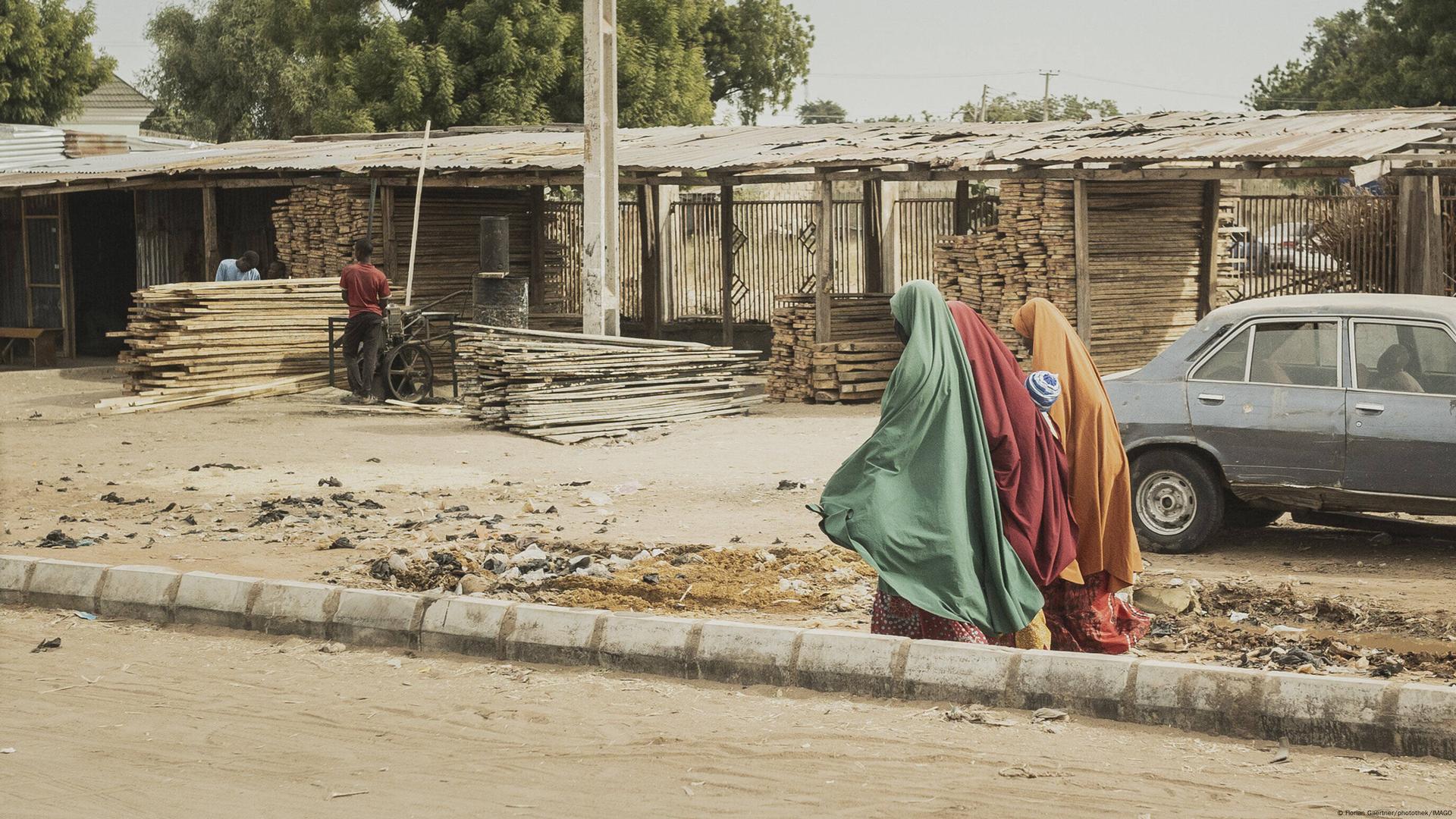
The Consequences of a Misframed Conflict
As the United States President Donald Trump threatens to cut aid to Nigeria and order military strikes over what he calls a “Christian genocide,” the consequences may not be about diplomacy or doctrine, but about the people who would suffer if his threat becomes reality. From the North-east to the North-central, where insurgency, banditry and communal violence already entangle ethnicity, religion and survival, residents who are predominantly Christians or Muslims risk becoming collateral victims of a foreign campaign driven more by geopolitics or policy missteps.
Trump’s New Line of Attack
In his latest outburst, Mr Trump accused Nigeria of “allowing the slaughter of Christians,” vowing to stop all US aid and possibly go in “guns-a-blazing” to wipe out the “Islamic terrorists who are committing these atrocities.” He said the USA’s attack in Nigeria will be “fast, vicious, and sweet.” The remark follows his recent decision to label Nigeria a “Country of Particular Concern” under America’s International Religious Freedom Act, a designation that paves the way for aid suspension, sanctions or even targeted military action.
What a Strike Might Look Like
Security analysts say a direct US invasion of Nigeria is improbable. “I don’t think that it’s likely that President Trump actually intends to launch a serious military operation in Nigeria,” James Barnett, a conflict researcher based in Nigeria, told this paper. “I think that this is kind of a form of bluster that’s aimed at gaining some leverage against Nigeria as part of a set of negotiations that will probably ensue.” The more realistic scenario, if Mr Trump follows through, would involve air or drone strikes on insurgent camps in the North-east or central regions where groups like Boko Haram, its breakaway factions, the Islamic State West Africa Province (ISWAP) and al-Qaeda linked Ansaru, as well as terrorists locally known as bandits, operate.
Such strikes, even when precise on paper, are never bloodless, as previous aerial operations by the US have shown. In a total of 849 US air strikes, data from Airwar, a not-for-profit transparency watchdog which tracks civilian casualties in conflict zones, shows that 265 civilians, including 90 children, were killed or injured in Yemen, Iraq, Libya and Somalia, between 2005 and 2025. Data about US airstrikes on Afghanistan could not be found on Airwar’s civilian casualty archive dashboard. However, an investigation by the Bureau of Investigative Journalism documented that about 117 civilians, including 70 children, were killed by US airstrikes on Afghanistan between 2018 and 2020.
Also, the Nigerian Air Force, which is backed by the US, has recorded civilian casualties in what it often describes as precision attacks against terrorists. In 2022, PREMIUM TIMES documented how the Air Force accidentally bombed six girls living in a terrorised village in Niger State, North-central Nigeria. More than 2,600 people, mostly unarmed civilians, have been killed in 248 air strike incidents outside the Northeastern terror-ravaged areas, which conflict experts refer to as BAY [Borno, Adamawa and Yobe], according to a Reuters analysis of the Armed Conflict Location & Event Data Project (ACLED), a US-based crisis monitoring group.
Many insurgent enclaves are located near remote villages, farms, or internally displaced persons (IDP) settlements, areas where civilians are often indistinguishable from armed fighters. “Drone warfare in populated terrain rarely goes as planned,” a serving Air Force officer told this newspaper. “When the blast dust clears, you may find both civilian and terrorist casualties.”
The Peril of Misframed Conflict
Mr Trump’s framing of Nigeria’s violence as “Christian genocide” resonates with US evangelicals but misrepresents the country’s complex conflict landscape. While thousands of Christians have indeed been killed in attacks attributed to Islamist groups or herder militias, Muslim communities in northern states like Borno, Zamfara, and Katsina have suffered equal or worse civilian tolls, often targeted by the same armed factions. Labeling it a one-sided religious war risks distorting the problem and the policy response.
“The conflicts in Nigeria are quite complex and driven by several factors,” Mr Barnett, the conflict researcher, observed. “Religion is sometimes a factor in the violence, but in many other cases, it’s not.” Mr Barnett told PREMIUM TIMES that in many cases, violence labelled as religious may stem more from ethnic tensions, where the main lines of division revolve around identity or “indigene-settler disputes” rather than religion itself. This reporter’s experience in covering the recurring Plateau violence validates Mr Barnett’s submission on indigene-settled disputes, which are mischievously framed along religious rhetoric.
Aid Cuts: The Quieter Weapon with Wider Pain
If Washington opts for economic coercion before bombs, the fallout could still be severe. Foreign aid cuts by the Trump administration are already hurting Nigeria. After he assumed office for his second term, earlier this year, Mr Trump issued a freeze on most foreign development assistance, including programmes managed by the United States Agency for International Development (USAID). For Nigeria, this is significant as it ranks among the largest recipients of US development aid, receiving around $1 billion annually.
This freeze has strained humanitarian support in conflict zones in northern Nigeria and fractured the health sector, with pregnant women and others risking HIV. While the freeze has resulted in job losses for about 28,000 health workers, according to the Nigerian Ministry of Health and Social Welfare, it has also put domestic budget pressure on Nigeria, forcing lawmakers to approve an extra $200 million to offset health aid shortfalls.
Diplomatic Ripples and Domestic Strain
Beyond the humanitarian strains, Mr Trump’s remarks have stirred diplomatic unease. Nigeria’s government swiftly rejected the “genocide” tag, insisting it protects all citizens regardless of faith. Analysts say Mr Trump’s threats pose a sovereignty dilemma for Mr Tinubu’s administration. If it cooperates, it may appear weak. If it defies Washington, it may risk economic and military pain.
Inside Nigeria, the rhetoric could also widen domestic polarisation. Many Christians might interpret Mr Trump’s stance as vindication, while many Muslims could view it as Western interference targeting Islam. Both perceptions could deepen mistrust and make coexistence even more fragile.
Regional, Global Fallout and the Human Cost
Nigeria’s size and influence make any US move consequential for West Africa. Aid suspension could further disrupt regional counter-terrorism initiatives such as the Multi-National Joint Task Force (MNJTF). A military strike, whether minimal or heavy, could send shockwaves across the Sahel, embolden extremists, or trigger anti-American sentiment.
Analysts have warned that Russia and China could seize the moment to court Abuja with offers of non-conditional support, further complicating Western leverage in Africa’s largest democracy. “China is already a major player in Nigeria’s economy, with huge investments in transport infrastructure,” Mr Samuel, the conflict researcher with GGA, said. “China has recently also been deepening its involvement in the extractive sector, especially in lithium mining, while also engaging in harmful business practices.”
He added: “And any opportunity to deepen its involvement in Nigeria will be seized upon, even at the expense of the Nigerian-US relationship. And we know that when China provides any support, it doesn’t bother about the country’s democracy or human rights record, issues that the US has traditionally partnered with Nigeria to deepen and strengthen.”
But behind the geopolitics, the victims remain ordinary Nigerians–whether under bombs, sanctions, or insurgents’ reaction. If the US acts rashly or if Nigeria fails to address legitimate human-rights concerns, the result will be the same: civilian suffering without strategic gain.
Journalists and Truth Under Fire
Just as the world witnessed the mindless targeting of journalists in Gaza, local reporters covering Nigeria’s security crisis could be exposed to another layer of risk if Mr Trump launches military actions in Nigeria. If US involvement heightens tension, journalists could face greater suspicion, restricted access or propaganda battles over casualty claims.
Reporting and verifying attacks could become more challenging as aid agencies scale back operations or withdraw from volatile regions. The information vacuum will favour disinformation and more fear. Mr Trump’s warning to Nigeria may read like a defence of faith, but its potential fallout crosses all faith lines. Nigerians of all persuasions, already bruised by years of conflict and neglect, would bear the cost of any misstep–from airstrikes gone wrong to aid cutoffs that punish the poor more than the powerful.
For now, the smartest response on both sides may be restraint: Nigeria must confront real abuses and protect all citizens; the US must resist turning complex grief into campaign theatre. Once the missiles fall or the aid stops, it won’t be the politicians who pay; it will be the people.


