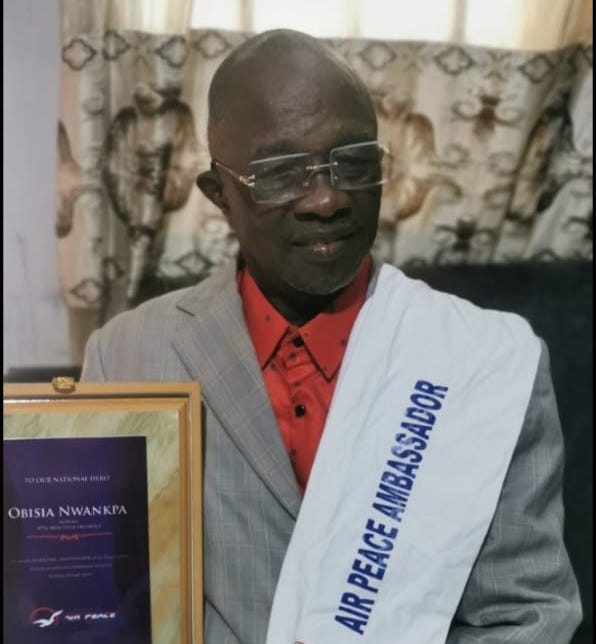
The Legacy of a Boxing Legend
The history of sports in Nigeria is marked by the contributions of numerous athletes who have brought glory to the nation. These individuals not only represented Nigeria on the global stage but also earned recognition and rewards for their achievements. However, many of these legends face severe challenges after retiring, often ending up in poverty due to a lack of support.
Retired Nigerian athletes frequently call for assistance from the government and well-wishers, especially when they require medical care or burial expenses. This issue has sparked debates among Nigerians, with some arguing that the government and the public are not obligated to support former athletes.
Controversy Surrounding the Death of Peter Rufai
Recently, the death of former Nigerian international Peter Rufai highlighted the struggles faced by retired athletes. His family accused the Nigeria Football Federation (NFF), the Lagos State Government, and other sports authorities of neglecting his needs. This incident led to criticism from some Nigerians, who viewed it as an example of entitlement mentality among retired athletes.
The Burial Struggles of Obisia Nwankpa
At present, the family of the late legendary boxer and former national boxing coach, Obisia Nwankpa, is seeking help to transport his body from Lagos to his hometown in Abia State for burial. Born on June 14, 1949, in Lagos, Nwankpa was known as the ‘Golden Gloves’ and was one of Nigeria’s greatest boxers during the 1970s and 1980s.
Nwankpa competed in the 1972 Summer Olympics in Munich and won gold at the 1973 All-Africa Games and the 1974 British Commonwealth Games. He held several titles, including Nigerian Lightweight Champion and Commonwealth Lightweight Champion. One of his most memorable fights was against Saoul Mamby in 1982, which he lost by a split decision.
After retiring, Nwankpa became the national boxing coach, leading Nigeria’s teams to major international competitions, including the 2004 Athens Olympics and 2008 Beijing Olympics.
A Cry for Help
Five months after his death, Nwankpa’s family is still struggling to raise funds for his burial. His wife, Madam Franca Obisia Nwankpa, expressed her frustration with the lack of support from the federal government, the Nigeria Olympics Committee, and the Boxing Federation.
She mentioned that the family had spent over N9 million on hospital bills before his passing, leaving them financially drained. The mortuary bill has reached nearly N2 million, and the overall funeral expenses are beyond their means.
‘
A Glimmer of Hope
Madam Nwankpa reached out to the Abia State government for assistance, hoping that Governor Alex Otti would intervene. She believes that the state should support a son who brought fame and honor to the region.
The director of sports in Abia State, Mr George Obioma, expressed his disappointment with the federal authorities for neglecting a hero like Nwankpa. He emphasized that the state is working to provide support, although the responsibility should lie with the federal government.
National Sports Commission Offers Support
In a related development, the chairman of the National Sports Commission (NSC), Malam Shehu Dikko, assured the family that support would be provided for Nwankpa’s burial. He stated that the NSC would consider the request either officially or personally.
Conclusion
The story of Obisia Nwankpa highlights the urgent need for better support systems for retired athletes in Nigeria. While the efforts of the Abia State government and the NSC are commendable, there is a clear need for a more comprehensive and sustainable approach to ensure that these legends receive the respect and care they deserve. The legacy of such athletes should not be forgotten, and their contributions should be acknowledged through tangible support.


