Osun State’s Political Landscape and Implications for 2027
Osun State awoke on Sunday with the same government it had the previous night: that of Governor Ademola Adeleke. His victory in the August 15 election marked a significant moment, offering the opposition a potential talking point for the 2027 elections.
Adeleke, running on the Accord Party platform, secured 511,067 votes, defeating his main rival, Asiwaju Munirudeen Bola Oyebamiji of the All Progressives Congress (APC), who received 444,815 votes. This result ensured Adeleke a second term and a crucial win in the last off-cycle poll before the January 2027 presidential election.
The outcome not only gave the Accord Party its first South-West state but also positioned Osun as a rallying point for the opposition heading into the next general elections. For Oyebamiji, known as AMBO, the 40% of total votes he received is a notable achievement.
Despite the governor’s re-election, the August 15 election continues to dominate discussions in Osun. In his usual energetic manner, Adeleke attended church for a thanksgiving service, where he sang and danced. The local APC, meanwhile, stated it is still analyzing the results to determine its next steps.
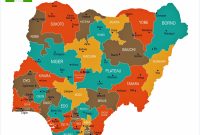
Political analysts had predicted that the election would be decided in Accord Party strongholds such as Ede North, Ede South, and Ife Central, which delivered large margins for the party. Meanwhile, areas like Osogbo, Iwo, and Ilesha East remained competitive but could not overcome the deficit.
In total, Adeleke won 19 Local Government Areas (LGAs), including Ede North, Ede South, Osogbo, Ife Central, Iwo, Ejigbo, Ifelodun, Odo-Otin, Ila, and Ayedaade. AMBO secured 11 LGAs, including Ilesha East, Ife South, Boripe, Irepodun, Obokun, and Olorunda.
The Accord Party’s campaign focused on continuity and workers’ welfare, while the APC emphasized a fresh start under a dancer-governor and the benefits of aligning with the center, which are already evident in Osun and the South-West.
At an Arise Television Town Hall conversation on August 11, AMBO showcased his academic background and achievements as MD of Osun Investment Company and as Commissioner for Finance in the state. He provided detailed insights into his work and legacy.
Although losing Osun may seem like a setback for the APC, President Bola Tinubu’s call to Adeleke at 2:00 am on Sunday changed the political dynamics. Tinubu congratulated Adeleke, emphasizing that the people of Osun had given him a mandate to lead for another four years. This gesture portrayed Tinubu as a democrat and statesman, reinforcing the legitimacy of the electoral process.
Following his victory, Adeleke reaffirmed his commitment to support Tinubu’s re-election in 2027. He pledged to collaborate with APC members in the state. On August 20, Adeleke visited Tinubu at Aso Rock to present his certificate of return, thanking him for ensuring a free and fair election. Tinubu urged Adeleke to embrace unity and reconciliation, urging him to refrain from stigmatizing anyone.
Accord Party’s allies in the opposition view the Osun win as vital. African Democratic Congress presidential candidate and former Vice President Alhaji Atiku Abubakar, along with other opposition leaders, called the Osun election “proof that Nigerians are asking for an alternative in 2027.” However, Adeleke quickly dismissed claims of any working pact with other parties or coalitions.
Will the Accord Party’s victory provide the opposition with momentum for coalition talks and a South-West base to challenge APC’s dominance? It seems unlikely.
What does the Osun election mean for January 2027? Three implications stand out:
-
The South-West remains competitive: With Osun in the Accord Party and Oyo State still led by Governor Seyi Makinde, who has moved to the Allied People’s Movement, the South-West cannot be considered an APC stronghold. However, Adeleke’s pro-Tinubu stance and the son-of-the-soil syndrome favoring the President suggest a fierce battle for the region’s votes in 2027 is unlikely.
-
The referendum effect: Voters in Osun used this off-cycle poll to judge the center. The opposition may frame the result as a rejection of economic reforms, while the APC will argue it was a local contest influenced by issues like the “half-salary policy” during the administration of former APC Governor Rauf Aregbesola and internal party contradictions.
-
Early start to 2027 politicking: Although the official presidential election campaign began on August 19, the Osun election has already set the stage for early 2027 campaigns.
For President Tinubu, with five months until January 2027, the Osun outcome signals the need for recalibration. The countdown to 2027 has officially begun, and the opposition believes it has gained its first headline.