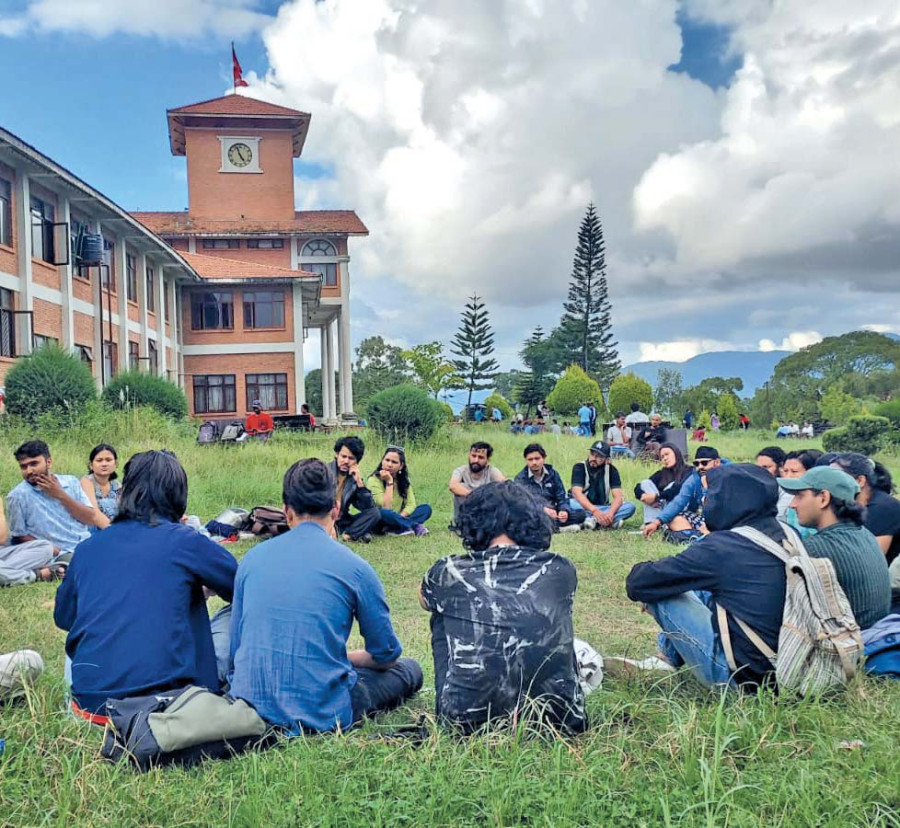
The Poetic Spirit of Generational Change
The essence of generational change is often captured through the lens of poetic consciousness and the art of expression through reading and writing. This theme has been brought to light by the young people I have spoken with, who have highlighted the significance of poetry in the context of the Gen Z uprising in Nepal. As a teacher, writer, and interpreter of poetry, I have observed how the subject of awakening, interpretation, and misinterpretation of the poetics of an uprising plays a crucial role in shaping the spirit of change.
Poetry has long been a medium through which youths across different eras have expressed their desire for transformation. As someone who has studied both Nepali and Anglophone poetry, including works from French, German, and Spanish poets translated into English, I am reminded of the powerful voices of young poets throughout history. Their work reflects vision and the promise of the future, capturing the essence of their generation and the wisdom of their time.
Historically, many young poets have faced significant challenges for their work. For instance, Federico Garcia Lorca, a Spanish poet, lost his life due to the power of his poetry. Similarly, the English Romantic poets of the 18th and 19th centuries, such as Wordsworth, Blake, and Shelley, used their poetry to challenge societal norms. Shelley’s “The Masque of Anarchy” was a direct critique of established values, highlighting the potential of poetry to inspire change.
In 1968, during the French student and youth uprising, the mantra “When poetry ruled the streets” became a symbol of resistance. Poetic graffiti adorned the walls of Paris, with phrases like “It is forbidden to forbid” resonating among the youth. Poetry provided a means for them to express radical ideas through surrealistic imagery, using metaphor and symbolism to convey their messages. The rejection of authority and the call for personal fulfillment were central themes in their work. Similarly, during the Arab Spring, poetry played a vital role in the protest chants of young people.
Today, the poetry of Millennials and Gen Z is of great interest to readers and academics alike. Scholars and philosophers have explored the dual aspects of poetry: solitude and sociality. As the English poet W.H. Auden once wrote, “For poetry makes nothing happen: It survives / In the valley of its making where executives / Would never want to tamper,” poetry is often seen as separate from activism and change. However, this view is not without its complexities.
In Nepal, young poets have long used their work to reflect on periods of autocracy and historical transition. Poet Siddhicharan Shrestha, for example, wrote about revolution in his native language, Newari, stating that there could be no peace without revolution. His words, “kranti bina makhu shanti,” capture the essence of his message. Another poet, Kedarman Vyathit, wrote about the sound of a storm and the revolution that followed, illustrating the transformative power of poetic expression.
Laxmi Prasad Devkota, after returning from a literary meeting outside Nepal, wrote, “We Nepalis are the children of the dawn (hami ushasuta Nayapali).” This poetic image reflects how past generations of Nepali youths expressed their hopes and aspirations through literature. Over time, poetry has continued to be a medium for heralding new changes.
The voice of each generation is a powerful phenomenon in poetry. Young poets from earlier times have shown how poetic imaginations and contemporary issues can coalesce productively. Across generations, poets in Nepal and beyond have chosen poetry as a powerful form of expression. While I cannot delve into every poetic mode of change here, it is clear that the millennial and Gen Z generations have become significant figures in various countries.
In Nepal, young poets may not always openly recite poetry about change, but they often express the spirit of transformation through their work. Some youths who do not identify as part of Gen Z have also written compelling poems. I was deeply moved by the energy of young poets at the Tikapur Literary Festival held on March 8-10, 2025. Their presence was impressive, bringing a fresh vitality to the event.
Among the participants was Rakshya Bam, who is currently at the forefront of the Gen Z movement. The energy of the youths was palpable, and their contributions enriched the festival. In my article titled “Literary festivals: Quest for energy,” I noted, “I was drawn by a desire to witness how the revival of energy in Tikapur brought together hopes, dreams and personal experiences. Literature is an apt metaphor for that.” This is one example of how youth-driven creative festivals are gaining momentum.
In conclusion, the subject of awakening and the interpretation of the poetics of an uprising and waves of change is a complex and important topic. It involves the alignment of the poetic spirit with the actions and plans of those who seek to bring about change. In Nepal, individuals tasked with developing such action plans face challenges in addressing the creative spirit of the youth’s rebellion. These moments of upheaval have occurred throughout history in various countries.
Transforming the creative spirit into action has always been a mix of opportunity and challenge. We are experiencing this firsthand. I have read that people in governments and political spheres seeking to harness the spirit of the moment are facing difficulties in translating it into actionable plans for the future. This is a poetic moment, where theories, ideologies, and interpretations play a vital role in forging ahead. However, we must first understand the poetics of the moment—the Gen Z spirit of change that is being experienced here.


