- The London-born neurologist died in New York in August 2015 at the age of 82
- The writer was previously described as the ‘poet laureate of medicine’
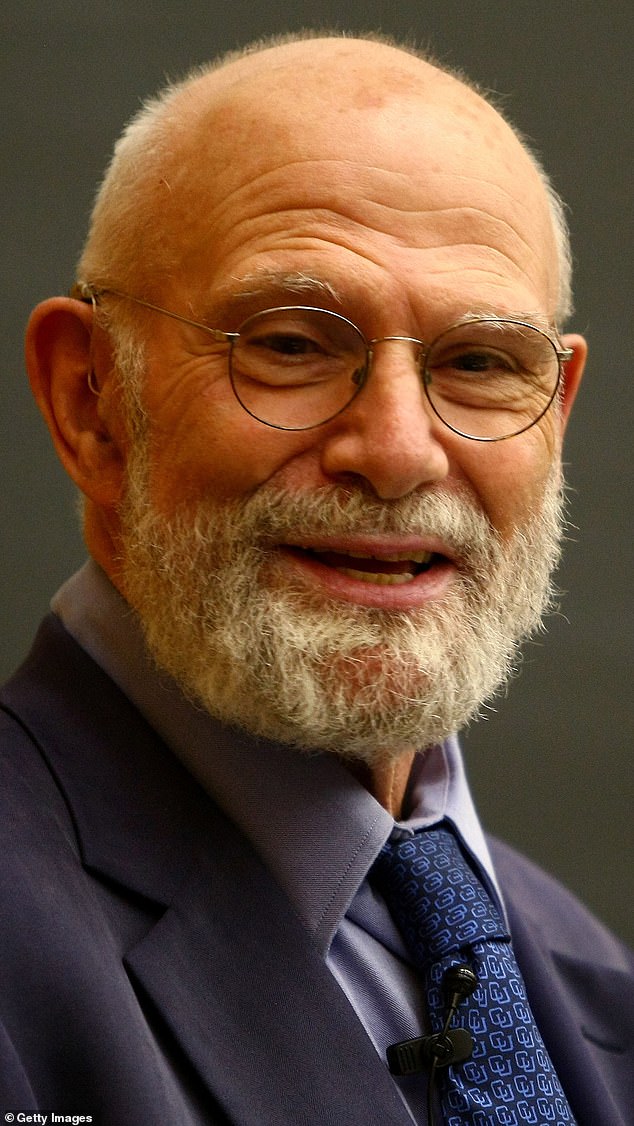
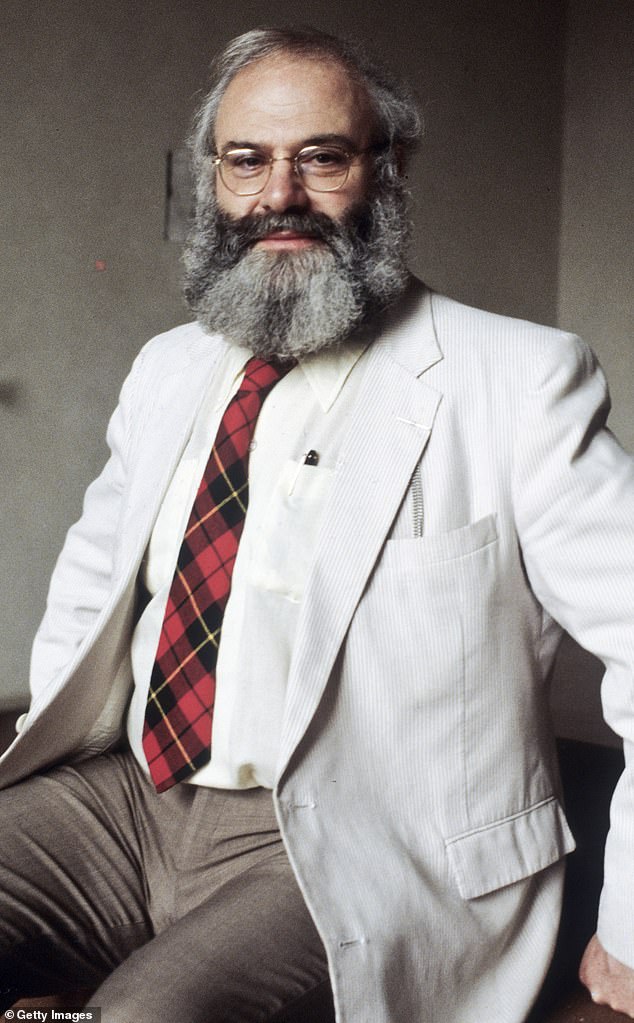
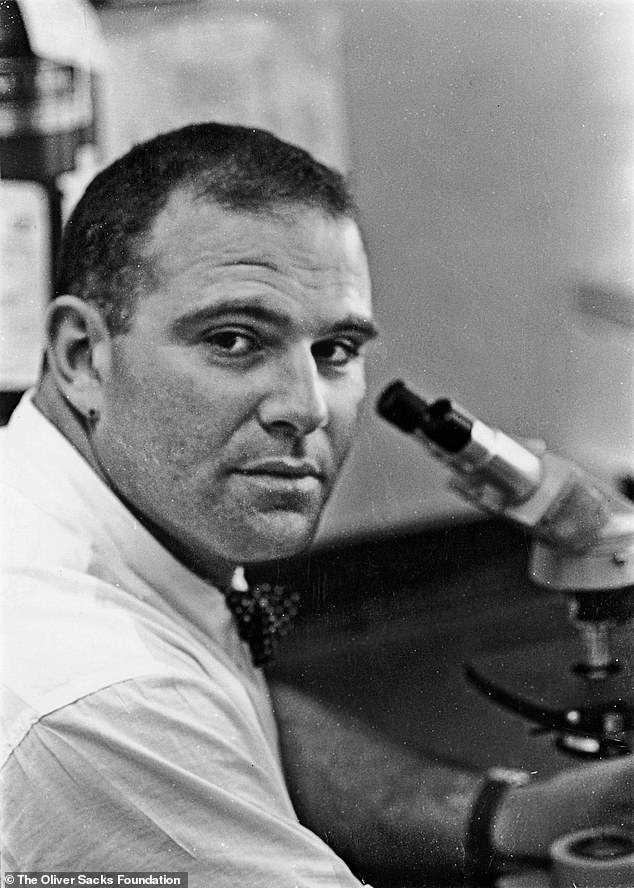
Celebrated scientist Oliver Sacks, whose bestselling writing inspired an Oscar-nominated Hollywood film, has been accused of fabricating details about his psychiatric patients – at times, he said, to alleviate his ‘boredom’.
Case studies were central to the books by the London-born writer, who was credited with bringing humanity to patients with complex neurological and psychiatric disorders through his work.
Now, however, an article in The New Yorker – to which the neurologist who died in 2015 was a frequent contributor – reveals how some accounts in his non-fiction books such as The Man Who Mistook His Wife For A Hat were ‘fairy tales’.
In the bestselling 1985 book, the patient in the titular story had difficulty interpreting what he saw due to damage to visual parts of the brain.
Dr Sacks described a scene in his office where the patient tried to lift his wife’s head off and place it on his own, because he could not tell her apart from a hat.
However, the patient’s wife ‘privately disagreed’ with the neurologist about this depiction of her husband.
Another story in the book featured autistic twins who had trouble with ordinary maths but could apparently perform other amazing calculations.
Dr Sacks admitted in his diaries that this was the ‘most flagrant example’ of his distortions and was inspired by his own childhood where he would spend hours attempting to devise a formula for prime numbers.
Discover magazine ranked The Man Who Mistook His Wife For A Hat among the 25 greatest science books of all time in 2006, saying: ‘Legions of neuroscientists now probing the mysteries of the human brain cite this book as their greatest inspiration.’
But notes from Dr Sacks’ own journals now show him admitting some details were ‘pure fabrications’ – and that he gave patients he wrote about ‘powers (starting with powers of speech) which they do not have’.
Dr Sacks died at his home in New York on August 30 2015, aged 82 – six months after he told of being diagnosed with terminal cancer.
That came after a rare melanoma of the eye – found nine years earlier – was discovered to have spread to his liver.
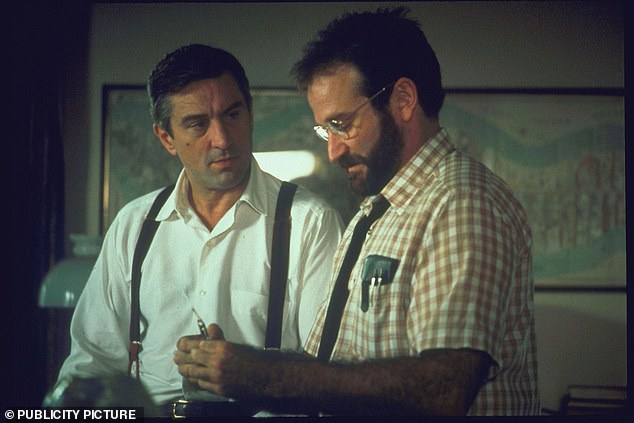
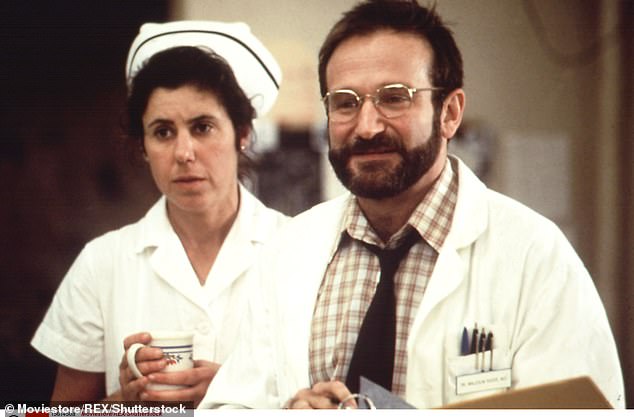
Dr Sacks’s 1973 breakthrough book Awakenings detailed his real-life experience with patients who suffered from a condition known as encephalitis lethargica and how they were able to exit – however briefly – from their catatonic states with the aid of a drug.
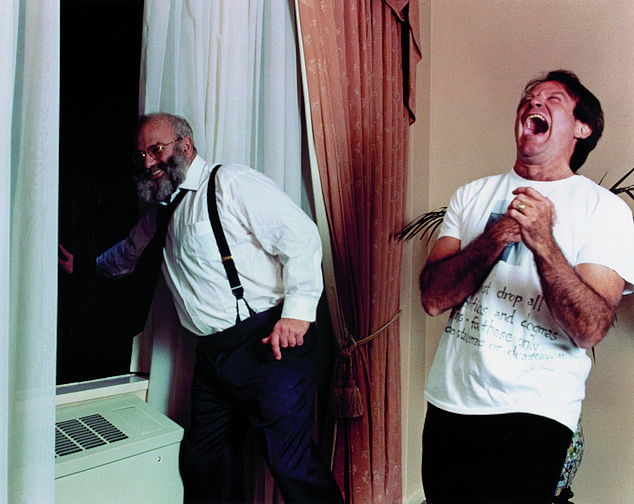
It later inspired a 1990 film of the same name, which was nominated for the Best Picture Academy Award as well as Best Actor for Robert De Niro who appeared as a patient alongside a doctor played by Robin Williams.
But his own private journals suggested for fabricating details, it has now been revealed – with Dr Sacks describing some of his patient accounts as ‘fairy tales’, while also saying: ‘I write out symbolic versions of myself.’
He also described his books and their embellishments as ‘symbolic autobiography’ – and wrote after the success of 1985 book The Man Who Mistook His Wife For a Hat: ‘Guilt has been much greater since “Hat” because of (among other things) my lies, falsification.’
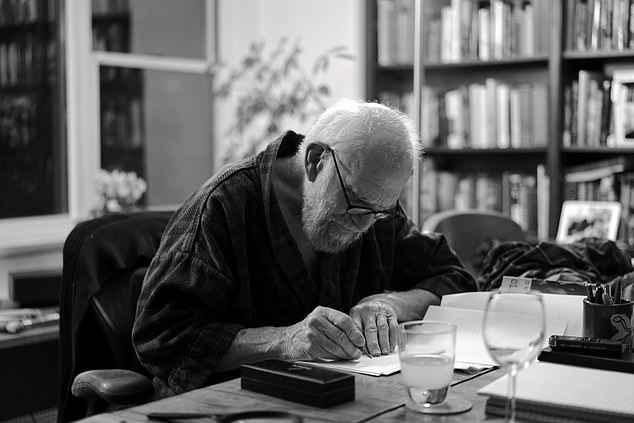
He told one of his brothers in a letter about that book: ‘These odd Narratives – half-report, half-imagined, half-science, half-fable, but with a fidelity of their own – are what I do, basically, to keep MY demons of boredom and loneliness and despair away.’
But his patients of whom he wrote, and their families, were largely happy with their portrayals, the new New Yorker feature says.
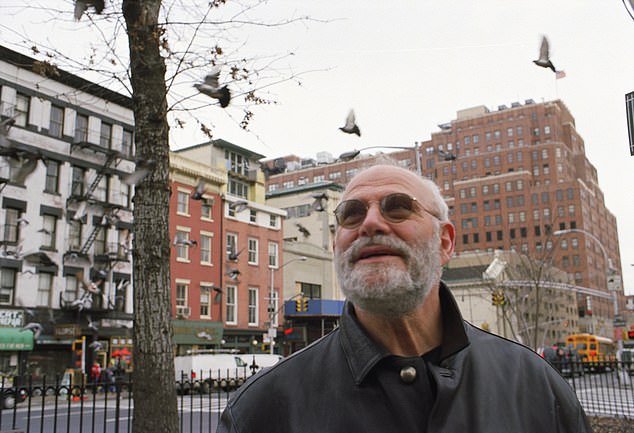
Born in London, Dr Sacks was educated at Oxford and then emigrated to Canada, then to the United States, arriving in New York in 1965 where he taught, wrote and practiced for the rest of his life.
Dr Sacks was awarded several honorary degrees recognising his contribution to science and literature, and was made a CBE in 2008 in the Queen’s Birthday Honours.
He was best known for his collections of case histories, not only The Man Who Mistook His Wife For A Hat but also others such as An Anthropologist On Mars.
He described patients struggling to live with conditions ranging from Tourette’s syndrome to autism, parkinsonism, musical hallucination, epilepsy, phantom limb syndrome, schizophrenia, retardation, and Alzheimer’s disease.
He investigated the world of deaf people and sign language in Seeing Voices, and a rare community of colour blind people in The Island Of The Colorblind.
Dr Sacks also wrote about his experiences as a doctor in Migraine and as a patient in A Leg To Stand On, before his autobiographical Uncle Tungsten: Memories Of A Chemical Boyhood was published in 2001.
When Sacks received the prestigious Lewis Thomas Prize for science writing the following year, the citation said: ‘Sacks presses us to follow him into uncharted regions of human experience – and compels us to realise, once there, that we are confronting only ourselves.’
At the time of his death, he was a professor of neurology at New York University’s School of Medicine.
Tributes were paid at the time on social media, with Harry Potter author JK Rowling describing him as a ‘great, humane and inspirational’ man, adding that he had ‘a life well-lived’.
The biologist and atheist Richard Dawkins wrote of having ‘greatly admired him’ and being ‘sad to hear of his death’.
And surgeon and New Yorker writer Atul Gawande said: ‘He was like no one in medicine or writing. I will dearly miss him.’
Dr Sacks had critics during his lifetime, with allegations he exploited his patients’ stories – and one academic branded him ‘the man who mistook his patients for a literary career’.
And yet Temple Grandin, a renowned American scientist whose own experiences of autism were detailed in Dr Sacks’ 1995 book An Anthropologist on Mars, disagreed.
She said: ‘They used to think people on the autism spectrum had no inner world. He got inside my emotions in a way that other people hadn’t. It was sort of kind of mind-blowing.’
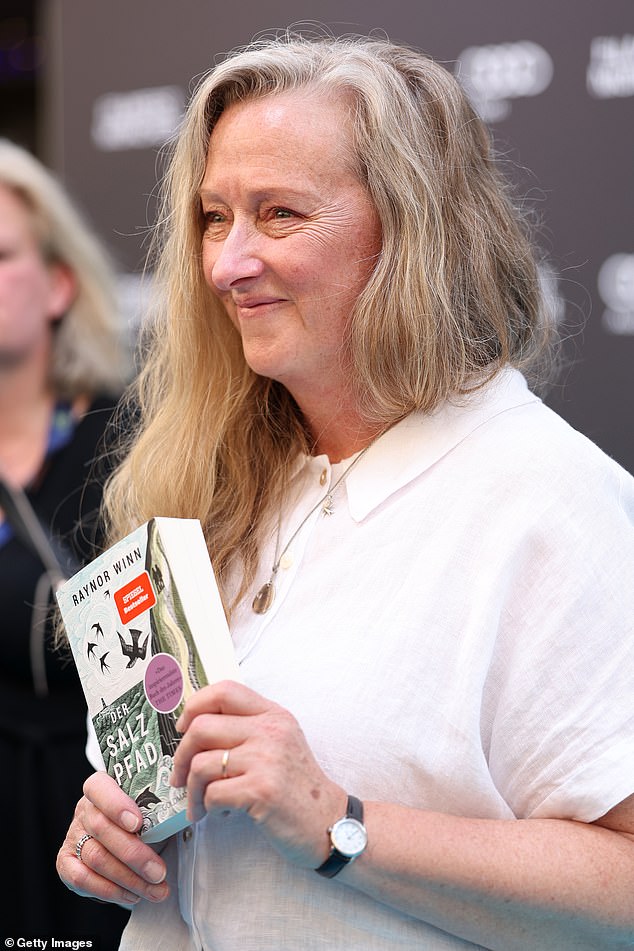
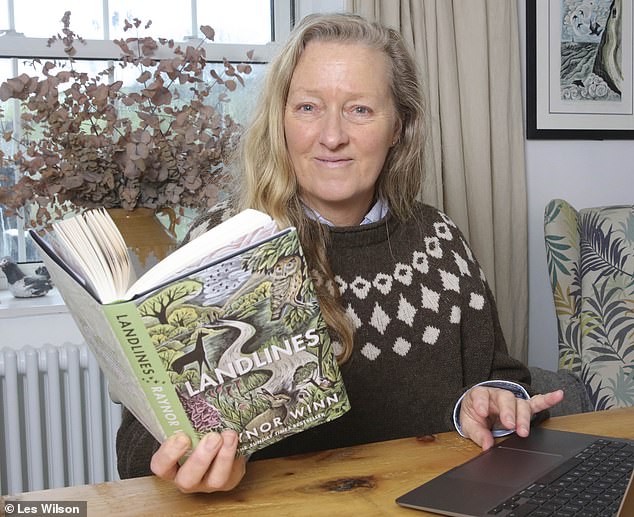
The new claims come amid a separate bestselling book scandal – with a widow this week telling of the moment she and her late husband discovered that The Salt Path author Raynor Winn had allegedly stolen £64,000 from their family business.
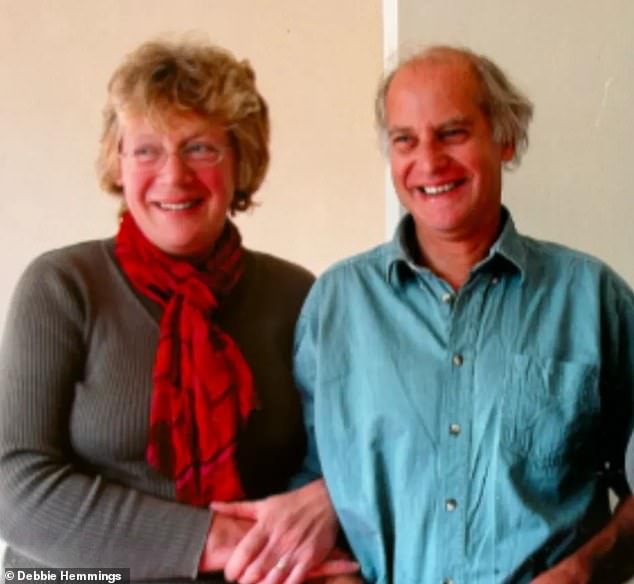
Winn, whose real name is Sally Walker, worked as a bookkeeper in the early 2000s for the property firm run by Martin and Ros Hemmings.
She later made a multi-million-pound fortune from the publication of her bestselling memoir, which detailed her struggles and those of her husband Moth, whose real name is Tim Walker.
But an investigation earlier this year claimed that Winn and her husband did not lose their home following a business deal, as they had claimed, but instead after she stole money from the Hemmingses.
Speaking in a new TV documentary containing fresh claims about Winn’s past behaviour, Mrs Hemmings, whose husband died in 2012, described how the author’s alleged deceit was discovered.
The book The Salt Path, made into a film starring Jason Isaacs and Gillian Anderson, tells how Winn and her husband walked the 630-mile South West Coast Path after their dream home in Wales was repossessed following a business deal gone wrong.
After noticing that the company finances were not nearly as healthy as they should have been, Mrs Hemmings claimed her husband discovered his signature had been forged on multiple cheques.
She said in a new programme broadcast on Sky Documentaries on Monday: ‘Martin and I, we took all the books home for the whole time that she had worked for us and started working backwards.
‘It took months. We felt there was £64,000 [missing].’
When asked in The Salt Path Scandal whether Winn had been ‘stealing money for years’, Mrs Hemmings replied: ‘She had, yes.’
The documentary also revealed alleged confession letters in which Winn admitted to taking money from her mother and parents-in-law.
According to the programme, Winn said: ‘Please don’t look any further for the money. I’ve taken it, all of it.
‘The figures the bank are giving you are correct. Any statements she [her mother] has had over the last 18 months are fake. I forged them.
‘I have to ask you not to take things any further with the bank, but to tell them it was a mistake.
‘I have to ask this as I have a police record. And should this go any further, I will go to prison this time.’
She also admitted: ‘In a mad panic, I transferred £25,000 from Tim’s mum and dad’s account to Tim’s.’
Winn has disputed all the allegations, including the latest revelations.
She said in a statement this week: ‘I did not steal from family, as others can confirm.
‘Nor have I confessed to doing so and I did not write the letter suggesting I did.’
Read more
- Did ‘The Salt Path’ author Raynor Winn steal £64,000, and how does her husband’s alleged illness add to the controversy?
- Did ‘The Salt Path’ author Raynor Winn steal a staggering £64,000 from a family business, causing a widower’s trust in humanity to crumble?
- Is ‘The Salt Path’ author Raynor Winn a cunning fraudster, accused of filching vast sums from her own family and forging financial documents?
- Did the renowned author of ‘The Salt Path’, Raynor Winn, allegedly forge signatures and siphon £64K from a family business?
- Is Raynor Winn accused of spinning deceptive tales, leading to a heartbreaking scandal that questions the true story behind The Salt Path’s poignant journey?