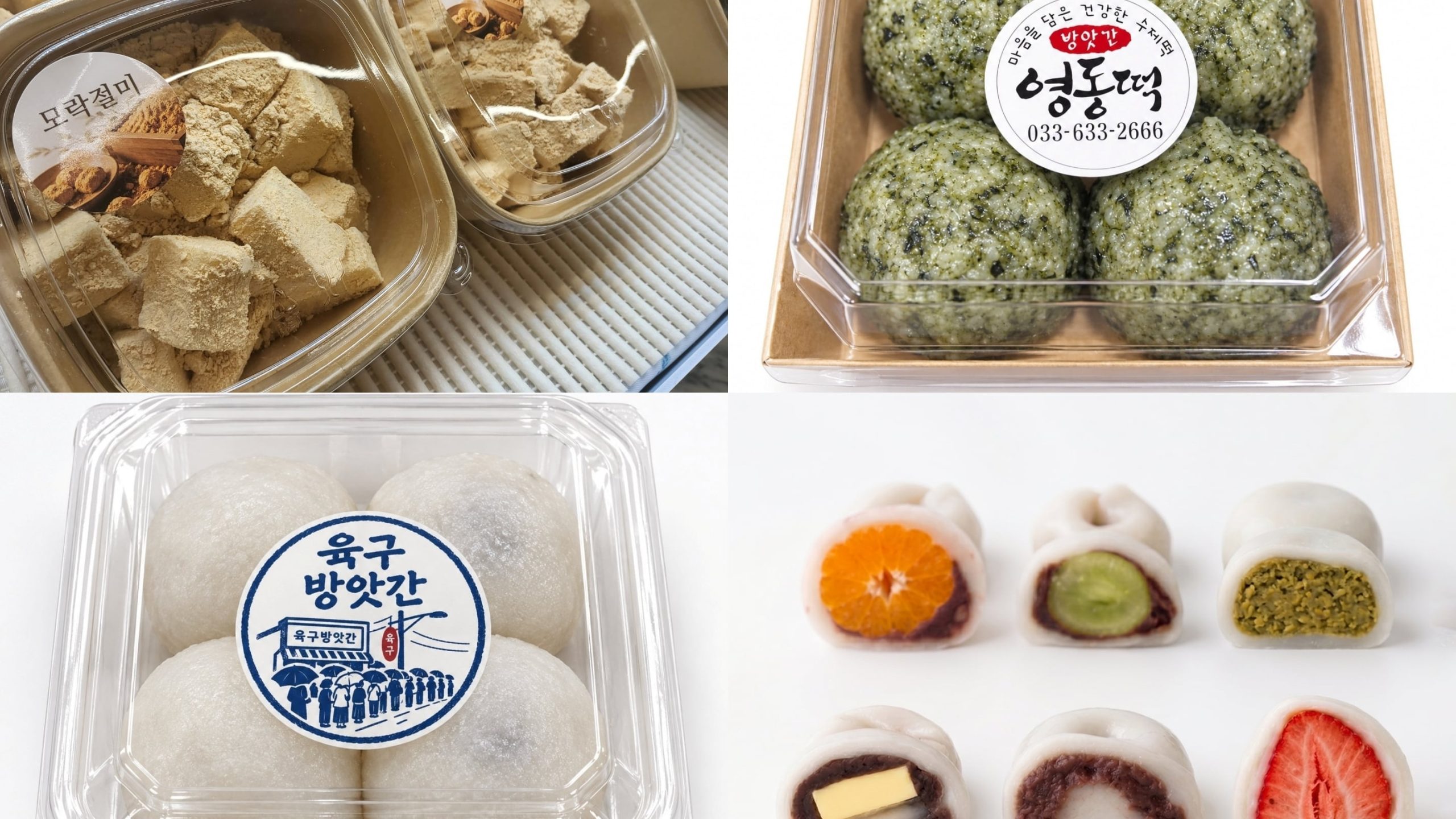
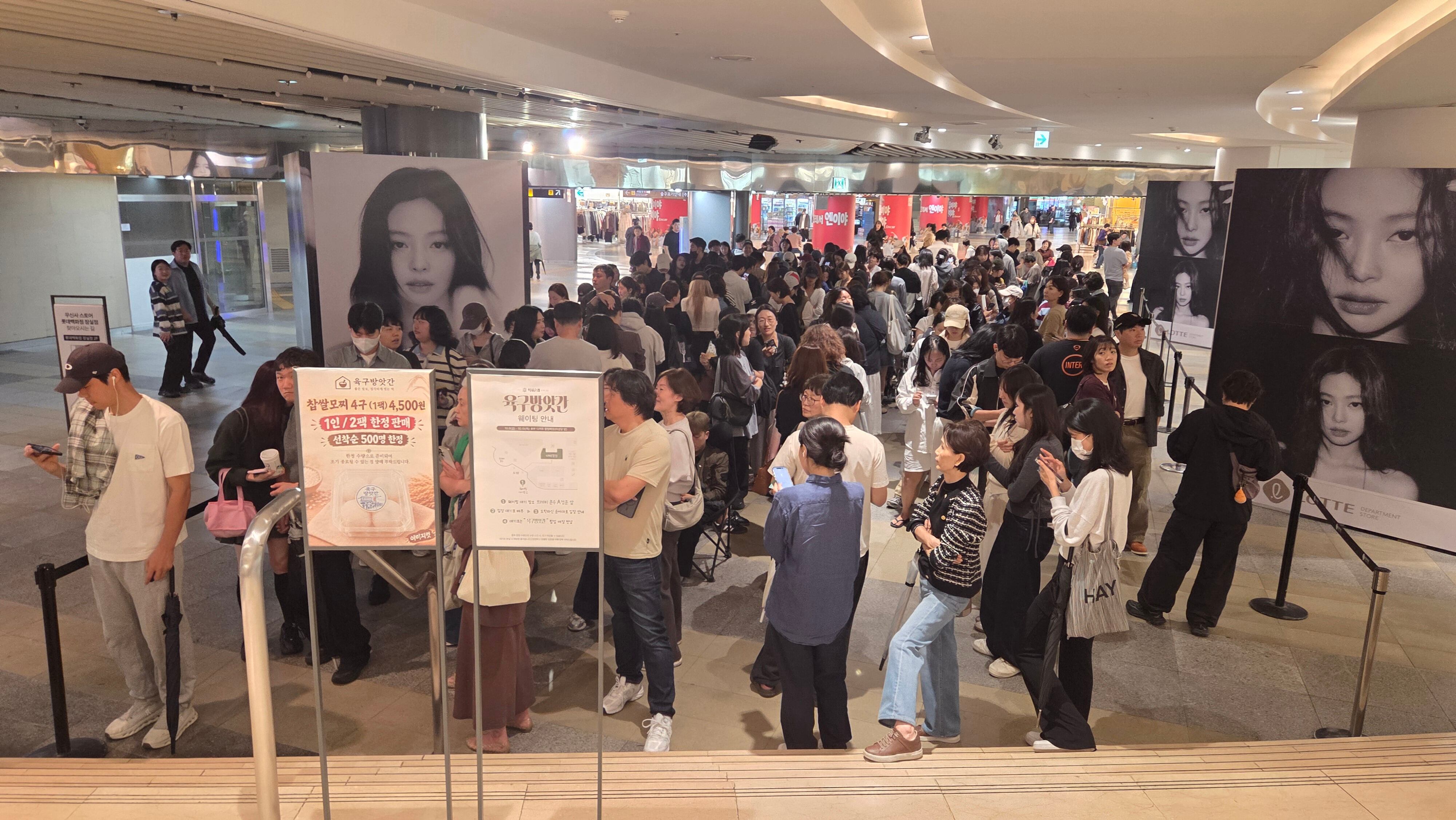
At 9:30 a.m. on the 13th, the entrance to the food hall in the basement of Lotte Department Store’s Jamsil branch. Though the doors would not open for another hour, 72 people were already waiting. They had left home in the early hours to receive entry numbers for the ‘National Rice Cake Pilgrimage’ pop-up event, held from the 9th to the 15th. A man at the front of the line said, “I arrived at 7:15 a.m.” By 10:30 a.m., the number of waiting customers exceeded 200. A source from the department store said, “Some popular rice cake shops sold out by 1 p.m., closing early,” adding, “We’re witnessing the popularity of rice cakes firsthand.”
Rice cakes, once dismissed as a snack for the elderly amid the dominance of sweet, visually striking breads and cakes, have now become trendy. The ‘ddeok-ppeun-run’ (rice cake + open run) phenomenon—where crowds gather before opening hours at famous rice cake shops—has emerged, and popular rice cakes that gain traction online and on social media (SNS) sell out quickly. The trend of ‘rice cake pilgrimage’—traveling to renowned rice cake shops nationwide—has replaced the previous ‘bread pilgrimage’ craze, where people took trains to visit famous bakeries like Daejeon Sungsimdang.
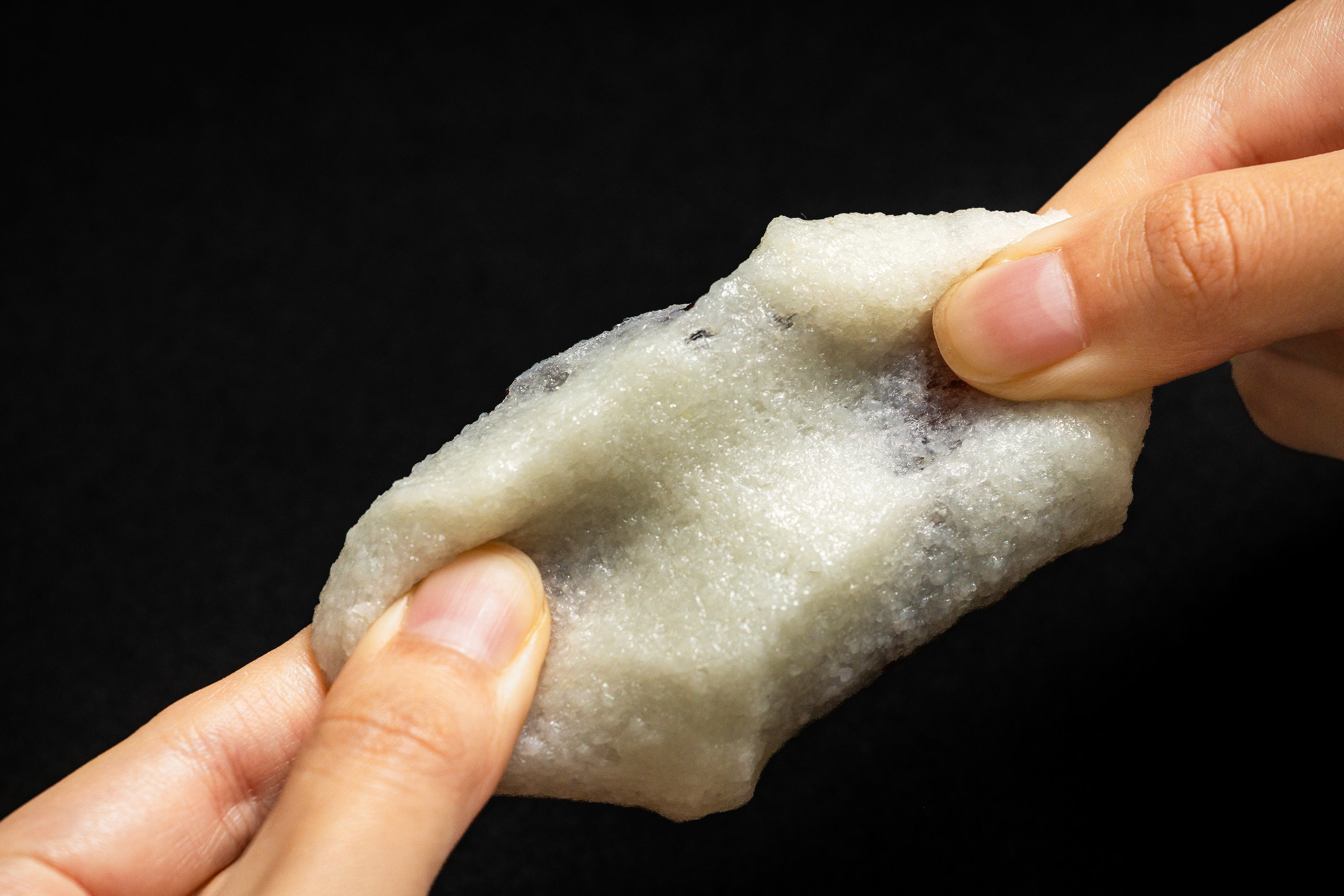
The rice cake craze, spreading mainly among younger generations, may seem sudden, but rice cakes have long been a beloved Korean food representing a ‘soft yet chewy texture.’ Food experts agree, “Items that have been popular, such as bagels, dujjonku (Dubai chewy cookies), and others, succeeded because they imitated the texture of rice cakes.”
From Holiday Specialties to MZ Desserts
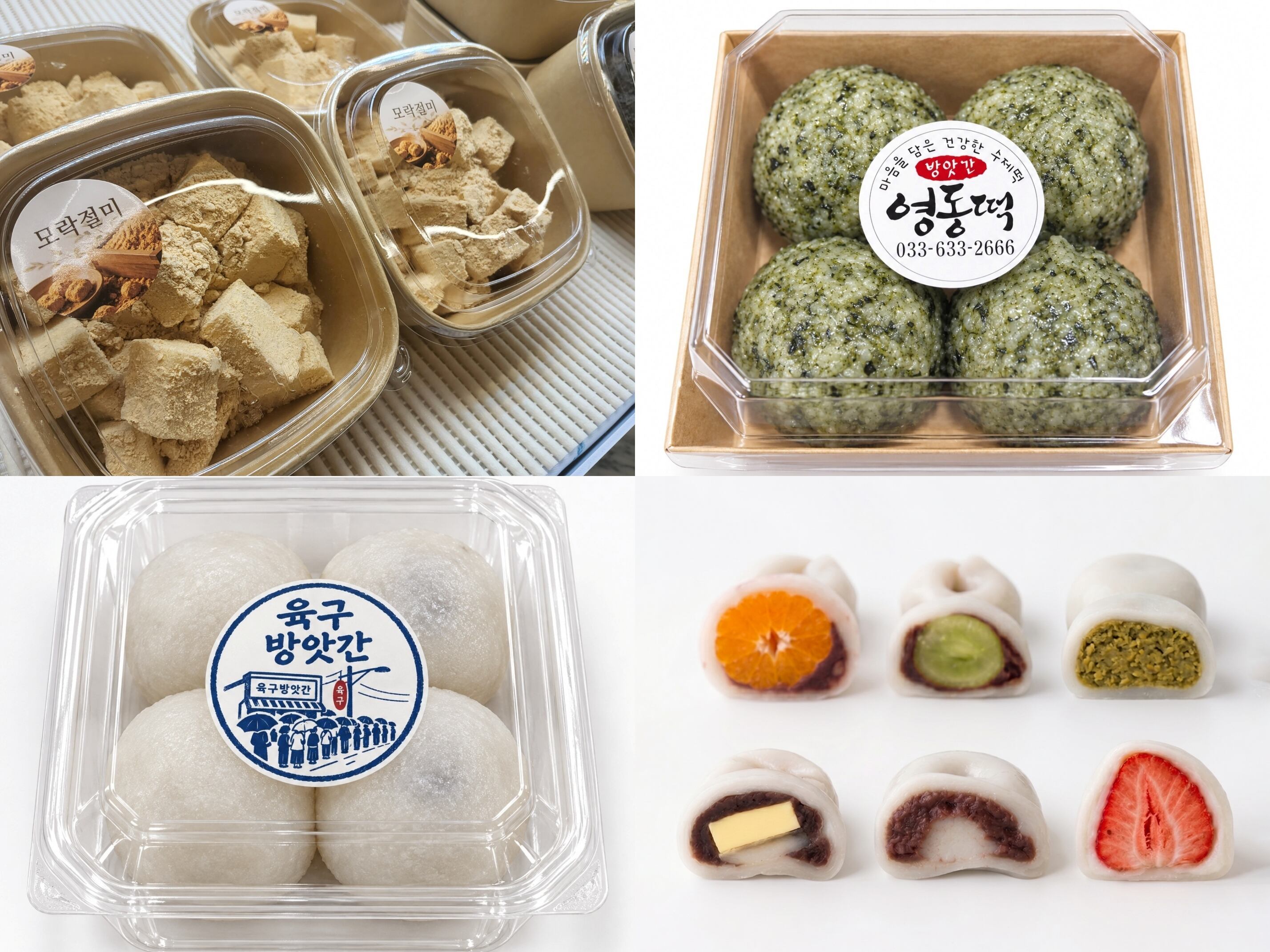
Rice cakes, once considered a food eaten mainly during holidays or special occasions like birthdays, have recently become a popular dessert among young people. The ‘ddeok-ppeun-run’ and ‘rice cake pilgrimage’ trends are in full swing. At the Seoul Seongsu-dong Hanjungsun flagship store, famous for its ‘fresh fruit glutinous rice cake’—a chewy glutinous rice cake filled with fresh fruit and Greek yogurt—hundreds of customers line up daily, regardless of weekday or weekend. Some even take the KTX to Busan’s ‘Yeongdodari Tteokbang,’ which pioneered ‘pizza seolgi’—a rice cake topped with pizza sauce, cheese, and pepperoni. There are even remarks that “due to Yukgu Bangatgan, Sokcho’s representative food has shifted from raw fish soup to glutinous rice cakes.”
The distribution industry has also noticed the rise of rice cakes and responded swiftly. Online platform Market Kurly reported that transaction amounts in the ‘rice cake·traditional sweets’ category increased approximately twofold from June to August this year compared to the same period last year, leading them to expand their product lineup by 180%. SSG.com launched the ‘Gourmet Creator Discovery Project—Rice Cake Pilgrimage Edition,’ supporting online sales and marketing for skilled rice cake shops nationwide. Convenience store CU released its private brand (PB) product ‘pizza jeolpyeon,’ reinterpreting traditional rice cakes as Western-style desserts. GS25’s ‘Hanjeongsun Yogurt Glutinous Rice Cake’ ranked first in overall ice cream and dessert sales in the quick commerce (delivery/pickup) category.
Rice Cake Pilgrimage Originates from Tteokbokki Tours
The term ‘rice cake pilgrimage’ originally combined ‘tteokbokki’ (spicy rice cake dish) and ‘pilgrimage.’ In May 2022, Hong Geum-pyo, who led tteokbokki-themed tour groups, published a book titled *Rice Cake Pilgrimage*, featuring 124 selected tteokbokki restaurants nationwide. Though it initially referred to tteokbokki tours, the term now firmly means visiting renowned rice cake shops.
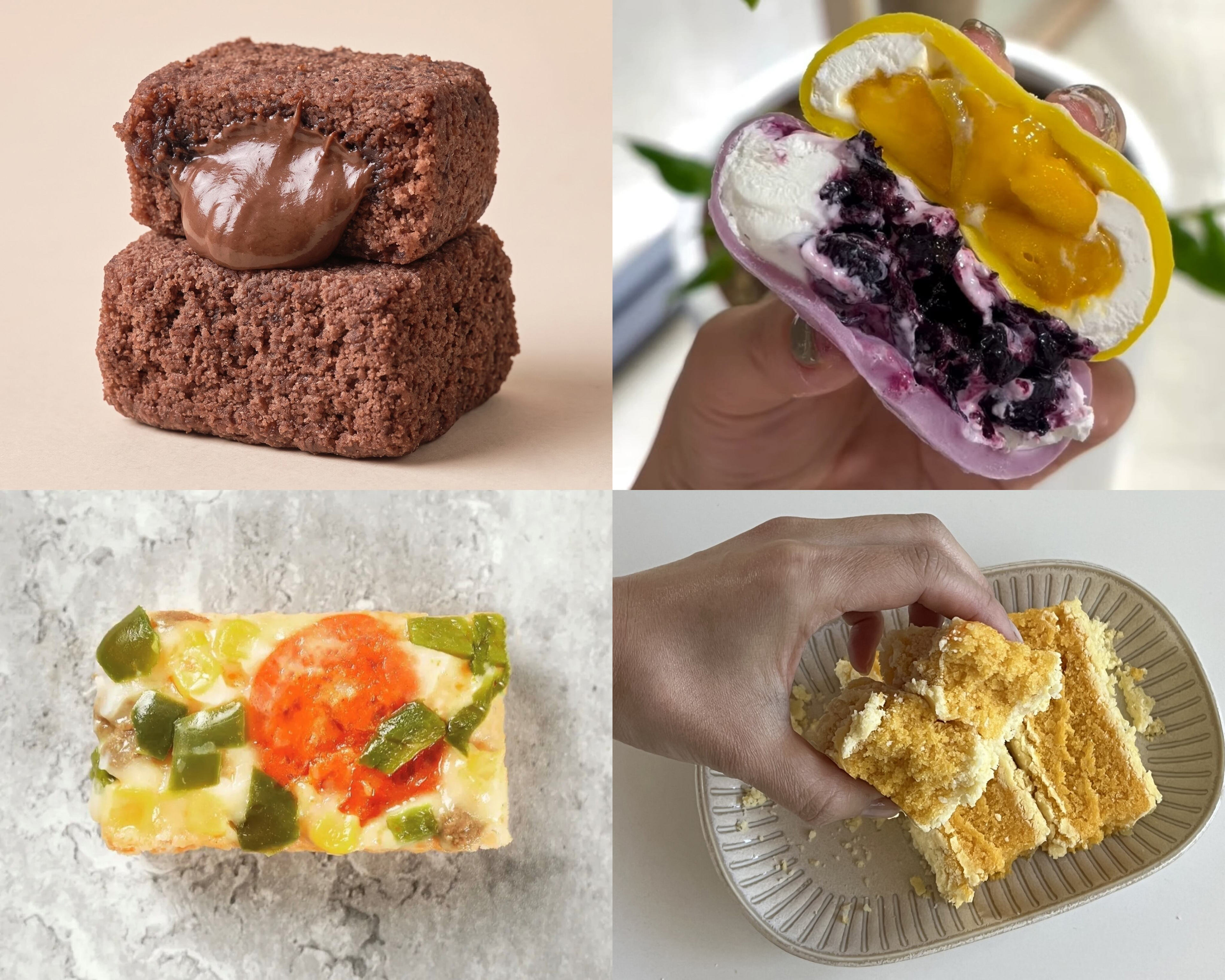
Jeonnam-Gwangju’s ‘Chang-eok Tteokjip’ is credited with sparking the rice cake pilgrimage trend. Its ‘pumpkin injeolmi’—a rice cake filled with pumpkin and coated with castella crumbs—gained viral attention on SNS, leading to nationwide popularity. This was followed by the emergence of unique rice cakes like pizza seolgi.
The trend expanded to traditional rice cakes. In Seoul, ‘Dosuhyang’—a northern-style injeolmi shop using red bean paste without skins—‘Gyeonggi Tteokjip,’ selling ‘E.T. rice cake’ for three generations, and ‘Biwon Tteokjip,’ a 70-year-old shop serving ‘dudub-tteok’ (a thick rice cake for royal banquets), are top pilgrimage spots. Outside the capital, Gangneung’s ‘Donghae Gijeong,’ Wonju’s ‘Mannangpo Potato Rice Cake,’ and Jeju’s ‘Anam Tteokjip’—credited with coining ‘omegi tteok’—are must-visit destinations.
Familiar Texture Meets Unfamiliar Flavors
The key to the success of these rice cake pilgrimage sites lies in combining traditional rice cake bases with Western dessert ingredients, creating a familiar yet novel texture. The most groundbreaking example is pizza seolgi—a steamed rice cake topped with tomato sauce, cheese, and pepperoni. It attracts young customers by blending the familiar taste of pizza with the chewy texture of rice cakes. Even global pizza brand Pizza Hut joined the trend, introducing pizza seolgi as a new menu item.
Fruit glutinous rice cakes, though not new, have been reinvented. Originating in Japan in the 1980s and introduced to Korea in the early 2010s, they were revitalized by Hanjeongsun, which reduced or eliminated traditional red bean paste and filled them with fresh fruit and yogurt cream for a modern twist.
Rice cakes are also ideal for SNS, where visual appeal is crucial. The proverb “A pretty rice cake tastes better” holds true in the digital age. While taste and aroma are hard to convey online, the stretchy texture of rice cakes is vividly captured in short videos. This makes rice cakes perfect for showcasing on SNS, and the act of waiting in long lines to purchase them has itself become content, fueling the rice cake pilgrimage trend.

All Successful Desserts Imitate Rice Cakes
The rice cake pilgrimage trend is not a sudden phenomenon but a resurgence of Koreans’ genetic preference for chewy textures. Koreans have a history and dietary culture that naturally favor chewiness. The Korean language’s rich vocabulary for textures—like ‘jjolgit-jjolgit’ (springy) and ‘jjondeuk-jjondeuk’ (sticky)—reflects this obsession. Dessert experts believe rice cakes will remain popular longer than imported desserts.
Koreans have eaten rice cakes since the Bronze Age. The earliest grain dish was porridge cooked in earthenware, but the invention of steaming with sieves solved issues of earthy smells and impurities, marking the origin of rice cakes. Korean rice, a Japonica variety, has a higher amylose content than Indica, giving it a uniquely chewy texture. This texture became a familiar pleasure in a diet long centered on grains and vegetables.
Koreans also enjoy chewy foods like pig’s trotters, boiled meat, and dried persimmons, which are physically altered to adhere stickily to the palate. Recent hits like bagels, dujjonku, and chewy ice cream owe their success to imitating rice cakes’ soft yet chewy texture. Lee Hyo-jung, founder of London Bagel Museum, explained in interviews, “We researched to achieve the chewy, soft texture of rice cakes familiar to Koreans, moving away from traditional bagels’ tough, hard texture.”
Food writer Park Jeong-bae said, “Even in an era of blood sugar management and low/no sugar trends, rice cakes remain popular due to their chewy texture ingrained in Koreans’ tongues for millennia.” He added, “By combining with global ingredients, they will continue to evolve as the forefront of K-desserts.”
- 월 5900원 멤버십, 신문 독자에게는 2900원, 조선멤버십
- 55000원 상당의 신문-잡지 8종 마음껏 보기, 조선멤버십
- 현금처럼 쓸 7000포인트 받아 알뜰한 쇼핑, 조선멤버십

Related posts:

Yu Seokjong: 20 Years Bridging Visually Impaired with Guide Dogs

Kenyan pilot allegedly left with nothing after dispute with wife shares update on family, new job

Hong Kong touts key advantages over London in bid to become global gold hub

‘Thai people already poor’: Developing nations protest IMF’s austerity call

Teacher, 25, killed in Oregon shooting is identified as family say it was her dream job