The Ongoing Struggle for Justice in Novi Sad
A year has passed since a tragic incident at the Novi Sad railway station claimed the lives of 16 people when a concrete canopy collapsed. This event has sparked a prolonged conflict between the Serbian government and the student movement, which continues to demand accountability and reform. As the anniversary approaches, a commemoration event is planned for Saturday, marking a significant moment in the ongoing struggle.
Under normal circumstances, Boris Kojcinovic, a student from Novi Sad, would be exploring master’s programs abroad. However, due to the ongoing university blockades led by students, his focus has shifted. Instead of studying abroad, he spends his time reading literature for his thesis and organizing volunteers for an event that will commemorate the first anniversary of the tragedy.

Kojcinovic is one of the prominent figures in the student protest movement, which has brought attention to what they believe are the root causes of the incident: corruption and systemic negligence. The movement has grown significantly over the past year, creating a network of supporters across Serbia and among the Serbian diaspora.
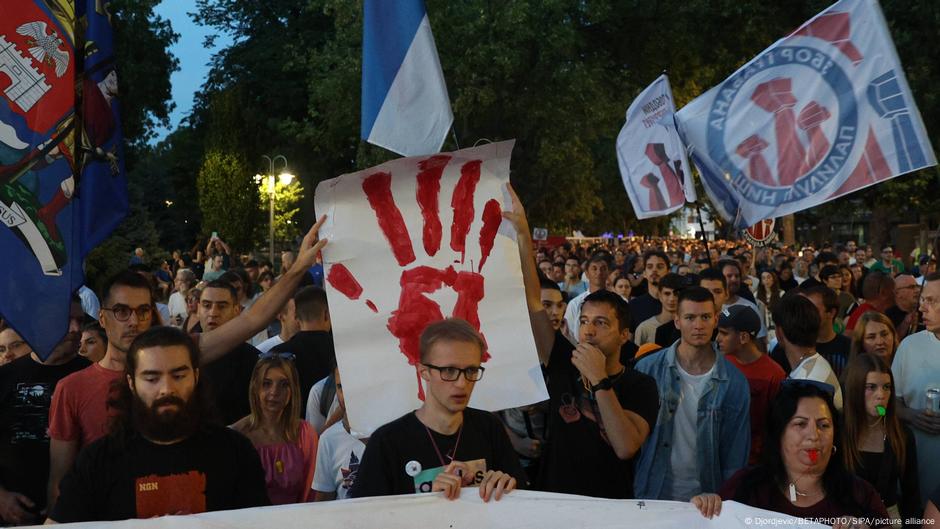
The student movement has used the slogan “You’ve got blood on your hands” and has flooded both online and offline spaces with images of red palmprints, symbolizing their protest. To ensure their message reaches as many people as possible, students have traveled extensively, organized demonstrations, and even cycled to Strasbourg and run to Brussels to bring their concerns to the European Union.
Despite the efforts of the students, they have not yet succeeded in making those in power take responsibility. The authorities have employed various tactics, including offering cheap housing loans to students and higher salaries to lecturers, while also using smear campaigns, physical attacks, and heavy-handed police interventions to intimidate protesters. However, these strategies have not yielded the desired results.
A War of Attrition
Political scientist Zoran Stojiljkovic described the situation as “a balance of powerlessness.” Bojan Klacar, executive director of the Center for Free Elections and Democracy (CESID), agrees, stating that the political crisis remains unresolved. Although the ruling coalition is more consolidated than it was six months ago, it still lacks full control of the situation and has lost its previous dominance.
“The [ruling Serbian Progressive Party] SNS was mostly on the defensive until the end of April. Today it can set the agenda — and it does,” said Klacar. However, the students are not in a better position either. While the movement has changed the social climate, it has not yet influenced political relations in the country.
Klacar explained that the students are not ready to turn the process in their favor, leading to a game of patience, a battle of nerves, and a certain kind of attrition between the two sides.
The Role of Elections
Elections are crucial for the students, but the authorities rarely mention the subject. Serbian President Aleksandar Vucic has only stated that elections will be held next year without specifying the exact date. Klacar believes the timing of the election is the SNS’s trump card, allowing it to stay ahead of its opponents.
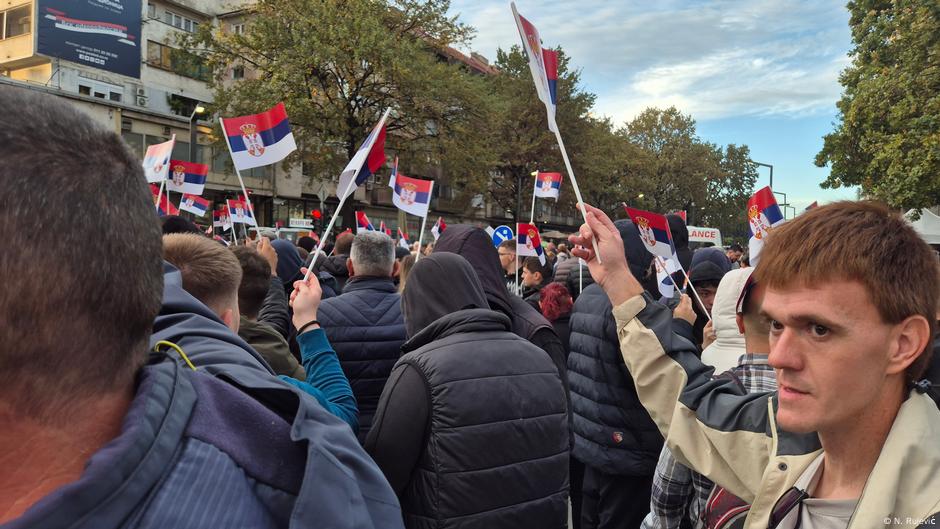
For the students, maintaining high protest energy and creating a referendum-like atmosphere are key. They are preparing for an election at “full steam,” building an electoral infrastructure that includes teams, observers, and a political program. The students’ list of candidates is almost complete, though it remains shrouded in secrecy.
This has drawn both criticism and praise. Some argue that voters should know who will be standing for election as soon as possible, while others believe it is wiser to wait to avoid candidates being discredited by the ruling party and aligned media at an early stage.
Determined to Keep Going
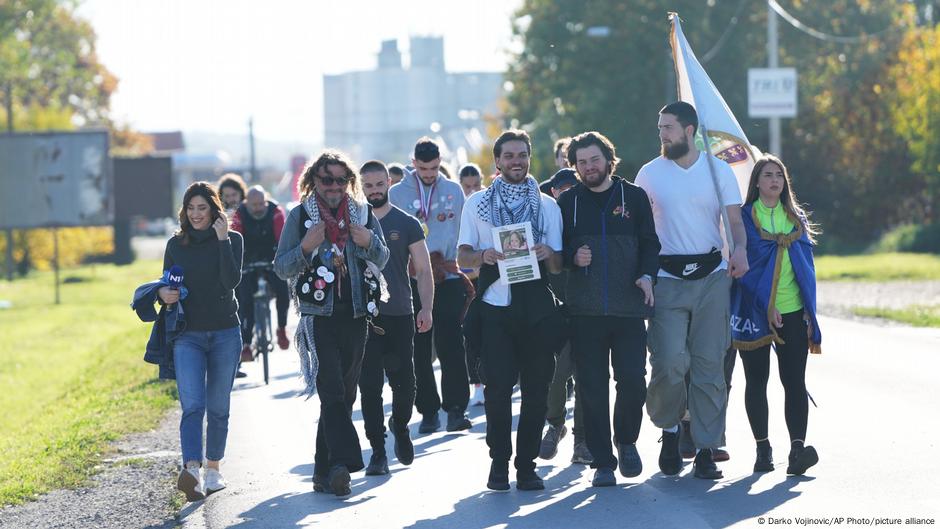
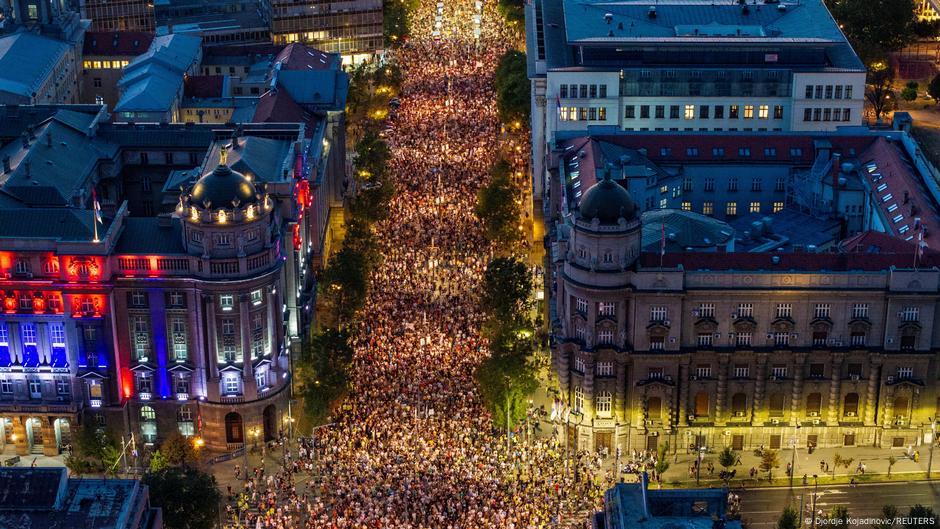
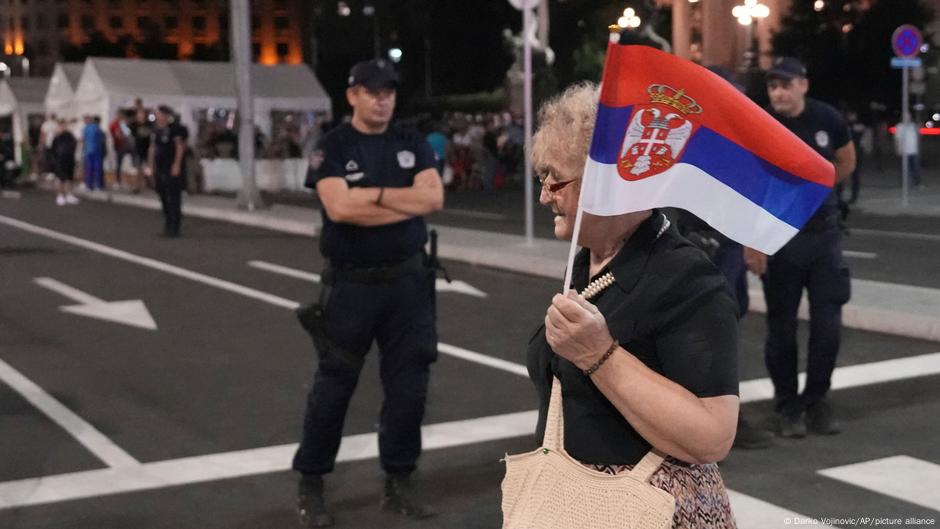
About 10,000 pedestrians and 5,000 cyclists are expected to arrive in Novi Sad on the eve of the November 1 anniversary. Tens of thousands more are anticipated to join them on the day of the commemoration gathering itself. The authorities accuse the students of preparing violence and have pledged a “state response.”
However, the students have declared unanimously that violence is not their mode of protest. They plan to hold a dignified commemorative gathering focused on the victims, highlighting the lack of accountability despite reports pointing to corruption and the involvement of parts of the system.
After a commemorative silence for the victims, the students intend to return to making noise until their demands are met. “This is how it will be until elections are called where the will of the citizens will not be manipulated, obstructed and abused. I don’t see that any other outcome is possible,” concludes Kojcinovic.


