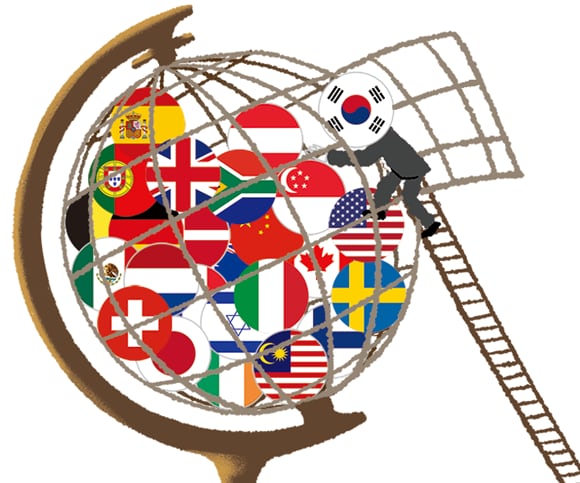
The South Korean government bonds have received final approval for addition to the FTSE World Government Bond Index (WGBI), which ranks among the globe’s premier three sovereign debt indexes. However, the incorporation will be delayed until April 2026, as announced by the index provider FTSE Russell on April 9th.
FTSE Russell mentioned that international investors backed Korea’s inclusion, with South Korean officials committing to facilitate a seamless integration. They stated that the postponement from the initially scheduled commencement in November 2025 aimed to provide market participants additional time for completing their internal processes and executing trial transactions.
This addition comes after a sequence of changes implemented by Seoul with the intention of enhancing foreign investment opportunities within its bond market. These modifications include tax breaks for both interest income and capital gains as well as doing away with the investor registration certificate (IRC) requirement.
The World Government Bond Index (WGBI), developed by FTSE Russell, influences approximately $2 trillion to $3 trillion in worldwide investments and presently encompasses government bonds from 25 nations, such as the United States, Japan, and the United Kingdom.
Even though the inclusion is official, the postponed schedule implies anticipated advantages like higher foreign investments and reduced lending expenses will be pushed back. Additionally, South Korea’s weight increment within the index will shift from quarter to month instead of quarters; however, complete integration still targets November 2026.
The South Korean Ministry of Economy and Finance stated that this revised schedule will assist investors in completing their preparatory work and guaranteeing a more seamless transition, thereby optimizing the effects of the index incorporation.
The statement also noted that providing monthly increases would grant investors more adaptability when modifying their investments.
When asked about the potential impact of recent political instability in South Korea on the postponement, officials from the ministry stated that there was no correlation. A ministry representative explained, “Should there have been doubts regarding confidence in Korea’s bond market, encompassing political hazards, FTSE Russell may have decided against incorporating it entirely or at least delayed the last stage of integration.”

