The Case for Decentralised State and Regional Grids in Nigeria
A decentralised approach to power generation and distribution could be the key to solving Nigeria’s long-standing energy crisis. The idea of state or regional grids, rather than relying solely on a single national grid, offers a promising alternative that could enhance resilience, promote efficiency, and foster local development.
A Personal Journey into Decentralisation
I still recall Professor Bello’s teachings on privatisation, decentralisation, and deregulation as the true engines of efficiency. His insights have remained with me, especially when I think about the current state of Nigeria’s power sector. The country is trapped in the failures of a fragile national grid, but there is an opportunity to explore a patchwork of successes at the state level.
Ever since 2021, when my former energy law mentor, Professor Tayo Bello, introduced me to these principles, I have been fascinated by their potential application in Nigeria. My experience working in a power distribution company showed me how efficiency can flourish when entities operate outside the bureaucratic constraints that once crippled the old NEPA or PHCN.
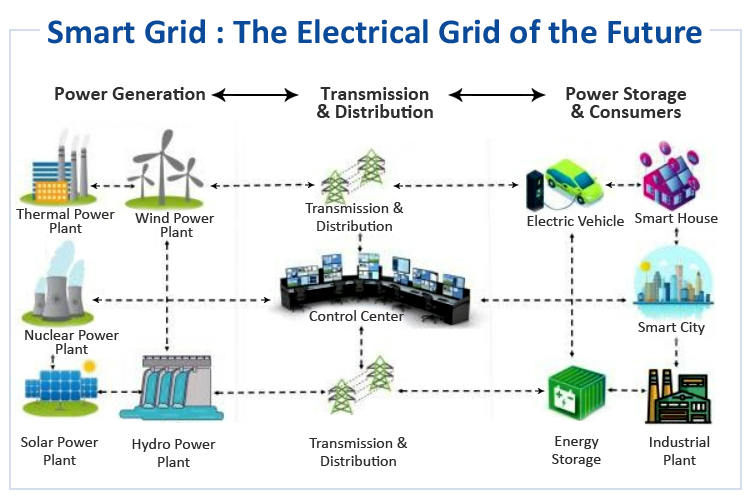
While the national grid remains too strategic to be fully handed over to private operators, there is a middle path: decentralising the grid itself. Instead of one fragile national grid, why not state or regional grids? Each with the authority to generate, transmit, and distribute power within its boundaries.
The Electricity Act 2023 has already created the legal framework for this, allowing states to license and regulate electricity. Decentralisation simply takes this further, giving Lagos, Kano, Rivers, Enugu, or even clusters of states the chance to build and run their own mini-grids, reducing reliance on Abuja’s overstretched national backbone.
Why Decentralisation Matters
A decentralised approach makes the system more resilient. Today, a fault in a single transmission line can trigger nationwide outages. With state or regional grids, a collapse in Kaduna does not plunge Enugu or Lagos into darkness.
It allows for specialisation. Lagos could focus on gas and solar, Kano on wind, Rivers on gas and hydro, Borno on renewables, and so on. Each grid can develop an energy mix that suits its geography and economy.
It creates competition. States that can guarantee stable electricity will naturally attract more investment and industry. Those that lag behind will feel the pressure to reform.
How It Could Work
State or Regional Authorities:
Each state, or a coalition of states, would establish its/their own grid authority responsible for licensing and oversight.
Private Investment:
Independent power producers would build plants directly tied to state or regional grids, with tariffs set locally, rather than by federal fiat.
Weaker States:
Weaker states do not have to go it alone. By forming regional grids, several states can pool their resources and spread the cost of building infrastructure. This approach would allow them to reach the economies of scale necessary to make the projects viable, while ensuring that no single state is left behind simply because it lacks financial muscle.
Interconnections:
States with surplus power could sell this across state lines. For example, Rivers could sell to Abia, or Lagos could trade excess solar power to Ogun. The national grid could still exist, but only as an interconnector, not the sole lifeline.
Phased Rollout:
Pilot projects in states with existing industrial demand (Lagos, Ogun, and Rivers) could set the standard before expanding nationwide.
Lessons from Around the World
This is not reinventing the wheel. In the United States, electricity is managed through regional transmission organisations, rather than one national grid. India’s states run their own electricity boards. Even South Africa is beginning to explore provincial and city-level grids as alternatives to Eskom’s overburdened central system.
Potential Challenges
A move toward decentralised state or regional grids would not be without serious challenges. One clear danger is unequal development. Wealthier states like Lagos or Rivers could quickly attract investors and build reliable grids, while poorer or conflict-affected states might struggle to keep up, deepening the inequality between Nigeria’s regions.
There is also the risk of regulatory confusion. If every state designs its own framework, investors could face a patchwork of rules that create uncertainty and discourage capital inflows. Costs pose another hurdle. Transmission infrastructure is expensive to build and maintain, and without careful planning, state budgets could be overwhelmed before projects even take off.
Finally, there’s the political dimension, which cannot be ignored. A shift of control away from Abuja to the states would almost certainly face resistance from entrenched interests who benefit from the status quo.
Possible Antidotes
Inter-State Compacts:
Weaker states do not have to go it alone. By forming regional grids, several states can pool their resources and spread the cost of building infrastructure. This approach would allow them to reach the economies of scale necessary to make the projects viable, while ensuring that no single state is left behind simply because it lacks financial muscle.
Federal Standards:
Even in a decentralised system, the Federal Government would still have a role to play. Setting basic standards for grid operations, investor protections, and technical requirements would create a baseline of consistency across all states.
Targeted Subsidies:
For states that are less developed or conflict-affected, initial support from the Federal Government could prevent them from being locked out of progress. Subsidies could be directed toward building the first phase of critical infrastructure, ensuring that every state, regardless of its wealth, has a starting point.
Public-Private Partnerships:
Financing large-scale electricity projects is capital-intensive, but the private sector has the capacity to bear much of that weight. Public-private partnerships could bring in private capital, while maintaining state oversight to safeguard transparency and accountability.
Why You Should Get Behind This
Every Nigerian knows the frustration of power failure. We have lived too long with promises of reform that never materialise. State grids offer a practical way to shift responsibility closer to home. Governors would no longer have excuses; their performance would be visible in kilowatts. Citizens could hold them directly accountable for light or darkness.
Imagine a Nigeria where Lagos runs uninterrupted power because it got its grid right, Rivers builds an industrial hub powered by gas, or Enugu lights up its economy with a small hydro station. These successes would pressure others to match them. Instead of waiting for one central solution, we would have 36 opportunities for progress.
Final Thoughts
Like many ideas, this one came to me on a hot afternoon in Lagos, sitting on the balcony for air while the power was out for hours, the result of yet another collapse of the national grid.
There may be more bottlenecks than I have thought of or have posited in this paper. Implementation may reveal complexities beyond the surface. But from my perspective, this does not seem like a bad idea at all.
I still remember Professor Bello’s words about privatisation, decentralisation, and deregulation as the true engines of efficiency. Looking at the power sector today, I am convinced state or regional grids could be one of those ideas whose time has come. Nigeria does not need to be trapped forever in the failures of one fragile national grid. It can explore a patchwork of successes, state by state, until reliable electricity becomes the rule rather than the exception.


