The High Stakes Meeting Between Trump and Xi
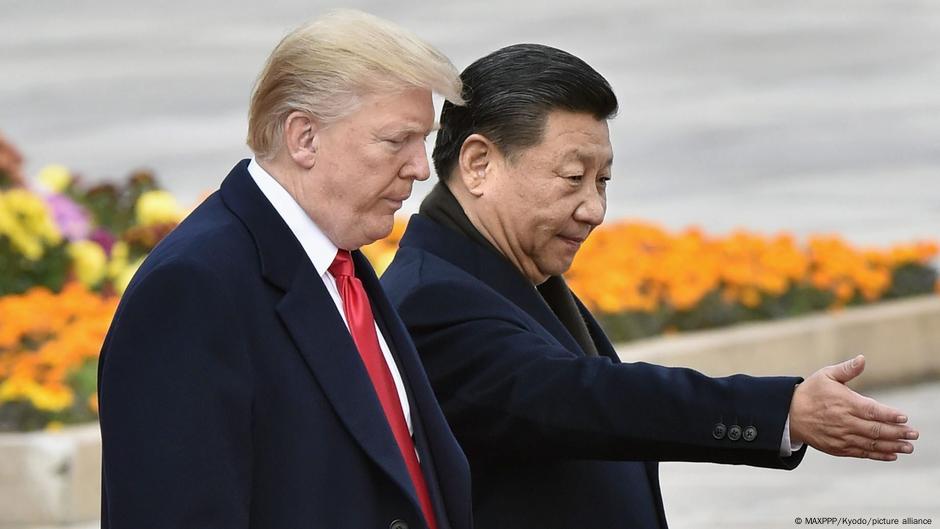
As the United States and China prepare for a high-stakes meeting between President Donald Trump and Chinese leader Xi Jinping, analysts are closely watching to see if the two leaders can find a way to defuse the ongoing trade war. This meeting, scheduled for Thursday on the sidelines of the Asia-Pacific Economic Cooperation (APEC) summit, comes after weeks of escalating tensions between the two nations.
The trade representatives from both countries have reportedly made progress in establishing a framework agreement that involves lowering U.S. tariffs on Chinese imports and China delaying curbs on exports of rare earth minerals. These minerals are essential for building high-tech goods, making them a critical component of the negotiations.
Trump, who arrived in South Korea on Wednesday, expressed optimism about the talks, stating he expected “a lot of problems” to be solved during the discussions. However, the road to this meeting has not been smooth. Earlier this month, Trump shocked markets by announcing 100% tariffs on Chinese imports, following China’s decision to restrict exports of rare earth minerals.
This development has had a significant impact on global stock markets, with investors showing increased optimism as the two nations return to the negotiating table. Despite the positive sentiment, the details of the framework deal remain confidential, with U.S. Treasury Secretary Scott Bessent hinting at potential concessions from China.
Bessent mentioned that the deal could include a “deferral” on Chinese rare earth mineral export controls and a call for China to purchase a “substantial” amount of U.S. soybeans. He also noted that Trump’s threat of 100% tariffs was “effectively off the table.”
Strategic Rivalry and Concessions
While the current truce may offer some relief, experts like Dennis Weng, an associate professor of political science at Sam Houston State University, believe it is unlikely to change the fundamental dynamics of the strategic rivalry between Beijing and Washington. Weng emphasized that both sides are aware of the ongoing competition but want to avoid triggering an economic collapse.
Bonnie Glaser, managing director of the German Marshall Fund’s Indo-Pacific program, shared a similar view, expressing skepticism about any grand bargain being reached. She suggested that cooperation might focus on issues like combating fentanyl, with China potentially working with the U.S. to get Trump to remove the 20% tariff rate related to China’s role in the fentanyl trade.
China’s Leverage Under Trump 2.0
The meeting in South Korea will mark Trump’s first in-person encounter with Xi during his second term. The two leaders have spoken by phone several times this year, most recently in September. Trump’s initial presidency saw sweeping tariffs on countries around the world, but China used its economic leverage to push back, including halting purchases of U.S. soybeans, which has cost U.S. farmers billions.
Beijing’s recent threat to control rare earth mineral exports was seen as a major escalation, given China’s dominance in mining and refining these critical resources. Analysts suggest that China may be less willing to compromise this time around, with Xi Jinping feeling more confident and likely to push his position more strongly.
Geopolitical Tensions Over Taiwan
Beyond trade disputes, the meeting is expected to address geopolitical tensions over Taiwan, a self-ruling democracy that Beijing claims as part of its territory. The U.S., while maintaining no formal diplomatic ties with Taiwan, remains its main security backer. Concerns have mounted about a potential shift in U.S. support for Taiwan, with reports suggesting that Xi is pushing for the Trump administration to officially declare opposition to Taiwan independence.
Despite these concerns, U.S. State Secretary Marco Rubio stated that the administration would not abandon its long-standing support for Taiwan in negotiations with China. Taiwanese Foreign Minister Lin Chia-lung also expressed confidence that Trump would not turn his back on Taiwan.
What Comes Next?
As Trump prepares to leave South Korea after the meeting, he has expressed optimism about reaching a deal with China. Previously, Trump had indicated plans to visit China in early 2026, though without a specific timeline.
Experts like Weng expect a period of relative easing of tensions between the two sides following the talks. However, Chong, an associate professor at the National University of Singapore, warned that what happens after the meetings is equally important. He emphasized that both the U.S. and China are willing to walk away from any agreements they make.
In conclusion, while the upcoming meeting between Trump and Xi offers a glimmer of hope for resolving trade tensions, the long-term strategic rivalry between the two nations remains intact. The outcome of these discussions will be crucial in shaping the future of U.S.-China relations.