European Commission President Faces No-Confidence Vote Amid Political Tensions
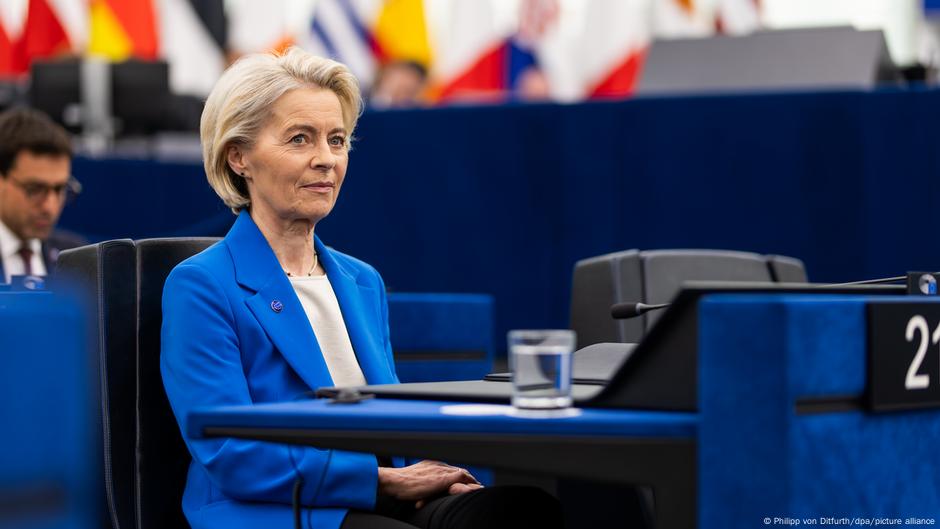
European Commission President Ursula von der Leyen is expected to survive Thursday’s no-confidence vote. However, both the far left and far right in the European Union have raised concerns about her leadership and decision-making.
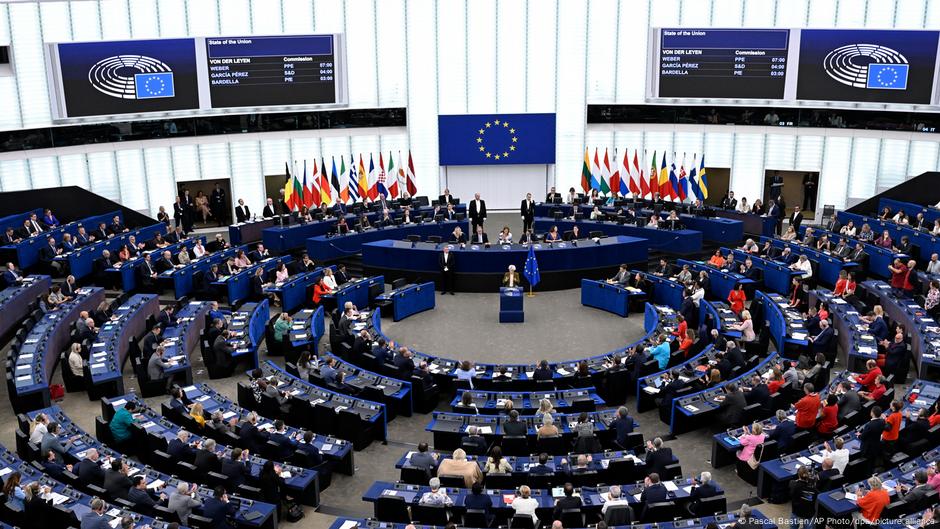
On Monday afternoon, the European Parliament convened for the second time after the summer break in Strasbourg. Legislators quickly got to work, with various political figures expressing their views on the Commission President’s performance.
Jordan Bardella, the French chairman of the far-right group Patriots for Europe, criticized von der Leyen for a lack of transparency, an ineffective migration policy, and a loss of competitiveness due to her climate policies. He also condemned the customs deal with the United States as a disaster, stating, “You have effectively signed Europe’s surrender.”
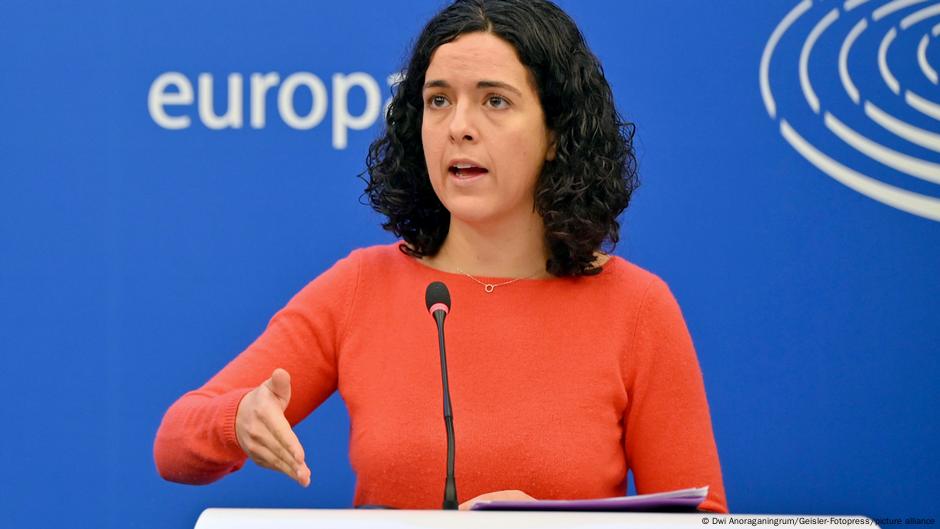
The next speaker was Manon Aubry, the deputy chair of the left-wing group. She accused von der Leyen of failing in her dealings with Israel and the war in Gaza, not achieving the Green Deal, and prioritizing arms purchases over social security. “You must go,” she told von der Leyen.
Despite these criticisms, von der Leyen remained composed. She responded by saying, “The truth is that our opponents are not only ready to exploit any divisions, they actively fuel these divisions.” She called for unity among the members of the European Parliament.
Two No-Confidence Votes in Three Months
It is unusual for a European Commission president to face two no-confidence votes within three months. While it is unlikely that von der Leyen will be removed in Thursday’s vote, the situation highlights the growing fragmentation within the parliament.
The event also reflects the fragile trust between the Commission and parties from the political center. Unlike the last no-confidence vote in July, this one has been driven by both the radical left and the far right. Although their ideologies differ, their goals align: to weaken von der Leyen and strengthen their influence in the parliament.
Almut Möller, director of European and Global Affairs at the European Policy Centre (EPC), noted that this development is not surprising given the increasing political fragmentation in the European Parliament. Olivier Costa, a researcher at the French Centre national de la recherche scientifique (CNRS), emphasized that the rise of extremist forces on both the left and right is the root cause of the current tensions.
Criticism of von der Leyen’s Leadership
Costa pointed to the declining ability of Social Democrats and Christian Democrats to cooperate, which was once the core alliance in the European Parliament. He also highlighted von der Leyen’s leadership style, which many perceive as too centralized and hierarchical. “She really sees herself as a prime minister,” he said, adding that cooperation and consensus are being overshadowed by top-down decision-making. This has led to dissatisfaction within the parliament and even within the Commission.
Europe’s political landscape has become increasingly complex since 2019. The former “grand coalition” between the right-wing conservative European People’s Party (EPP) and the social democrats (S&D) is no longer sufficient to secure stable majorities. “We have seen that already in some votes, especially on environment and migration or international questions, that there is no hesitation anymore for the EPP to vote with them [far-right parties],” he said.
Personal clashes between Manfred Weber (EPP) and Iratxe García (S&D) at the top of the parliamentary groups have made compromises harder to reach. This has created a power vacuum in the center that is being exploited by the political fringes.
Criticism Mounts From All Sides
Despite the challenges, the parties in the center are still trying to maintain unity, but patience with the Commission President’s approach is wearing thin. “We have to acknowledge that the political platform upon which the Commission President and her Commission stand holds for now, but is not that solid in the center either,” Möller said.
Criticism comes from all sides: parts of the Liberal Party complain about the slow pace of bureaucracy cutbacks, the EPP is annoyed about unilateral foreign policy decisions, and the Social Democrats and Greens are increasingly skeptical about a shift toward growth and competitiveness and away from social projects and the Green Deal.
Möller warns against jumping to conclusions. “These [accusations] will not fundamentally be a threat to the power of the Commission President,” she explained, adding that von der Leyen will “have to focus on keeping the center engaged and happy.” In her view, the upcoming no-confidence votes are an opportunity to do just that.
Von der Leyen may be able to discipline her coalition by turning the vote into a question of loyalty.
Dangerous or Invigorating?
So, are the no-confidence votes a sign of dangerous destabilization or democratic vitality? “Both,” Costa said, explaining that “controversy is the proof that democracy is vivid, within EU institutions, but it’s always the same thing: It’s vivid until the point where it becomes too much for the system and the system is destabilized.”
On Thursday, the European Parliament will decide on von der Leyen’s future. However, Costa does not see any grounds for an imminent resignation, but rather views the situation as the new normal, which consists of nonstop stress tests.
“Von der Leyen will neither resign nor be dismissed; for many, she is still the best option. After all, who would be the alternative?” he said. And yet, he views the size of the “no” camp as politically significant. “A weak score would mirror the declining relationship between the European Commission and the European Parliament,” he said.
Many observers believe that the decisive factor is not whether von der Leyen will survive the no-confidence vote, but how. After all, the tighter the opposition, the less support there is, and the greater the pressure in the upcoming budget, trade, and climate legislation. For the Commission President, the delicate balancing act looks set to continue.


