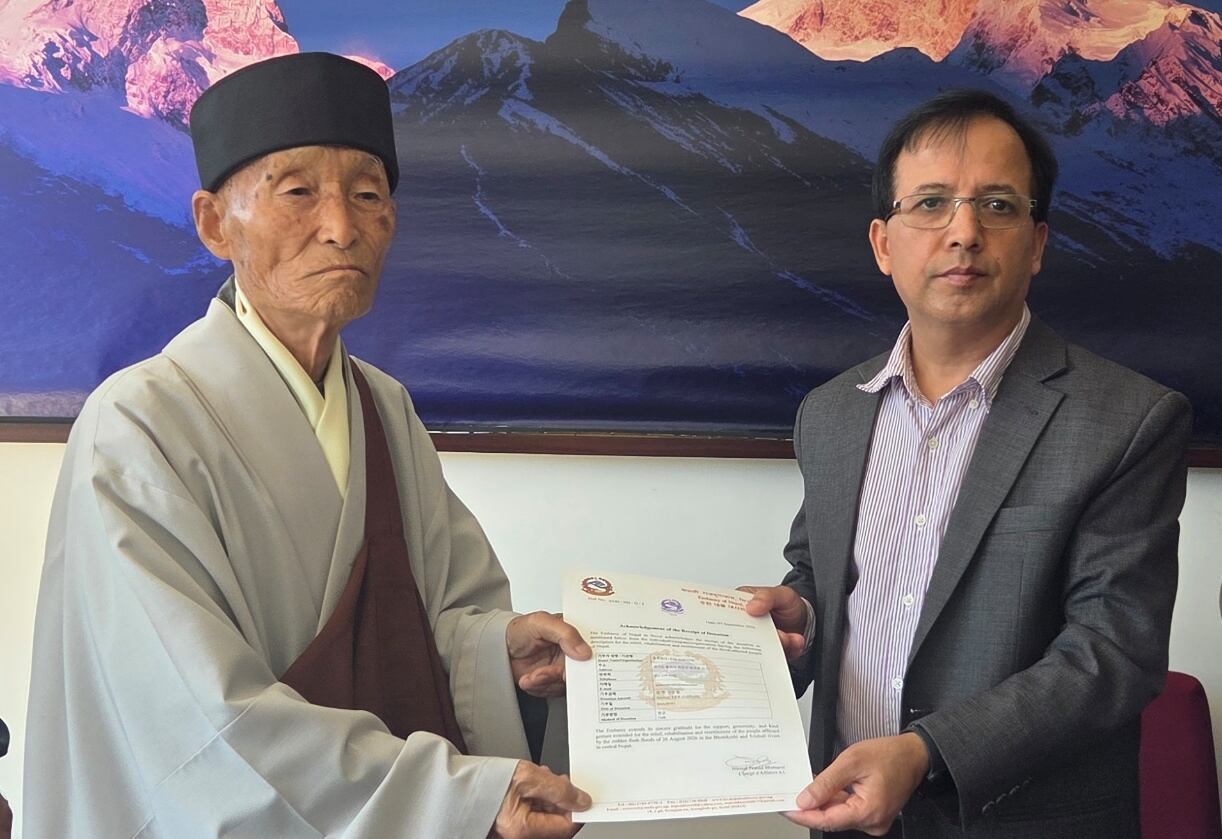
On September 7, Abbot Haegok of Wowjeongsa Temple in Yongin, Gyeonggi Province, visited the Nepalese Embassy in South Korea. The purpose was to deliver a donation of 10 million Korean won to console the Nepalese people suffering from recent severe floods and to pray for their recovery.
Videos of the Nepalese floods shocked people worldwide. The helplessness of humans in the face of raging torrents appeared like a preview of the disasters that climate change may bring.
Many people at home and abroad are stepping forward to help Nepal. Donations are pouring in, with the Asan Foundation contributing 200,000 dollars. Religious groups have also launched fundraising efforts.
A donation of 10 million Korean won from an individual temple is a large or small amount depending on perspective. Abbot Haegok is well aware of this. In a phone call on September 7, he said, “This amount is not large compared to the damage Nepal has suffered,” and added, “However, it was not an easy amount for Wowjeongsa to prepare, but we could not remain idle. We wanted to show our sincerity even if it meant stretching ourselves a bit.”
As the abbot mentioned, Wowjeongsa’s donation stands out due to the temple’s long-standing connection with Nepal.
As is known, Wowjeongsa is a temple akin to a “World Buddhist Theme Park.” Those who have visited know that the temple, nestled in the mountains of Cheoin-gu, Yongin, Gyeonggi Province, truly has “much to see.”
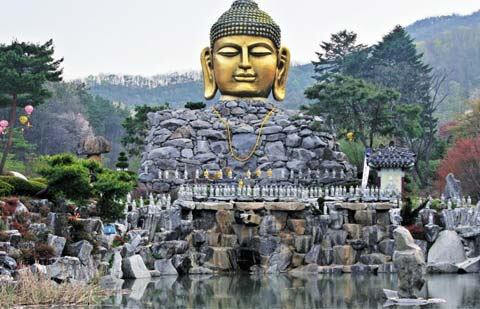
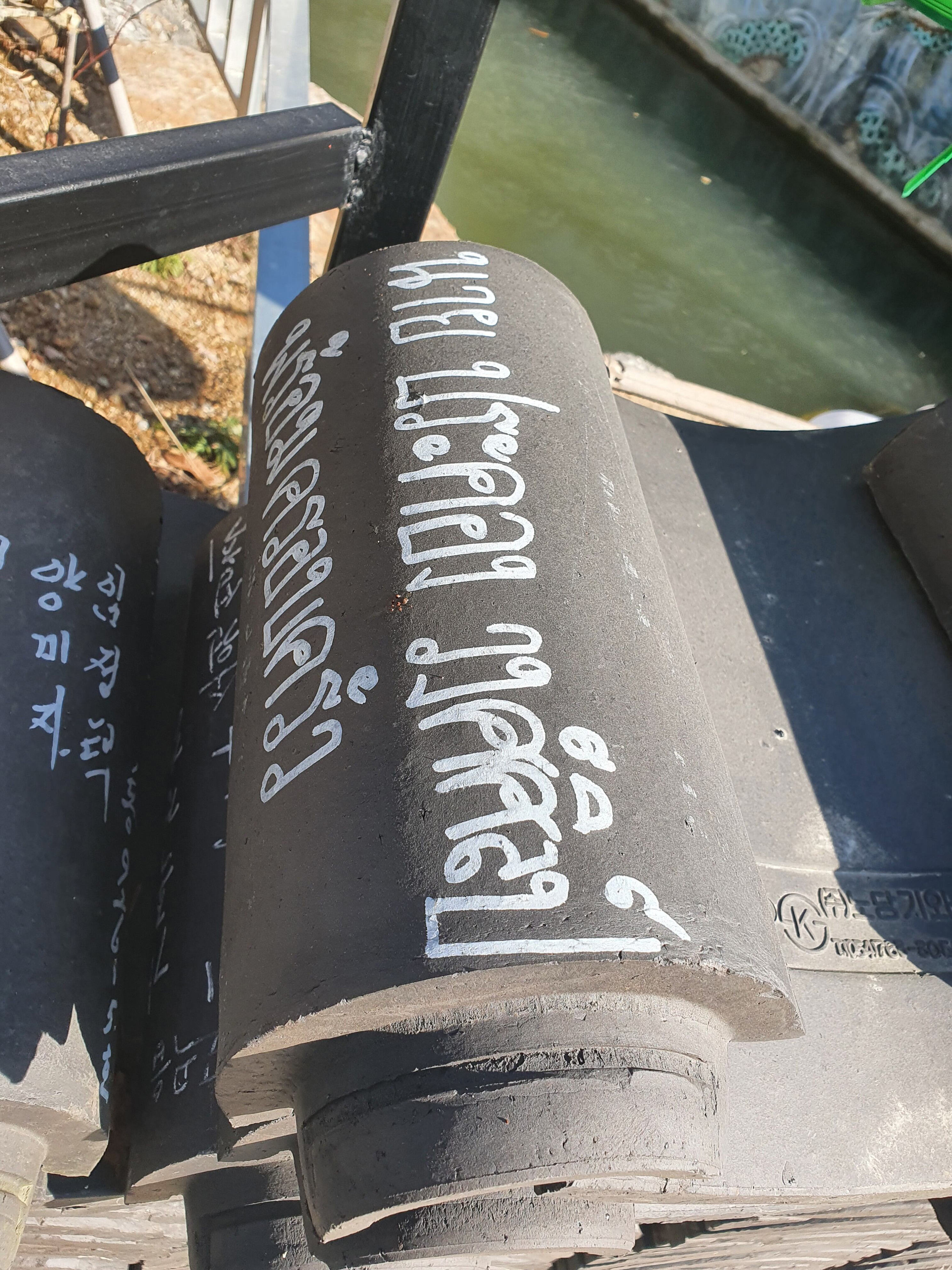
First, a large golden Buddha head greets visitors at the entrance. Beyond the Buddha head, visitors encounter the “World Buddhist Museum.” The museum houses many rare artifacts, including statues made of rice grains, sand, and crystal. They say there are more artifacts not on display than those exhibited. After passing the museum and ascending the valley, one finds Buddhas made in Thailand, Indonesia, Sri Lanka, and other countries. There are seated Buddhas and reclining Buddhas. When visiting temples, it is common to see people inscribing wishes on roof tiles and making donations. Usually, the tiles are marked with amounts like “10,000 Korean won per tile,” but Wowjeongsa also features Thai currency units, catching the eye. This makes it a truly “international” temple.
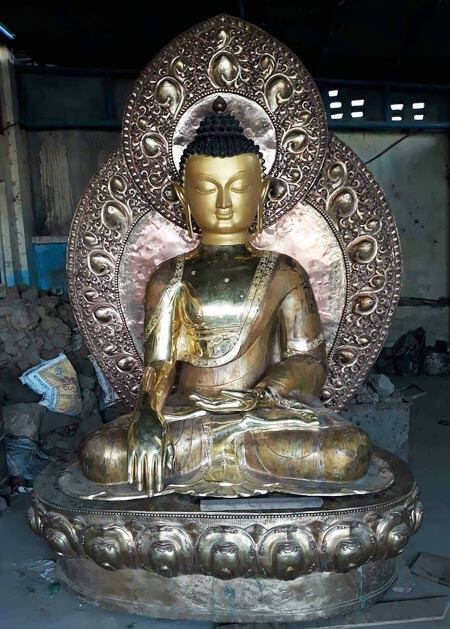
Among these is a Nepalese Buddha statue created in 2018 with contributions from Nepalese residents in Korea. This is what I wish to discuss today. There is a reason why the Nepalese Buddha statue is enshrined at Wowjeongsa.
The “hometown” of the Buddha is often confusing. It is commonly known that the Buddha’s hometown is India. Seven of the so-called “Eight Great Pilgrimage Sites,” which mark different periods of the Buddha’s life, are in India. Only one site, his birthplace, is in Nepal—Lumbini Garden. Thus, pilgrims must cross the India-Nepal border. Nevertheless, many Koreans, and indeed people worldwide, often consider the Buddha, Shakyamuni, to be Indian.
This led Nepalese residents in Korea to take action. In the mid-2000s, a Nepalese group in Korea conducted a survey in front of Jogyesa Temple in Seoul. The topic was “The Buddha’s Hometown.” Approximately 80% of respondents answered “India,” while only about 7% said “Nepal.” This must have been disappointing for Nepalese people. In 2018, the representative of the Nepalese Association in Korea residing overseas, whom I interviewed, said, “It was disappointing that even those who visited Lumbini thought the Buddha’s hometown was India,” and added, “It’s similar to how Koreans feel when foreigners don’t recognize Dokdo as Korean territory.”
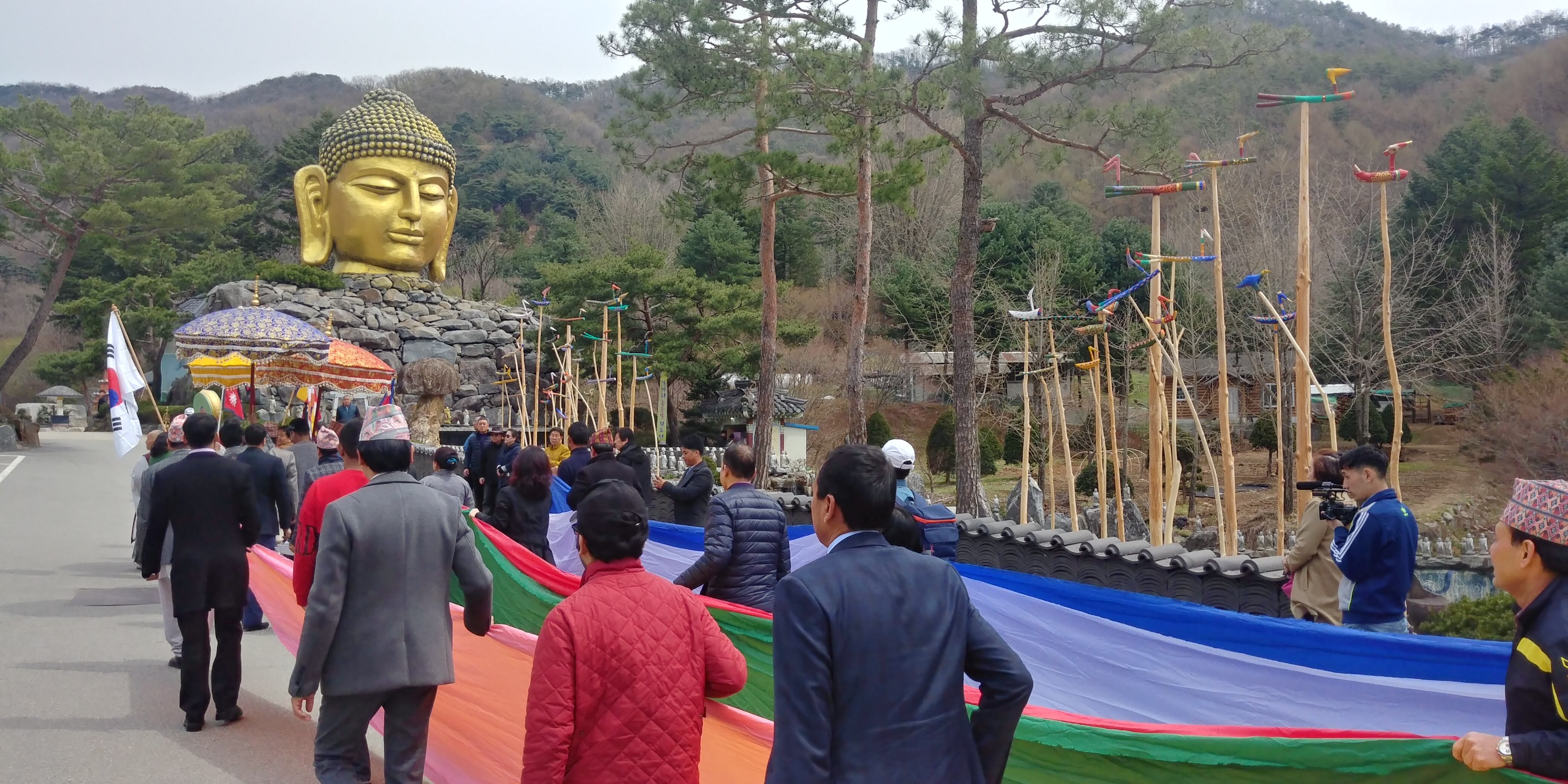
Additionally, although Koreans may not notice, Nepalese Buddha statues have subtle differences compared to those of other countries. While Korean, Chinese, and Japanese statues have round faces, and Southeast Asian ones have slender faces, Nepalese statues are somewhere in between. The lower face is slender, but overall, the face is round.
As mentioned earlier, Wowjeongsa has long been a must-visit pilgrimage site for Southeast Asian tourists. It receives around 400,000 visitors annually, with approximately 300,000 being Thai.
Naturally, Nepalese residents wanted to enshrine a “Nepalese Buddha.” Out of approximately 40,000 Nepalese residents in Korea, 400 people contributed. As foreign media widely reported regarding the recent floods, the majority of Nepalese are Hindus. Buddhists are a minority in Nepal. These Nepalese Buddhists commissioned the statue not to a Korean workshop but to a specialized one in Nepal. The entire production process was shared via photos and videos on social media. It was a meticulous endeavor. Korean Air reportedly supported transporting the completed statue to Wowjeongsa. As a result of these efforts, a 280 cm tall bronze “Nepalese Buddha” was enshrined at Wowjeongsa.
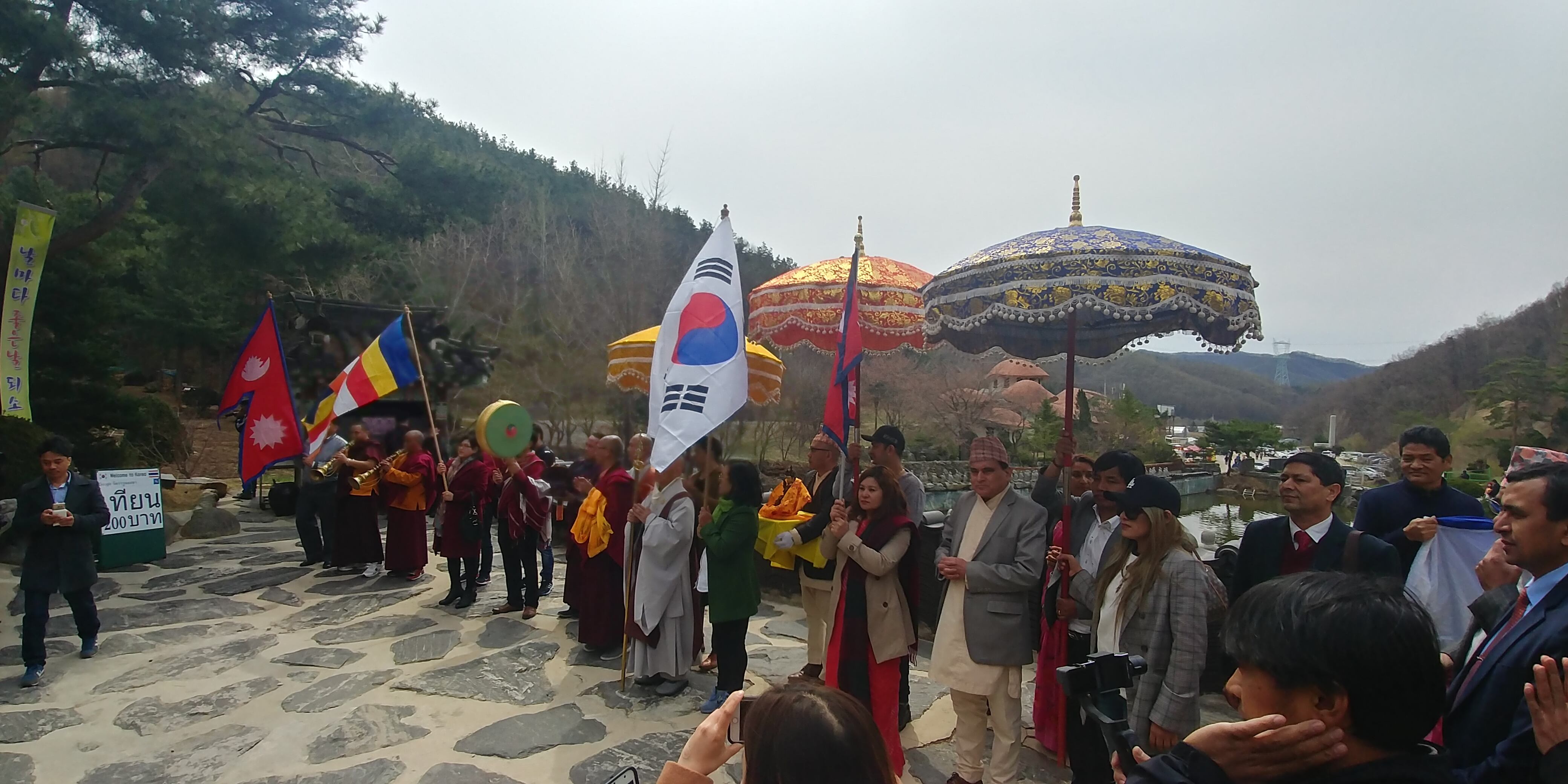
I once covered the groundbreaking ceremony for the “Nepalese Buddha Altar” on April 8, 2018. The weather was unusually cold for early April. However, about 50 Nepalese people unfurled banners from morning, prepared offerings of cookies, rice cakes, bananas, and corn margarine, and devotedly worked to ready the site for the Buddha statue. Since the statue’s enshrinement, Nepalese Buddhist residents in Korea have regularly visited Wowjeongsa to soothe their nostalgia. It has served as a sort of spiritual homeland.
This background is why Abbot Haegok insisted on preparing the donation despite the strain. He stated, “Nepalese Buddhists contributed greatly to Wowjeongsa, and we are also concerned about the nine employees from Doosan Group and Korea South-East Power whose fate remains unknown.” He added, “We requested the Nepalese government to support the safe return of our missing nationals.”
The term “people’s diplomacy” is often used. Sometimes, a “small consolation” between nations and peoples yields significant effects. There is a saying, “A poor person’s single lamp (빈자일등),” which tells of a poor person who gathered all their sincerity to light a lamp, and that lamp did not go out. Upon hearing about Wowjeongsa’s donation for Nepal’s flood relief, I was reminded of this saying.
- 월 5900원 멤버십, 신문 독자에게는 2900원, 조선멤버십
- 55000원 상당의 신문-잡지 8종 마음껏 보기, 조선멤버십
- 현금처럼 쓸 7000포인트 받아 알뜰한 쇼핑, 조선멤버십

Related posts:


Japan’s protest over Russian soldier statue aggravates ‘summer of tension’

Nepal announces ‘scholarship bank’ for children orphaned or displaced by floods

Pakistan’s Enduring Commitment to Religious PluralismPublished on: September 10, 2026 4:31 AM

63% reject Yong Hye-in nomination, 47% criticize Kim Seung-won’s