It is like a candle in the wind. Next year’s South Korea-U.S. joint training is in a precarious state, swaying in a storm. It seems the training will continue to be suspended throughout President Lee Jae-myung’s administration.
President Lee Jae-myung, during an in-flight press briefing upon returning from the G20 summit in South Africa, shook the heavy card of suspending South Korea-U.S. joint training, as there was no special news. He said, “What North Korea is most sensitive to is the South Korea-U.S. joint military training. If a peace regime between the South and North is firmly established, it would be desirable to not conduct it at all,” adding, “Depending on the situation, this could serve as a lever or become the outcome.”
He then subtly brought up U.S. President Donald Trump, stating that Trump does not particularly favor the training due to its costs. While the proposal for a preemptive suspension of joint training by the pro-independence faction’s Minister of Unification is not new, the president’s public discussion of it is on a different level. After the trial balloon remarks, the alliance faction’s National Security Office director quietly withdrew, signaling that the suspension is imminent.
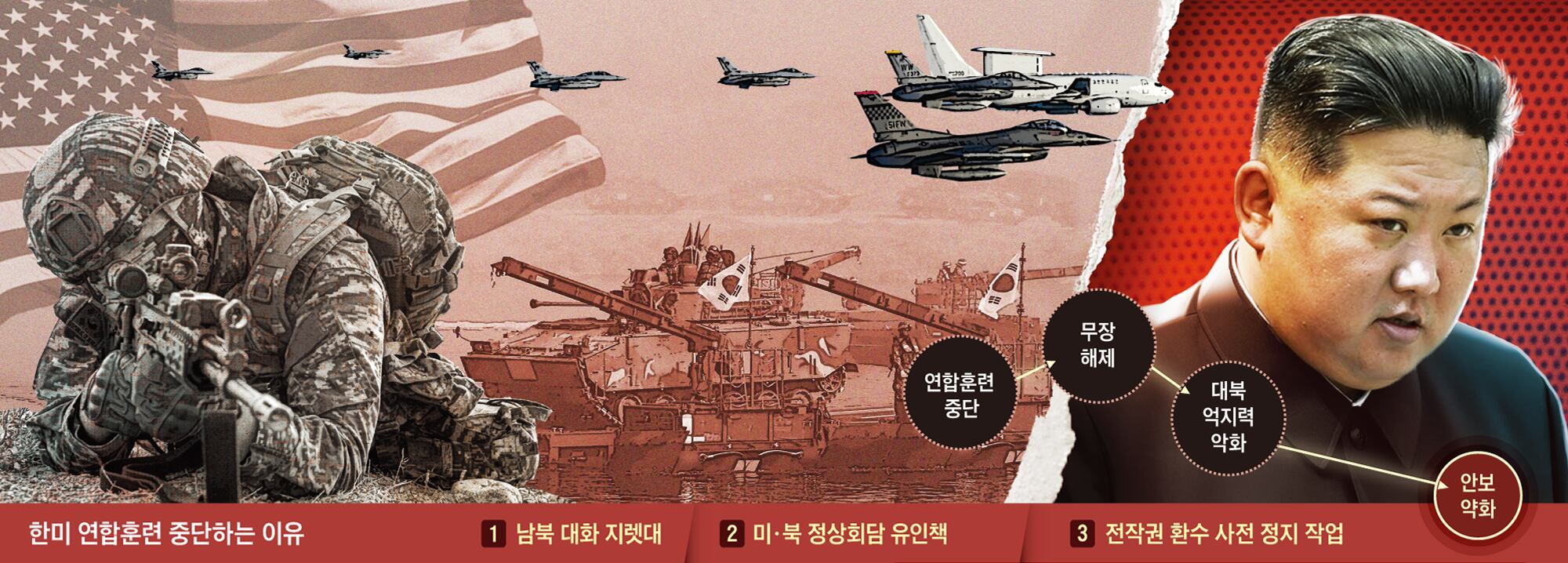
President Lee Jae-myung’s intention to suspend South Korea-U.S. joint training has three aspects. First, he aims to use this card to bring North Korea to the inter-Korean dialogue table. After Pyongyang showed no response to proposals such as halting anti-North Korea broadcasts and repatriating unconverted long-term prisoners, he presented the suspension of training as a critical catalyst.
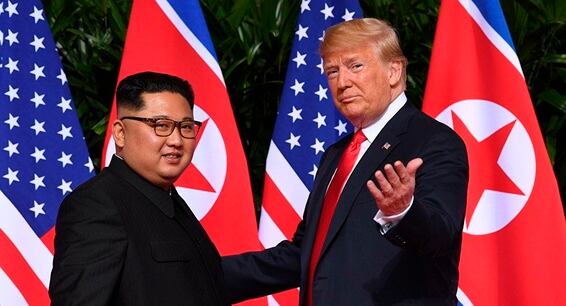
Second, it is an incentive to advance toward a U.S.-North Korea summit. North Korea rejects inter-Korean dialogue under the “hostile two-state theory” and focuses on U.S.-North Korea talks. This serves as a pacesetter to realize a summit between Trump and Kim Jong-un. He persuades Trump that suspending the training is the only card to meet Kim Jong-un.
Lastly, it is a preliminary step toward reclaiming wartime operational control (OPCON) from the U.S. The fact sheet from the South Korea-U.S. summit in Gyeongju includes the purchase of $25 billion worth of U.S. weapons and $33 billion in support for U.S. troops stationed in South Korea. There is also an agreement to pursue the transfer of OPCON. If OPCON is transferred, the necessity of joint training will further diminish.
If OPCON is reclaimed, the rank of the commander of U.S. Forces Korea may be downgraded, while the rank of the commander of U.S. Forces Japan could be elevated. The U.S. military’s doctrine does not allow joint training under the command of another country’s officers.
President Lee Jae-myung is preparing for a meeting with Chinese President Xi Jinping in Beijing early next year. He aims to use a three-cushion billiards strategy, where Xi Jinping persuades Kim Jong-un to engage in U.S.-North Korea talks. Since inter-Korean dialogue between Seoul and Pyongyang is not progressing, he plans to expedite a Pyongyang-Washington summit through the Seoul-Beijing-Pyongyang channel.
Kevin Kim, the acting U.S. ambassador to South Korea, recently stated, “No option should be excluded when dealing with North Korea.” He was deeply involved in U.S.-North Korea negotiations from 2018 to 2019, serving as an aide to Stephen Biegun, then the U.S. special representative for North Korea, during Trump’s first administration.
President Donald Trump hopes to receive the Nobel Peace Prize next year. If he loses the midterm elections in the fall, the atmosphere will darken. Since the Nobel Prize’s achievement evaluation concludes in the first half of the year, he aims to hold a summit event with Kim Jong-un before July. He is quietly moving to hold a summit with Kim Jong-un around the time of his visit to Beijing for the U.S.-China summit in April next year.
This outlines the preview of Northeast Asian international politics until the first half of next year. The issue is the scenario where South Korea-U.S. joint training, a cornerstone of our security, is suspended.
South Korea-U.S. joint training originated from the South Korea-U.S. Mutual Defense Treaty. President Rhee Syng-man, shortly after signing the defense treaty in Washington in October 1953, urged proper management of the treaty, stating that future generations would live safely. The two countries established the South Korea-U.S. Security Consultative Meeting (SCM) and the South Korea-U.S. Military Committee (MCM) to form a substantive security cooperation relationship.
The U.S. has exercised deterrence against North Korea by training to deploy over 30% of its naval, air, and marine forces in contingencies. It is no coincidence that no war has occurred on the Korean Peninsula since the Korean War.
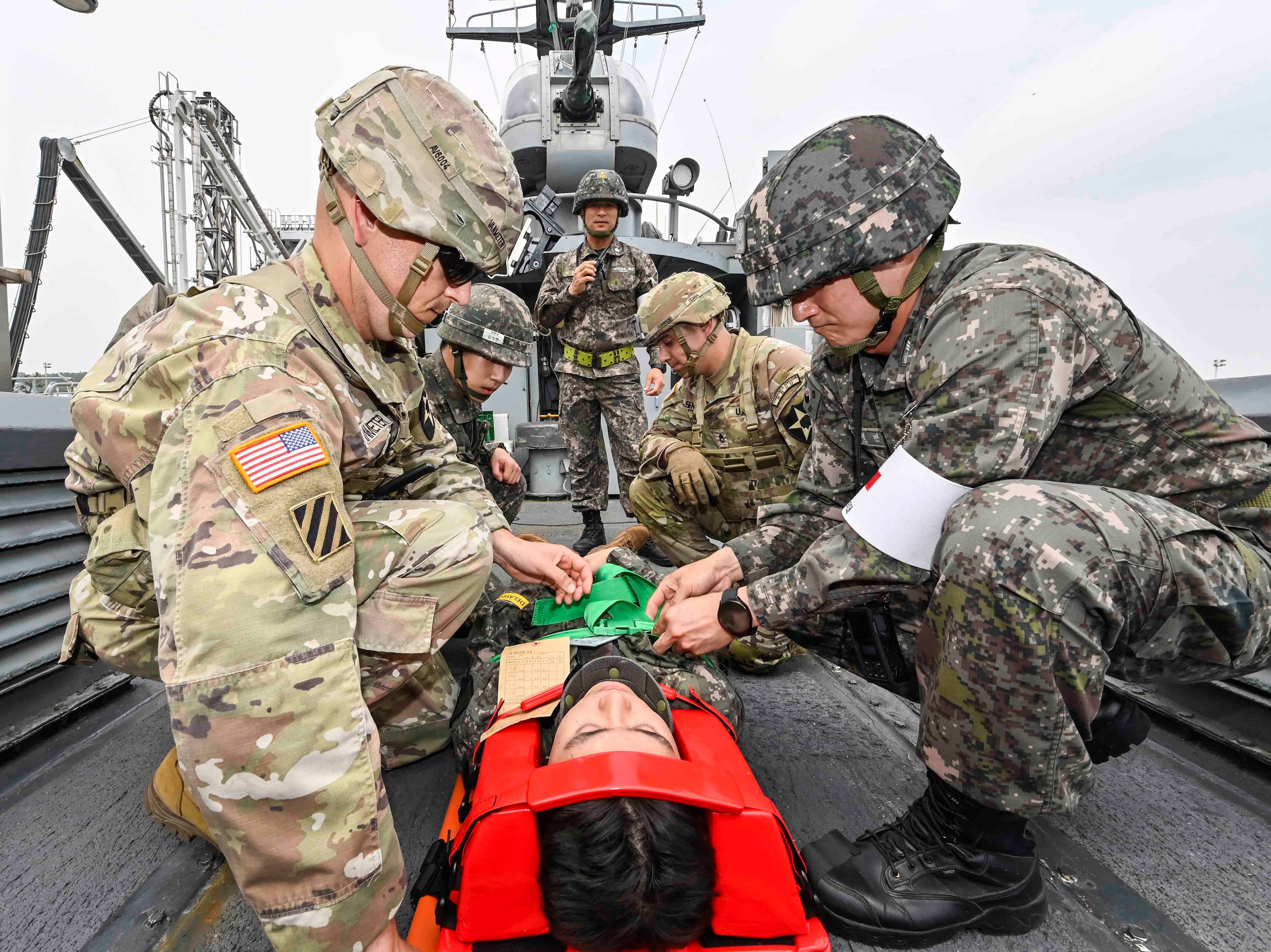
South Korea-U.S. joint training was conducted in three forms: Ulchi-Freedom Guardian (UFG) exercises, Key Resolve, and Eagle exercises. The Moon Jae-in administration promoted the reduction of South Korea-U.S. joint training through the “Panmunjom Declaration” and the September 19 military agreement. The UFG exercise, a South Korea-U.S. joint training simulating contingencies on the Korean Peninsula, was abolished in 2019 after 43 years but was barely revived in 2022 as the Ulchi-Freedom Shield (UFS) exercise.
However, President Rhee Syng-man’s advice is being shaken. Under the emotional rhetoric of “self-reliant defense” and “ethnic cooperation,” substantive South Korea-U.S. joint training is gradually becoming a legend. South Korea, a conventional weapons state, is undermining the foundations of its security to appease North Korea, a nuclear-armed state. It is akin to self-inflicted security harm under the guise of establishing a peace regime.
For the South Korean military, South Korea-U.S. joint training is a core deterrent against North Korea. This is why North Korea vehemently criticizes the exercises. As seen in North Korea’s troop deployment to Ukraine, there are not only North Korean forces in the northern part of the Korean Peninsula. China stations around 20,000 troops near the Tumen and Yalu Rivers. In the event of a sudden crisis in Pyongyang, they can enter within an hour. The Russian Pacific Fleet can instantly dock at the port of Chongjin. The reality of Northeast Asian security includes threatening flights by Chinese and Russian bombers capable of bombing Tokyo. Without the deterrent role of U.S. forces in South Korea, the entry of Chinese and Russian forces into the Korean Peninsula is inevitable.
Diplomacy does not stand above security; it exists for security. It must be based on normal give-and-take. The role of a pacesetter should not be played with the card of dismantling military capabilities, which even the U.S. military worries about. Pyongyang, backed by China on the left and Russia on the right, threatens Seoul with over 200 nuclear weapons.
Under the pretext of inter-Korean dialogue omnipotence, various proposals are rampant. Some pro-independence faction elders propose the absurd idea that amending Article 3 of the Constitution, which pertains to territorial clauses, would bring North Korea to the dialogue table. They suggest excluding the Office of National Security from the National Security Council (NSC) and letting the Ministry of Unification lead negotiations with the U.S. and North Korea.
Hitohsi Tanaka, former Japanese Foreign Ministry director-general who facilitated the 2002 North Korea-Japan summit, recently wrote in his new book detailing “secret negotiations,” “We never engaged in negotiations with North Korea that defied common sense; if that wasn’t possible, we would halt talks.” It is concerning whether the pro-independence faction of the Lee Jae-myung administration will uphold Japan’s common sense in North Korea-Japan negotiations, which avoids giving North Korea “cash” and does not compromise “security principles.”