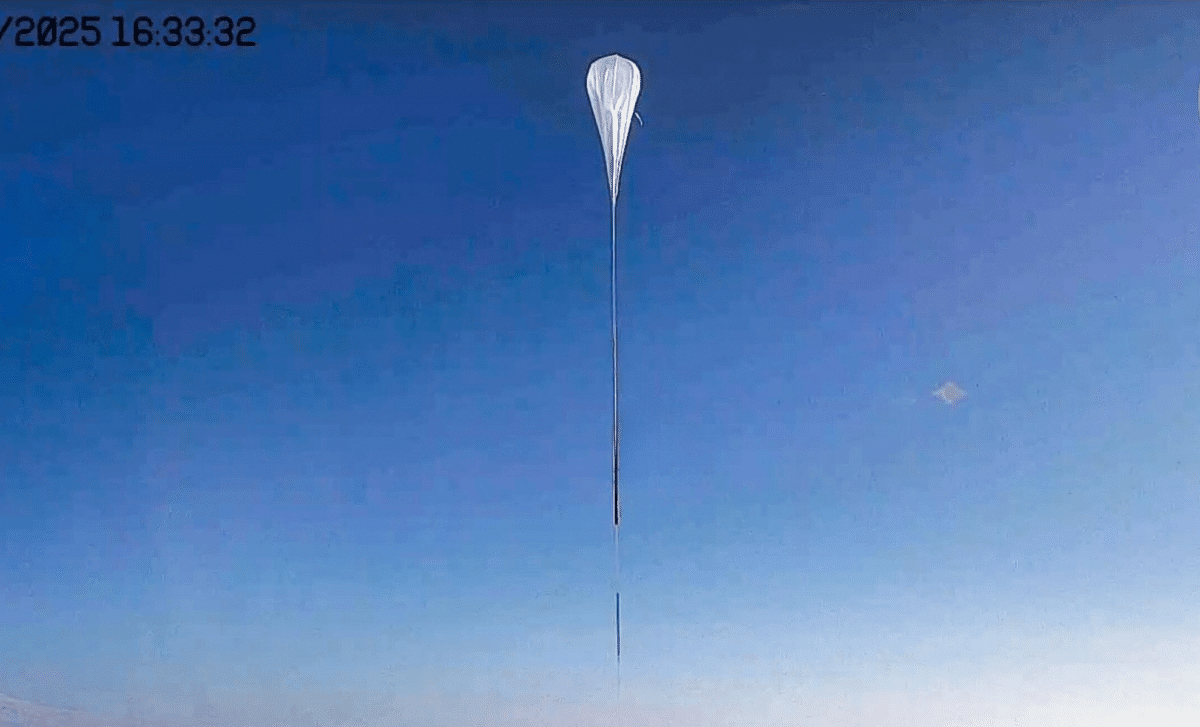
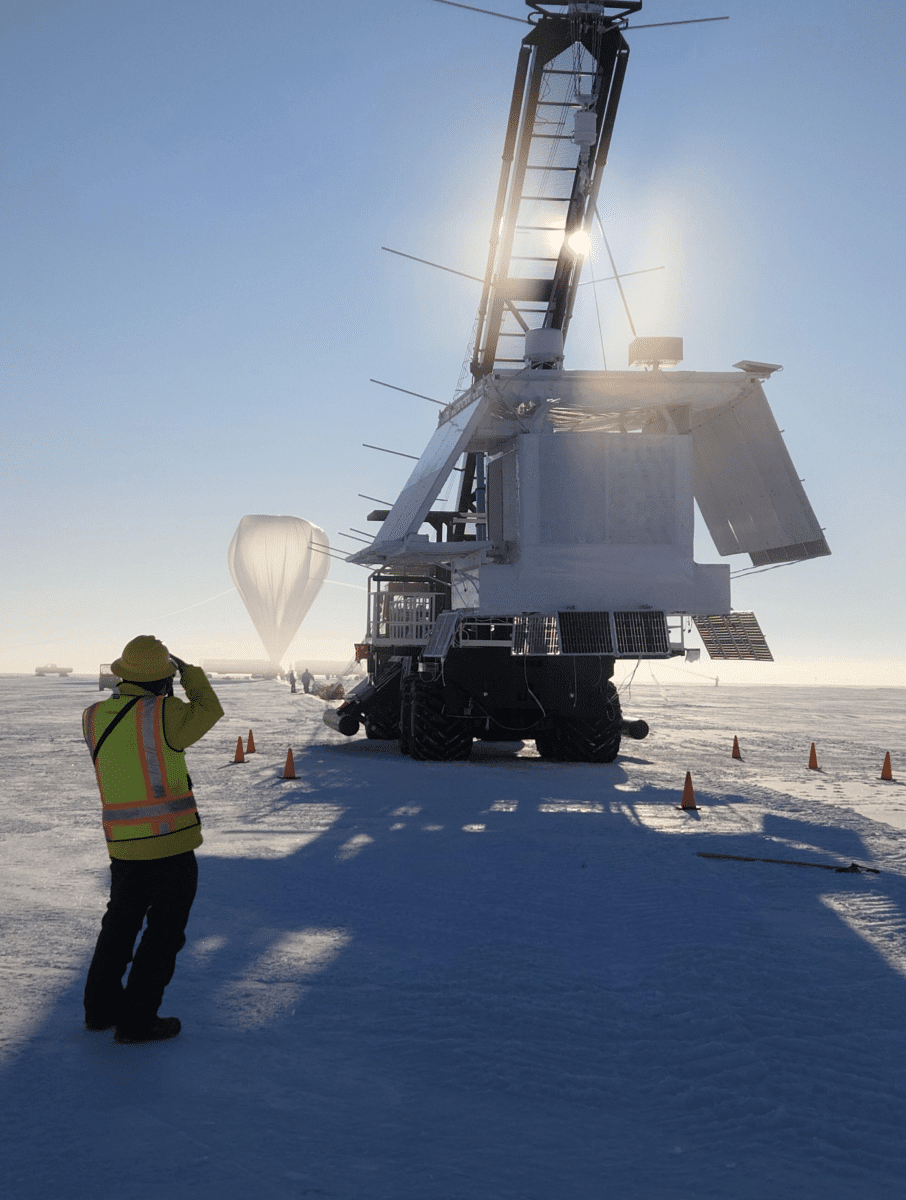
On December 15, a football-field-sized balloon took flight over Antarctica, embarking on a mission that could reshape our understanding of the universe. Spearheaded by theUniversity of Hawaiʻi at Mānoa, the General AntiParticle Spectrometer (GAPS) experiment aims to unlock the mysteries of dark matter, one of the most elusive phenomena in modern physics. This groundbreaking mission brings together an international team of scientists, with Hawaiʻi playing a leading role in the quest for answers.
The Search for Dark Matter: A Quest Like No Other
Dark matter has intrigued scientists for decades. Despite accounting for approximately 85% of the universe’s mass, it remains invisible and undetectable by conventional means. Researchers know it exists because of its gravitational effects on visible matter, but its composition remains a mystery. The launch of the General AntiParticle Spectrometer (GAPS) from Antarctica is part of a bold attempt to finally unravel these secrets.
Suspended by a massive balloon, the GAPS experiment will soar 24 miles above Antarctica, where it will search for rare cosmic antimatter particles such as antiprotons and antideuterons. These particles, if detected, could provide critical insights into the fundamental nature of dark matter and how it interacts with the rest of the universe. The experiment’s ability to detect these particles in such a pristine environment—the high, thin atmosphere of Antarctica—is a crucial factor in its success.
AsPhilip von Doetinchem, project lead and UH Mānoa Department of Physics and Astronomy professor, puts it: “This experiment puts Hawaiʻi at the forefront of one of the biggest mysteries in modern physics. Our students and researchers at UH Mānoa are helping lead a quest to understand what makes up a large fraction of our universe, showing that groundbreaking science is happening right here in our islands.”
Hawaiʻi at the Forefront of Scientific Exploration
The University of Hawaiʻi at Mānoa has been instrumental in developing and supporting the GAPS experiment. Under the leadership of Philip von Doetinchem, the university has worked tirelessly to prepare the experiment, from calibrating detectors to integrating NASA’s balloon technology. The research team at UH Mānoa not only plays a pivotal role in the experiment’s development but also directly contributes to its operational success.
The significance of this project to the scientific community extends beyond the detection of dark matter. It also highlights Hawaiʻi’s growing prominence in global space and physics research. With its excellent scientific resources, including the Pacific space observatories and partnerships with NASA, the university has cemented its role as a leader in cutting-edge research.
Through the GAPS experiment, the University of Hawaiʻi continues to demonstrate that groundbreaking science can take place anywhere, even in the isolated and often overlooked island state. This endeavor serves as a proud moment for the institution and for Hawaiʻi, as it places the state at the center of one of the most ambitious scientific missions of our time.
The GAPS Experiment: How It Works
At the core of the GAPS experiment is the use of a large, high-altitude balloon capable of reaching altitudes of up to 24 miles above Earth’s surface. This location provides an optimal environment for detecting cosmic antimatter particles, as it is above most of the Earth’s atmosphere, where cosmic rays are typically absorbed or altered. This pristine, high-altitude region allows the GAPS experiment to directly measure particles that would otherwise be impossible to detect on the ground.
The main goal of GAPS is to detect antimatter particles such as antiprotons and antideuterons, which are considered potential signatures of dark matter. These particles are part of the broader class of antimatter, which behaves oppositely to normal matter. The detection of these particles could provide indirect evidence of dark matter, offering new clues to how the mysterious substance behaves and interacts with ordinary matter.
GAPS is a collaboration between several prestigious institutions, including the University of Hawaiʻi at Mānoa, Columbia University, UCLA, and Northeastern University, alongside international partners from Japan, Italy, and China. This global collaboration demonstrates the worldwide interest in solving the dark matter puzzle and the importance of pooling resources and expertise to tackle one of the most challenging scientific questions of our time.
A Multi-National Effort: Collaborative Science at Its Best
The GAPS experiment is a prime example of international scientific cooperation. While the project is led by the University of Hawaiʻi at Mānoa, it involves partners from several countries, including Japan, Italy, and China, as well as multiple prestigious universities in the United States. Each of these institutions brings its own expertise to the project, whether in the development of the detectors, data analysis, or balloon technology.
Collaboration is a key aspect of this mission. As dark matter is such a complex and elusive phenomenon, a variety of scientific disciplines—ranging from physics and astronomy to engineering and data science—must come together to design and execute a successful experiment. The combined efforts of scientists from different countries and universities not only enhance the experiment’s likelihood of success but also underscore the importance of global partnerships in scientific discovery.
Enjoyed this article? Subscribe to our free newsletter for engaging stories, exclusive content, and the latest news.