A Celebration of Culture Through Art
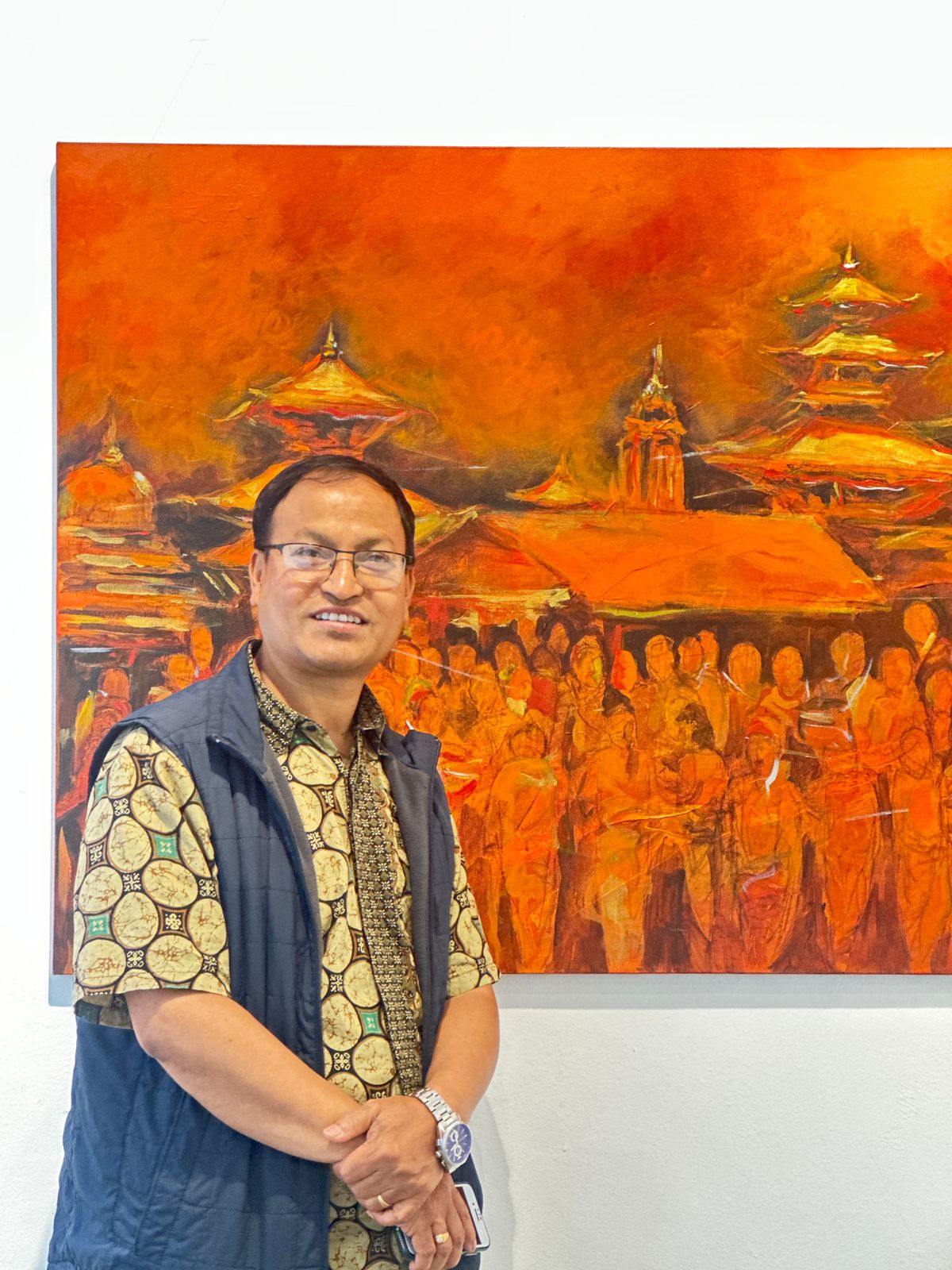
Kathmandu, May 12 — How does it feel to grow up in a culture that is full of communal celebrations, one that quite literally embodies the word ‘festive’? This question is at the heart of Pradip Kumar Bajracharya’s solo art exhibition titled ‘Festive Spirit’, currently on display at Gallery MCube. The artist captures the essence of Nepal’s vibrant celebrations through his work, blending chaos and warmth into a visual narrative.
Bajracharya has been an active participant in these cultural events since childhood. Growing up in Makhantole, he witnessed festivals as more than just occasions for celebration; they were integral parts of his life. These experiences have deeply influenced his artistic journey, leading to the creation of this exhibition, which marks his return to solo exhibitions after over a decade.
Prior to ‘Festive Spirit’, Bajracharya had showcased other works such as ‘Festive Moods’ and ‘Heritage Panorama’. These prequels laid the foundation for his current series, which focuses on the Newa people’s cultural celebrations. The exhibition explores various aspects of jatras, from Bhaktapur’s Sindure Jatra to Indra Jatra, with a unique approach that emphasizes movement and atmosphere rather than individual faces.
The Artistic Process
For Bajracharya, art is not a lengthy process but a way to express emotions instantly. He often completes his works within two to three days, believing that delaying the process diminishes the initial emotion. His goal is to capture the energy and feeling that first inspired him.
His paintings are characterized by abstraction, where each brushstroke contributes to a vibrant blend of colors. The use of acrylics is particularly notable, as he manipulates the medium to achieve varying levels of fluidity and transparency. In some pieces, he dilutes the acrylic with water, creating a transparent effect that challenges traditional techniques.
The theme of continuity is central to Bajracharya’s work. One painting references the pandemic era, depicting a locked chariot and halted jatras. The image includes Dwarpals, temple guardians, symbolizing divine protection even in difficult times. This piece serves as a reminder of the resilience of cultural traditions.
Cultural Narratives and Symbolism
Bajracharya also delves into historical narratives, using vivid red tones to depict old settlements. He draws inspiration from folktales about kings who monitored their citizens’ well-being by observing smoke from rooftops. These stories, shared during his childhood, continue to influence his artistic vision.
Another striking piece features Hayagriva Bhairav, a sacred horse-headed form of Lord Vishnu. The fierce eyes of Bhairav are emphasized through contrasting colors, adding depth and intensity to the painting. Bajracharya has also experimented with dotwork or stippling, focusing on specific elements while maintaining cultural roots.
Personal Experiences and Inspiration
Bajracharya’s exhibition is not only a celebration of festivals but also a reflection of his personal experiences. He often finds inspiration during walks home from Asan, where the sight of a sunset influences his work. His use of visualization and photography allows him to capture the essence of celebrations, though he values on-field art for its liveliness.
Bajracharya’s connection to festivals is deeply rooted in his lived experiences. His work is a continuation of these traditions, preserving the spirit of Nepal’s cultural heritage.
Exhibition Details
Festive Spirit
Where: Gallery Mcube, Chakupat, Lalitpur
When: Until May 17
Time: 10:00 am to 7:00 pm
Entry: Free