Unusual Heatwave Brings Record Temperatures to the UK
As the Bank Holiday period approaches, the UK is experiencing an unusual heatwave that has led to amber and yellow weather alerts. The hottest day of the year so far was recorded on Saturday, with temperatures expected to rise further in the coming days.
Parts of the country are anticipated to reach up to 30°C on Sunday, with temperatures potentially climbing as high as 33°C on Monday and Tuesday. These temperatures surpass those typically seen in the Seychelles, highlighting the intensity of the current heatwave. However, not all regions will experience the same conditions. Western Scotland and Northern Ireland are expected to see cooler temperatures, along with clouds and spells of rain.
Steve Kocher, the Met Office’s deputy chief forecaster, noted that temperatures will continue to climb through the weekend, particularly in the south, where 30°C is likely on Saturday and 32°C on Sunday. He added that the peak temperature is expected on Monday, with southern England and the Midlands possibly reaching 33°C. This could lead to breaking the May and spring temperature records, which currently stand at 32.8°C.
The Met Office also warned that while much of the UK will enjoy dry and sunny weather, there will be more cloud and some showers in Northern Ireland and western Scotland. Additionally, low sea surface temperatures may result in low cloud and sea fog near western coasts.

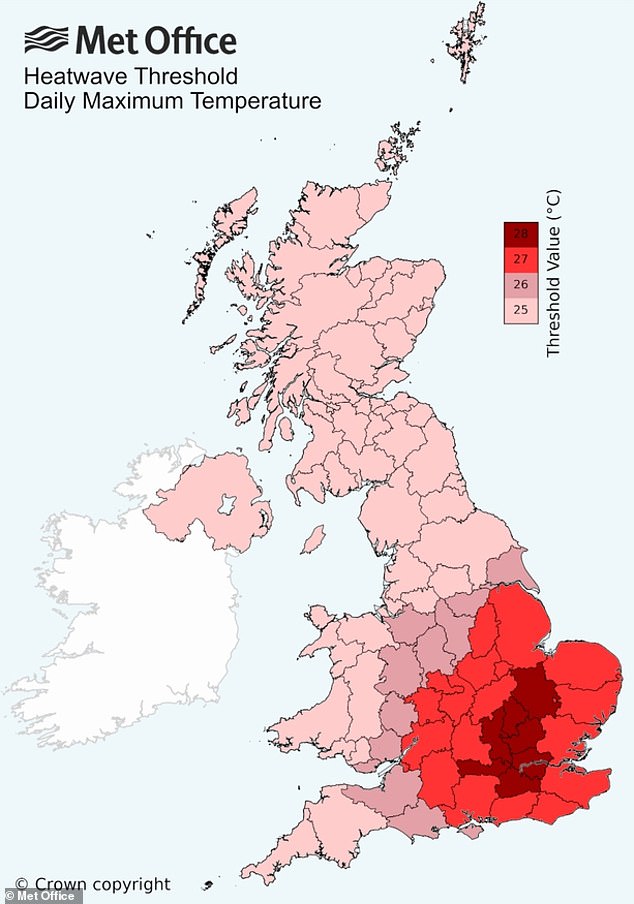
The current May temperature record of 32.8°C was set at Camden Square on May 22, 1922, and again on May 29, 1944, at Horsham, Tunbridge Wells, and Regent’s Park. With the current forecast, these records may soon be surpassed.
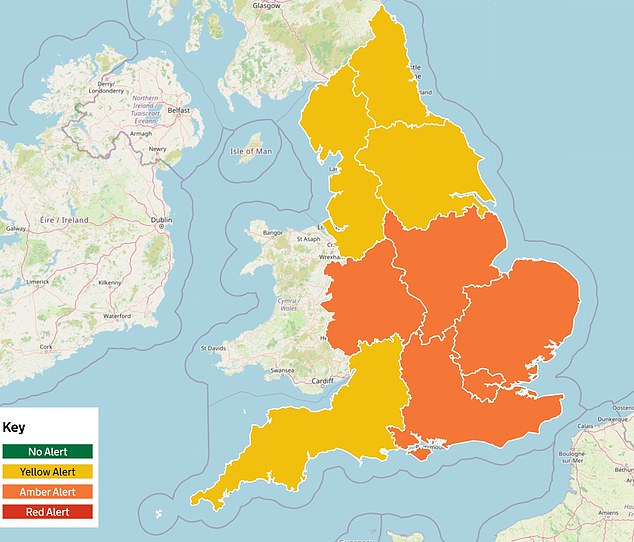
The UK Health Security Agency (UKHSA) has issued amber heat-health alerts for four regions of England, warning that high temperatures during the Bank Holiday could pose a risk to vulnerable individuals. Health and social care services are preparing for potential increases in demand as temperatures continue to rise.
Yellow heat health alerts have been issued for southwestern and northern England. According to the UKHSA, these warnings indicate a likely increase in deaths, especially among those aged 65 and over or with pre-existing health conditions. Dr Anya Gopfert from the UKHSA emphasized the importance of taking precautions, particularly for older people and those with health conditions.
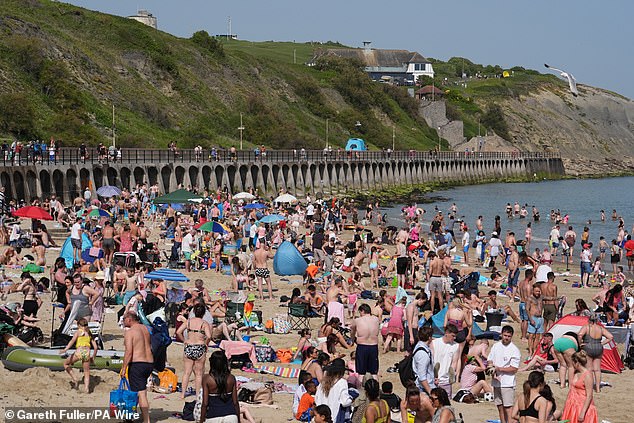

In addition to the heat, warnings have been issued about the dangers of entering water to cool off. Despite the warm air temperatures, sea surface temperatures remain relatively low, ranging from 9°C around Scotland to 13°C around the southwest of England. Ashley Jones from the Royal Life Saving Society UK urged the public to choose lifeguarded locations and be mindful of the risks associated with cold water shock.
UV levels are also expected to be high across much of the UK during the Bank Holiday weekend. Greg Dewhurst, a senior operational meteorologist at the Met Office, noted that high pressure will dominate the weather throughout the period, bringing plenty of warm sunshine to England and Wales. Scotland and Northern Ireland will experience more cloud and occasional showers.


To stay safe during the heatwave, people are advised to keep their homes cool by closing windows and curtains in rooms facing the sun. They should seek shade, apply sunscreen regularly, and avoid being in the sun between 11 am and 3 pm. Physical activities such as exercising or walking a dog should be done in the morning or evening when it is cooler.
Signs of heat exhaustion include tiredness, feeling faint, intense thirst, heavy sweating, and nausea. Symptoms of heatstroke are more severe and include confusion, lack of coordination, a fast heartbeat, hot skin that is not sweating, and seizures. In cases of heatstroke, it is crucial to call 999 immediately.
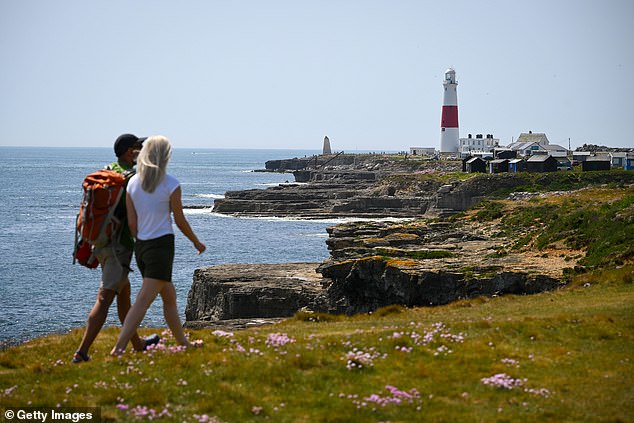

The Bank Holiday is expected to see record-breaking temperatures, with parts of the country bracing for 33°C heat. However, according to the Met Office, temperatures usually do not reach the 30°C threshold until June or later each year. The last time temperatures reached 30°C in May was in 2012, before that in 2005. This unusual heatwave highlights the changing climate patterns and the need for increased awareness and preparedness.