The Struggle of Nepal to Attract Foreign Direct Investment
Nepal has been open to foreign direct investment (FDI) for over three decades, yet it has never managed to attract FDI that exceeds 1% of its gross domestic product (GDP). In the past three years, this figure has remained around 0.2%, significantly lower than countries like Cambodia, Bangladesh, and Rwanda, which have successfully drawn substantial foreign investment.
Despite the presence of many foreign companies operating in Nepal, some have already left the market due to persistent operational and policy-related challenges. Multinational companies in the country have struggled to recommend Nepal as a favorable destination for investment, highlighting the need for significant improvements in the business environment.
Calls for Policy Clarity and Decentralization
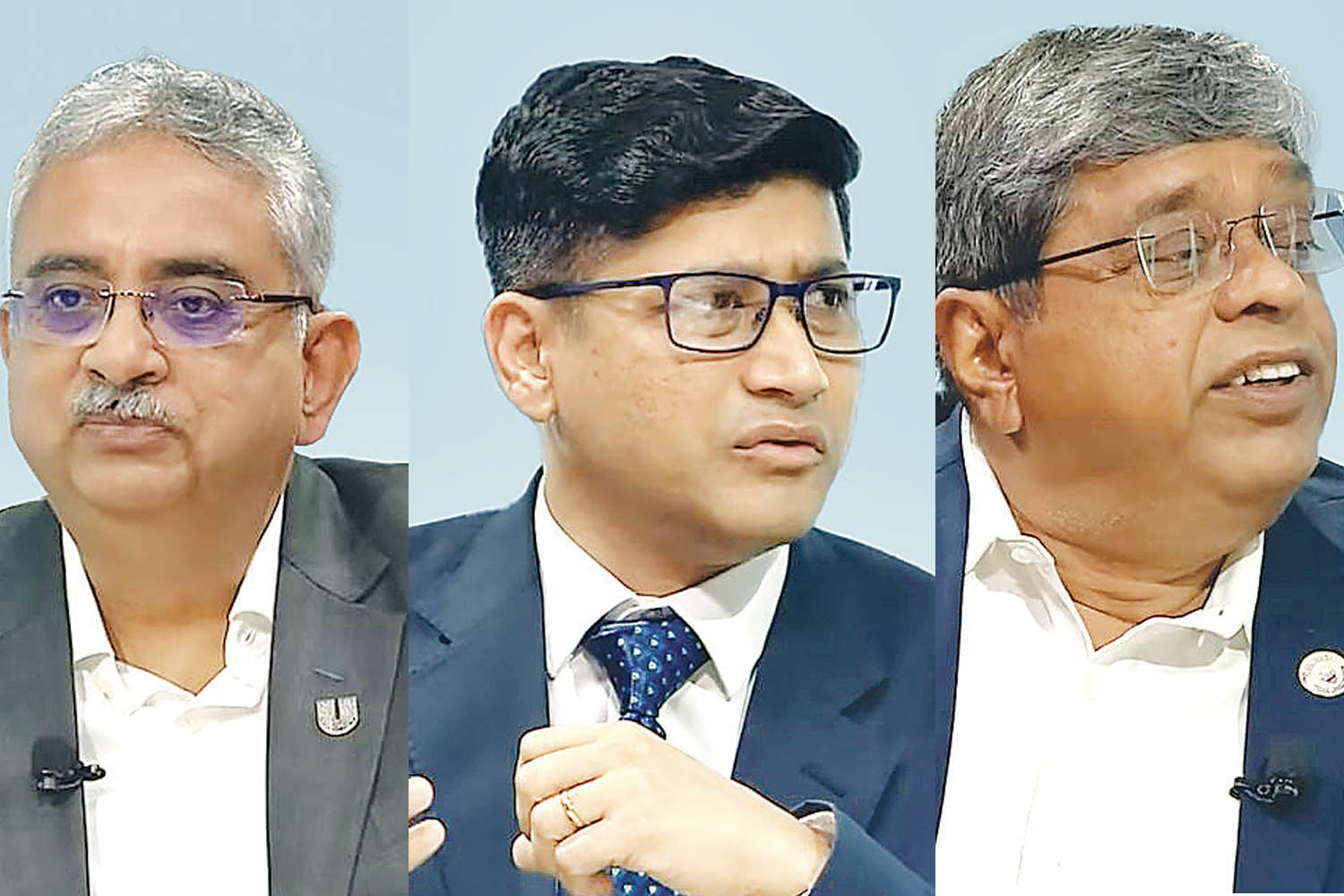
Amlan Mukherjee, CEO of Unilever Nepal, emphasized the importance of clarity and uniformity in policy implementation during a roundtable discussion organized by Kantipur ahead of the national budget. He suggested that if the government can create an environment where businesses can thrive, companies will naturally promote Nepal as an attractive investment destination.
Mukherjee also advocated for the decentralization of decision-making related to FDI. He argued that concentrating all decision-making in Kathmandu or ministries leads to delays. “Once there is faceless government and a decentralized policy decided by local authorities, there will be speed and consistency,” he said.
He further highlighted the need to clear confusion regarding policies among chief district officers (CDO). According to him, clarity, uniformity, and decentralization in policy implementation will automatically bring positive results.
Balancing the Fiscal Budget
Mukherjee called for a balanced fiscal budget, considering the impact of the ongoing conflict in West Asia and the resulting global instability. He praised the government’s stability and clarity in principles but urged a progressive budget that creates pathways for local industries, consumption cycles, banks, and financial institutions to move forward.
He noted that investment in infrastructure would lead to growth in other sectors. Citing the low contribution of manufacturing industries to GDP—around 5%—he attributed this to Nepal’s reliance on an import-based economy. “The moment Nepal begins producing within the country, the benefits will be multidimensional,” he said.
Tax Structure and Policy Stability
Rajib Roy, country manager for Berger Paints Nepal, shared his company’s experience of operating in Nepal for over 30 years despite policy instability. He pointed out the inverted tax structure in Nepal, where taxes on raw materials are equal to or higher than those on finished goods, which is a major policy issue.
Roy warned that without employment generation, both educated and uneducated youths will continue to migrate abroad. He stressed the need for long-term and stable policies, noting that each government change leads to policy fluctuations. Predictable taxes are essential for business sustainability.
He also emphasized the need to remove retrospective laws that negatively affect business and economic progress. To become an export-oriented economy, Nepal must offer Special Economic Zones (SEZs), incentives, and subsidies.
Infrastructure and Renewable Energy
Roy highlighted the importance of infrastructure development for any type of investment. Nepal has abundant hydropower and potential for other renewable energy sources. “We have vast barren lands suitable for setting up solar panels,” he suggested.
Other opportunities include linking the hospitality industry with tourism, as well as developing Information Technology (IT) and Business Process Outsourcing (BPO) sectors. However, the government must embark on a journey of digital transformation, including introducing 5G and building high-speed internet highways.
As Bangladesh and India face energy shortages, Nepal can establish large hydropower projects and construct cross-border transmission lines for energy exports. Roy also emphasized the need to shift from low-cost tourism to high-end tourism by investing in infrastructure. Although Nepal has manpower, skill development is necessary.
Corporate Social Responsibility and Education
Saibal Ghosh, coordinator of multinational companies at the Nepal-India Chamber of Commerce and Industry (NICCI), observed that investors first examine financial parameters such as tax, customs duty, value addition, and potential earnings. He noted that changes in these policies disrupt investors’ financial calculations.
Ghosh stressed that policy stability is the minimum condition required for any investor. “Any investor wants assurance beforehand of how much return can be generated from the investment within a certain period,” he said.
He also highlighted the importance of quality education in stopping youth migration. While remittance income equals a quarter of GDP, the country should look beyond this. Continuous youth migration affects consumption, and unless it increases, even established companies in Nepal may struggle to survive in the future.