When the Trump administration announced a new policy requiring green card applicants to apply from their home countries instead of in the U.S., it created a wave of uncertainty among immigrants and legal professionals. Flavia Santos Lloyd, an immigration attorney, found her phone constantly ringing with worried clients.
Lloyd wasn’t certain how to respond, but she recognized that the new policy would likely slow down the application process. “It has a chilling effect because we have some cases that we were going to proceed and I can tell already, we should wait and see what’s going on,” she said.
The U.S. Citizenship and Immigration Services (USCIS) recently announced that foreigners currently in the U.S. who want a green card must leave and apply in their home country, with only unspecified exceptions allowed. This change could affect hundreds of thousands of applicants annually and is part of a broader effort by the Trump administration to target legal immigration pathways.
“This is simply an attempt to try to limit and scare people away from the legal immigration process,” said immigration attorney Charles Kuck, who expects legal challenges against the policy. “This is a scare tactic.”
As immigrants and their employers seek answers, the full impact of the policy remains unclear. Questions about who will be affected and what exceptions might exist are still unanswered.
A Confusing Rollout for the New Policy
For over half a century, foreign nationals with legal status in the U.S. have been able to apply for permanent residence while in the country. This includes individuals married to U.S. citizens, those on work or student visas, and refugees or asylum-seekers.
However, this appeared to change abruptly when USCIS announced the shift on its website. The agency stated, “From now on, an alien who is in the U.S. temporarily and wants a Green Card must return to their home country to apply, except in extraordinary circumstances.”
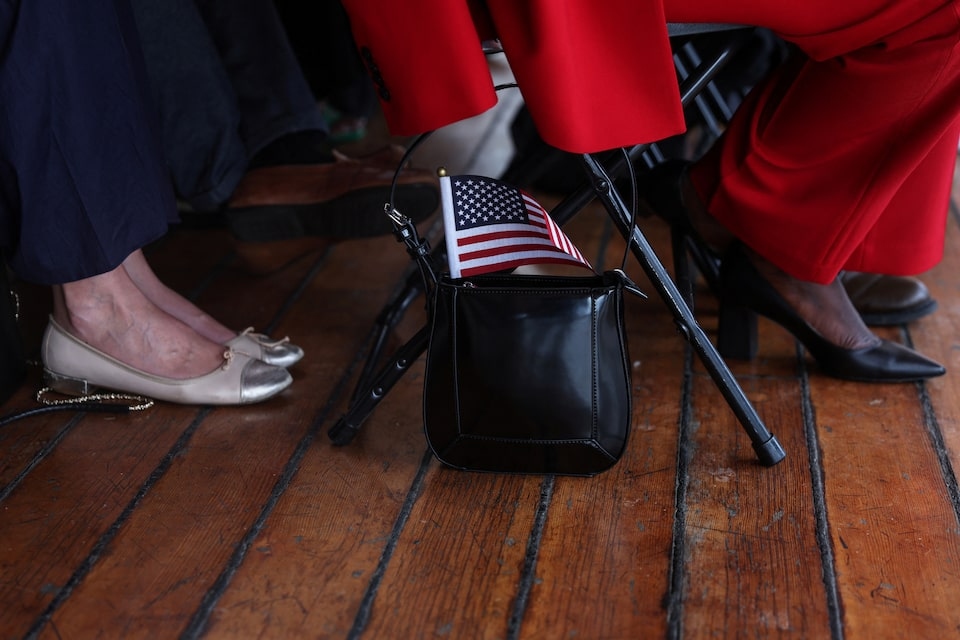
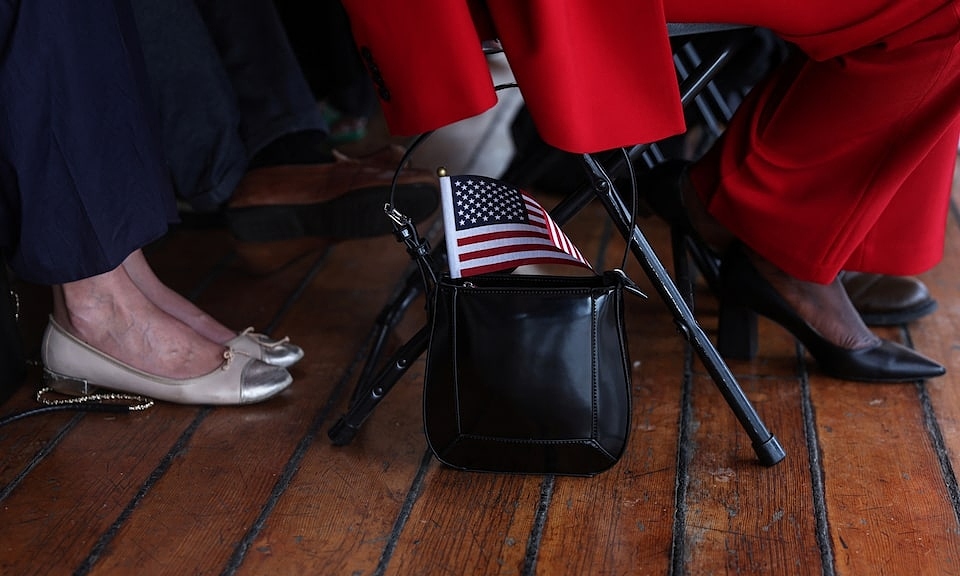
A U.S. flag sticks out from the purse of a citizen candidate attending a U.S. Citizenship and Immigration Services (USCIS) naturalization ceremony aboard the 1885 Tall Ship Wavertree at the South Street Seaport in New York City, U.S., June 14, 2023. Photo by Reuters
USCIS also released a more detailed policy memo intended as guidance for its staff. While the memo was seen as more nuanced, it led to confusion about the exact implications of the policy.
In response to questions from the Associated Press, the Department of Homeland Security stated that the policy wouldn’t prevent anyone who “legitimately and properly” qualifies from obtaining a green card. However, it noted that some applicants may now have to apply overseas through the State Department. The department added that the policy would have “no noticeable impact on highly qualified applicants and skilled professionals who have followed the law.”
Immigrant Firms and Advocates Left Guessing
Boundless Immigration, an immigration law firm, suggested that officers would apply existing discretionary standards more rigorously. The company believed the policy doesn’t completely stop the adjustment of status process for “eligible applicants” depending on their visa category.
Shev Dalal-Dheini, senior director of government relations at the American Immigration Lawyers Association, said the guidance might target individuals who overstayed their visas. This includes parents of U.S. citizens who remained after their visas expired, employees transferring to the U.S., and religious workers.
Kevin Miner, a partner at Fragomen, expected that people on employment-based visas, like H-1Bs, would be exempt. These visas allow nonimmigrant visa holders to seek a green card. Miner noted that these cases might continue as usual.
Matthew Soerens, U.S. director of church mobilization for World Relief, expressed hope that the policy does not apply to refugees. Refugees undergo extensive vetting and are required to complete green card processing a year after arriving in the U.S. They cannot return to their home countries due to the risks they face there.
Trump’s administration has significantly reduced the number of refugees admitted into the U.S. this year, limiting them to white South Africans. People entering under humanitarian parole, which allows presidents to admit individuals for humanitarian reasons, could also be affected.
Immigrants Facing New Questions
The American Immigration Lawyers Association reported that several people in green card interviews under the new guidance faced questions not previously asked. One individual applying based on marriage to a U.S. citizen was asked why they applied to adjust their status in the U.S. instead of returning to their home country.
Another person was asked to file a form demonstrating why they should be allowed to apply from the U.S. and was told evidence should prove they wouldn’t be a financial burden or a “public charge” on the U.S. This could include tax returns, employer letters, and bank statements.
Lloyd, the immigration attorney, advised her clients to wait for further guidance. “I don’t want everybody to panic,” she said. “My advice to them is wait and see.”